The home of architecture and design in the Asia-Pacific
Get the latest design news direct to your inbox!

Get the latest design news direct to your inbox!
A culture of bungled design competitions has led a Sydney architect to call for greater transparency. Business Editor Gemma Battenbough reports.
April 28th, 2010
John Choi, director of Manly-based Choi Ropiha, said from now on contest organisers would need to demonstrate “greater commitment” to fully engage the profession.
Clients often launch design competitions without any real commitment to the outcome, he said. The expectation is that architects should invest their time and money in entering without knowing the likelihood of a project being developed.
“Often design competitions are run with the main intention of raising the profile of one of the stakeholders,” he told indesignlive.com.
“There is a culture of design competitions not coming to fruition and it is frustrating. A level of commitment needs to be signalled on the client’s side.”
Currently, the onus is on an architect to deconstruct a brief and see whether a competition is worth entering, Choi expalined. Firms have to “suss out” post-competition plans and processes, research budgets, look for the involvement of stakeholders, councils and public agencies, and study the jury.
But this should change, Choi said, with the burden of weighing up wobbly design competitions borne by professional bodies, such as the Australian Institute of Architects.
According to Choi, endorsing bodies should be “more mindful” of the commitment on offer from clients.
He also believes in a two-tier system of endorsement that would give clients the option of running an ideas competition or a fully-fledged project competition.
“An ideas competition would need a low level of commitment from a client. The winner can always be engaged if circumstances evolve that way. Whereas, a project competition would call for a high level of commitment, including a larger prize sum, upfront contract terms, high-level design jurors, technical advisors and stakeholder involvement,” he said.
“Competitions are great project opportunities and they are important for developing professionally … But they would be significantly more constructive to the profession in Australia if they were more organised”
Choi Ropiha
choiropiha.com
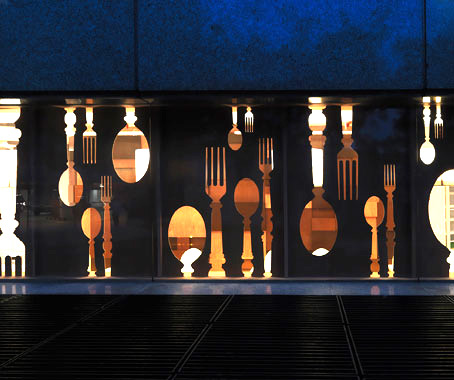
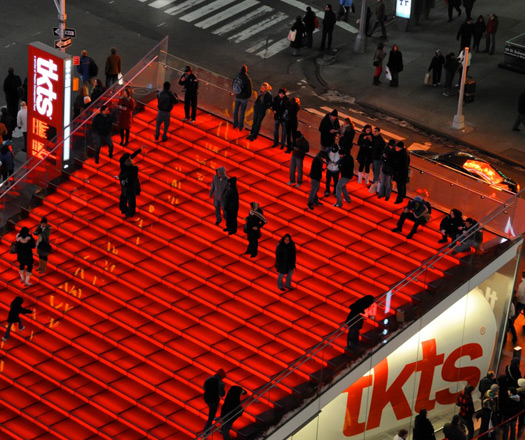
Image above and below: Choi Ropiha’s TKTS Booth in Times Square, competition winner.

INDESIGN is on instagram
Follow @indesignlive
A searchable and comprehensive guide for specifying leading products and their suppliers
Keep up to date with the latest and greatest from our industry BFF's!
The internet never sleeps! Here's the stuff you might have missed