The home of architecture and design in the Asia-Pacific
Get the latest design news direct to your inbox!

Get the latest design news direct to your inbox!
The Ore-no Kappou restaurant in Lan Kwai Fong designed by Hiroshi Kanazawa is a modern take on “wa” – a Japanese style which describes harmony found in traditional art and design.

April 23rd, 2015
Photographs: Courtesy of YO CO.
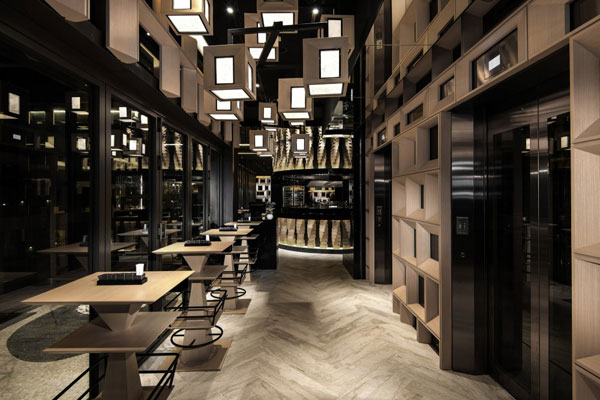
In an effort to distinguish the brand image of Ore-no in Hong Kong, lead designer, Hiroshi Kanazawa, developed a modern and personal interpretation of Japanese “wa” aesthetics, a term which translates to togetherness, describing the harmony found in traditional Japanese culture be it clothing, paper or cuisine. Quite fittingly, this 350 square-metre restaurant is also the Japanese brand’s first foray overseas. The Ore-no group owns a series of esteemed restaurants in Japan, including Ore-no French, Ore-no Italian and Ore-no Kappou.
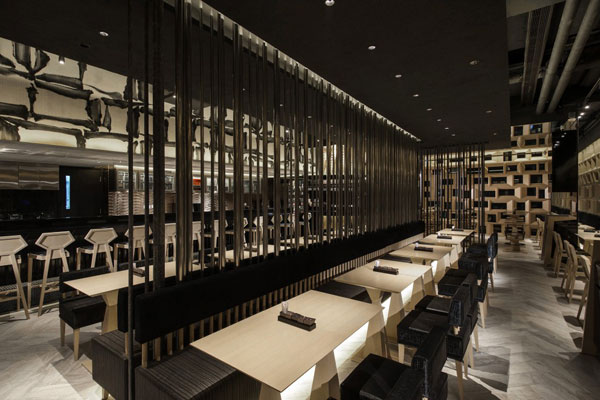
The Ore-no Kappou in Lan Kwai Fong merges core traditional Japanese design philosophies with new ideals. A restrained palette holds the space together as orderly formed block patterns crowd walls and ceiling spaces, almost disregarding the subtle language often found in Japanese design. “I always think that the most important point is to express a new generation of Japanese “wa” style that is stepping forward into the world,” says Kanazawa.
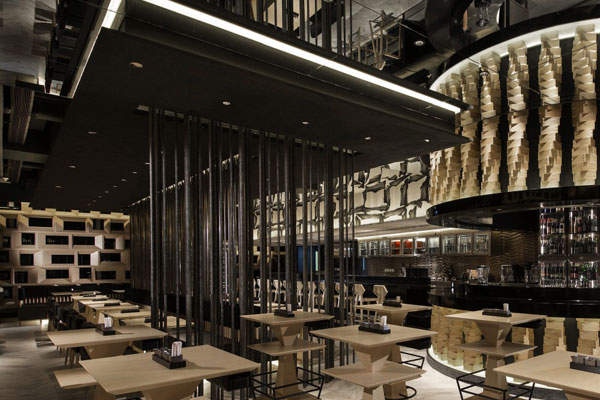
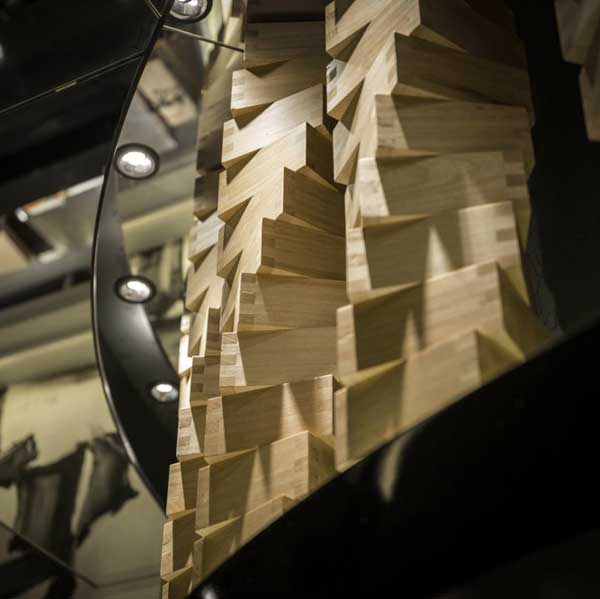
An accented section by the side of the bar stands out with rounded perimeters where staggering wooden boxes are stacked up, creating a three-dimensional pattern. There is a sense of order and chaos as boxy wall monuments form the backdrop for angular furniture.
Light sources remain thoughtfully concealed through a series of boxy lighting and polyhedral pendants that resemble lanterns in futuristic forms.
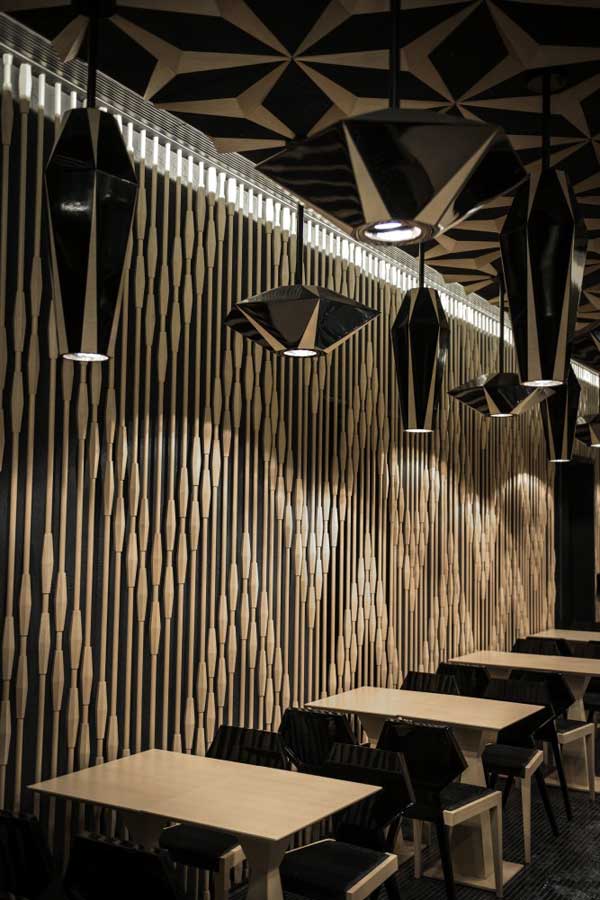
Bearing five traditional Japanese materials, including Hinoki wood, soil, lacquer, paper and ink, the space retains Japanese traditions at its core, but consists of new patterns and shapes that belong to an evolution. “These five elements appear intermittently in a surprising pattern and shape that show a good balance between an implicit Japanese “wa” style and the innovative spirit,” Kanazawa shares.
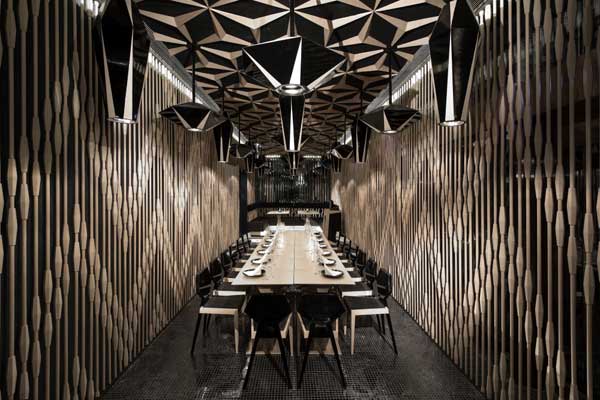
Alluding to the usage of contrast and shadow in traditional Japanese techniques to express beauty, Kanazawa’s Ore-no Kappou replaces both elements and juxtaposes traditional materials with “surprising patterns and shapes”, creating a one of a kind dining space.
INDESIGN is on instagram
Follow @indesignlive
A searchable and comprehensive guide for specifying leading products and their suppliers
Keep up to date with the latest and greatest from our industry BFF's!
The internet never sleeps! Here's the stuff you might have missed