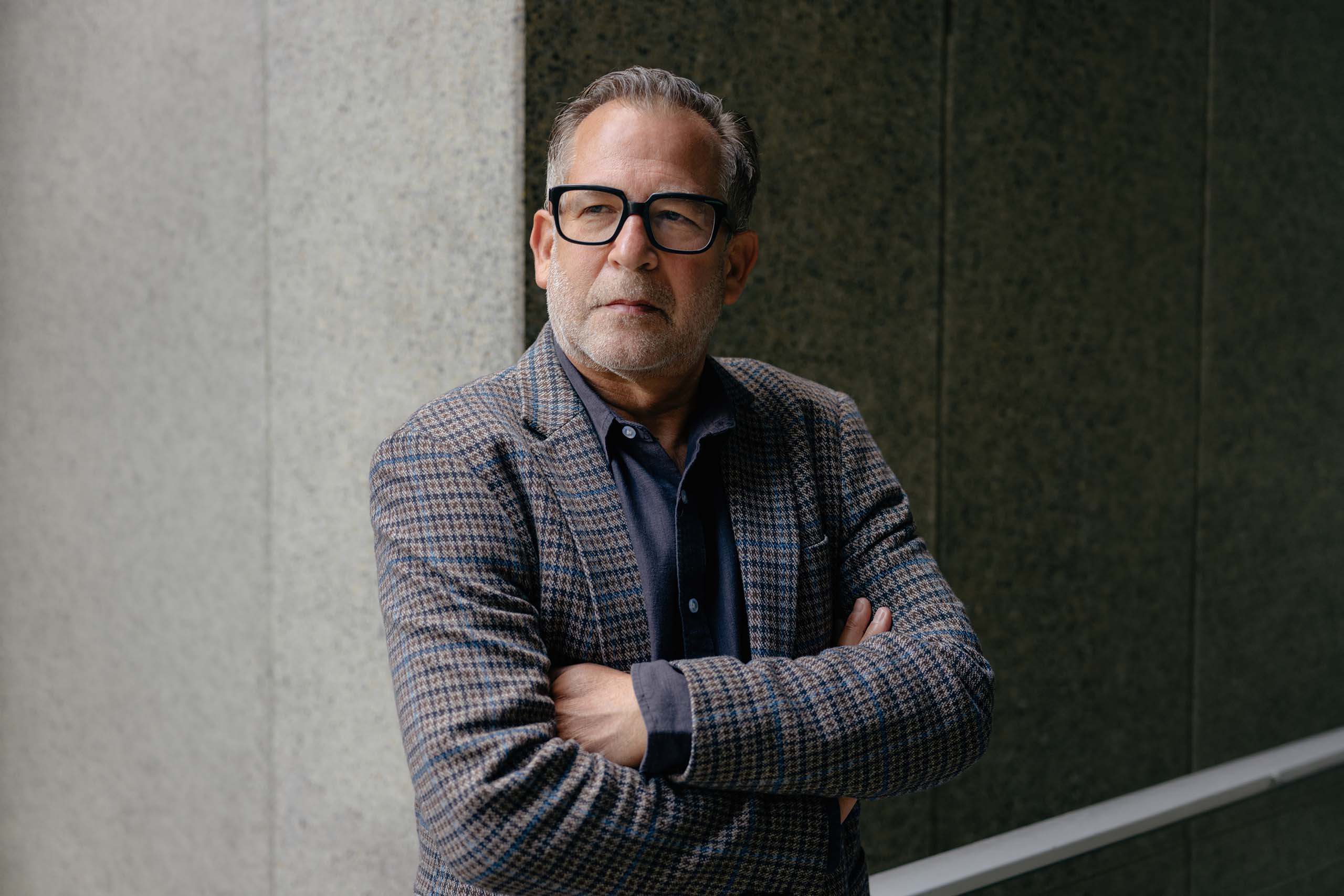
Daryl Maguire is the studio principal for Warren and Mahoney in Melbourne, a boutique practice that handles a portfolio of complex and large-scale work across varying sectors. That’s because the practice falls within a larger ecosystem of seven studios whose 300-strong talent pool is not pinned down by location.

Daryl Maguire.
“We call it ‘one studio’ where we have a single pool of talent, which we apply to projects as required,” says Maguire.
Most of us can attest to just how easy it is to slip into a comfortable ‘silo’ pattern of working. Maintaining a 360-degree awareness requires more than just emotional intelligence. An expand across New Zealand and into Australia, Warren and Mahoney has worked hard to overcome the challenge, using technology and regular communication to create a “locationless” workforce.
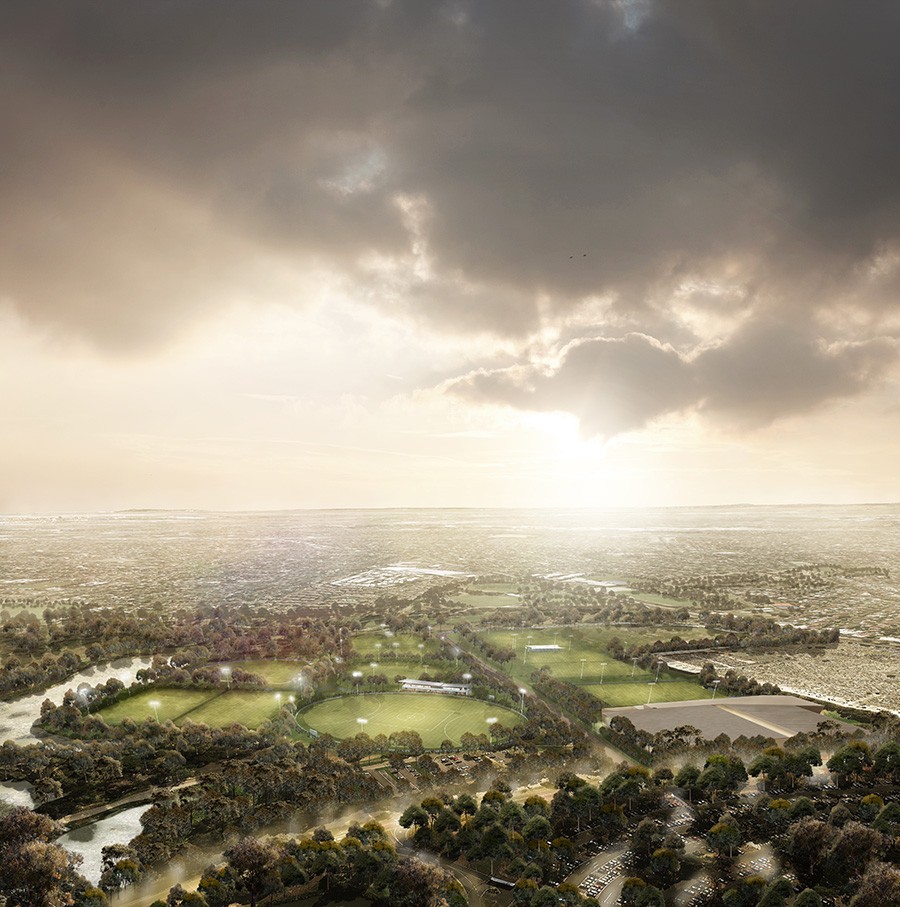
La Trobe University Sports Park.
After all, architecture is a “team sport”, says Maguire who is also the company’s sports sector leader and chair of its Australian board. “It takes a group of people to design and build a project. It’s a big team effort and it’s about sharing the load, putting the right people and talent in front of the right problem.”
It’s also an extremely portable profession. As Maguire points out: “Good design doesn’t speak a language.” And Australia and New Zealand are two of the world’s closest linked economies which, from a high-level business point-of-view, dissolves a lot of barriers (borders included).

La Trobe University Sports Park.
It’s allowed Warren and Mahoney to pool its talent and transfer its learnings from one culture and country, into another. A great case in point is Maguire himself. Having recently moved to Melbourne, from Christchurch, he brings with him the knowledge of projects past – the Metro Sports Facility (the largest community sports facility in Australasia), and the brand new QEII Recreation and Sport Centre – both in Christchurch.
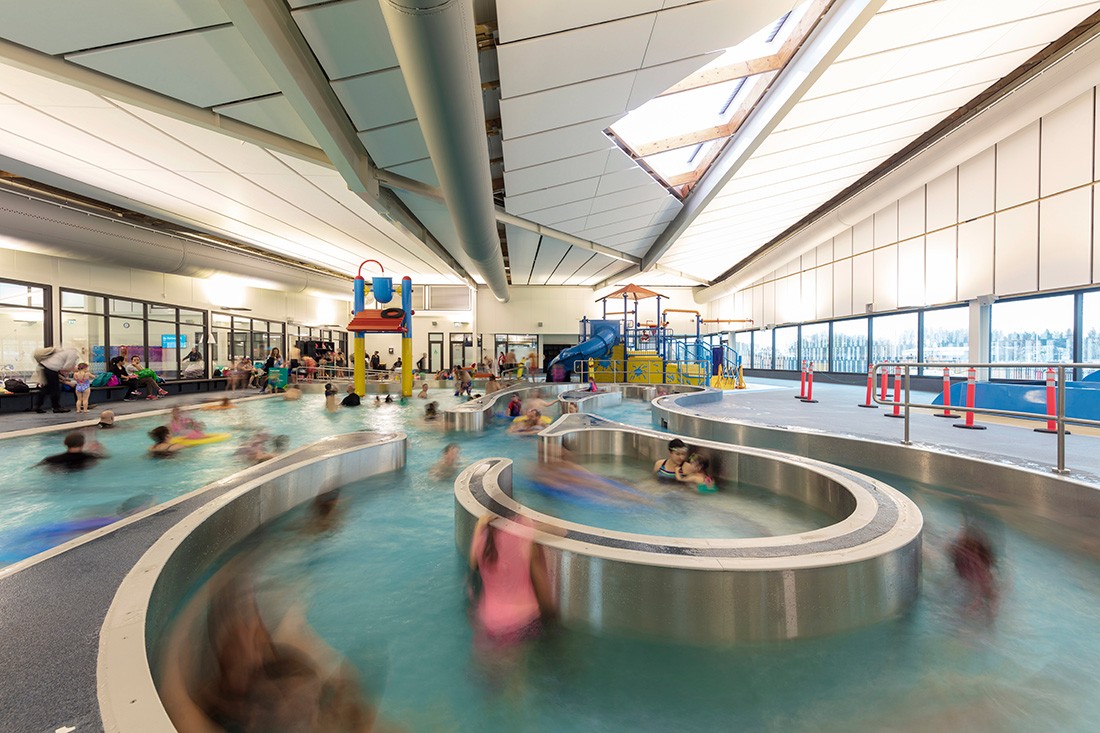
QEII Recreation and Sport Centre.
In New Zealand, Warren and Mahoney sports the best and largest portfolio in this sector. And the view is to grow it further in Australia. Already that strategy has been put into play with the commencement of the $150 million, 60-hectare LaTrobe Sports Park.
“Large-scale recreational developments can often be the most challenging but also the most gratifying as each facility quickly transforms into a community hub,” says Maguire. “They have to cater to the full range of society [sometimes as far reaching as six-week-old babies to 98-year-old people], and they are a very public facility. If they are successful, they become part of your life.”

EA Networks Centre – Indoor courts.
From sporting facilities to stadiums and arenas – the balance complex demand continues. There are the technical aspects of a sport to consider, as well as revenue maximising measures, and public experience – “can you see, hear and smell what’s happening?” Also important is just how well a venue fits in with its surrounds. “How to make them stay alive as part of a community when not [operational or] in full event mode?”
Maguire highlights Melbourne’s Etihad Stadium for its architecturally embedded approach, in which it has “disappeared into the fabric of the city”. But asks, just how enlivened can Olympic Park be, when not hosting 100,000 people?
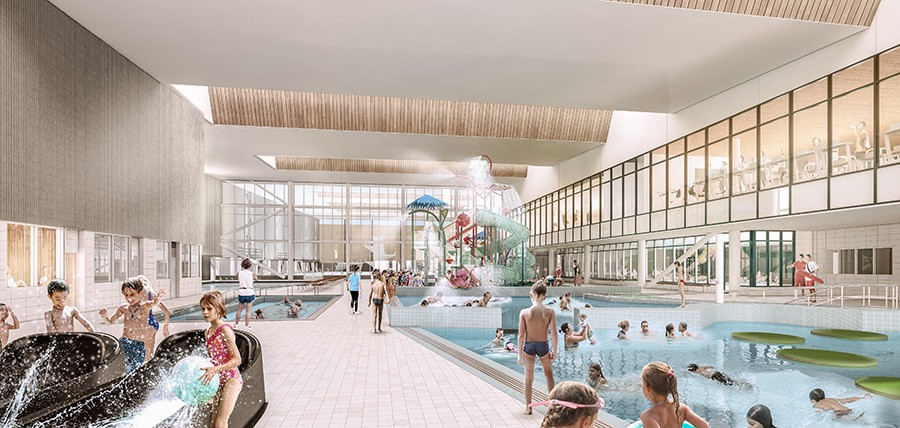
Metro Sports Facility – Combining Wet and Dry sports in the largest community sports facility in Australasia.
It’s about making these sites as welcoming and transparent as possible, he says. Because: “at the core of our business is a belief that identity matters. The most successful and enduring projects are those that connect people together and create a sense of belonging.”
A belief that goes to the core of Warren and Mahoney’s own trans-Tasman company culture.
Take a look at our Top 10 picks for Stadium architecture from around the world.
Images and renders courtesy Warren and Mahoney.
–
Never miss a beat. Sign up for our design industry newsletter.