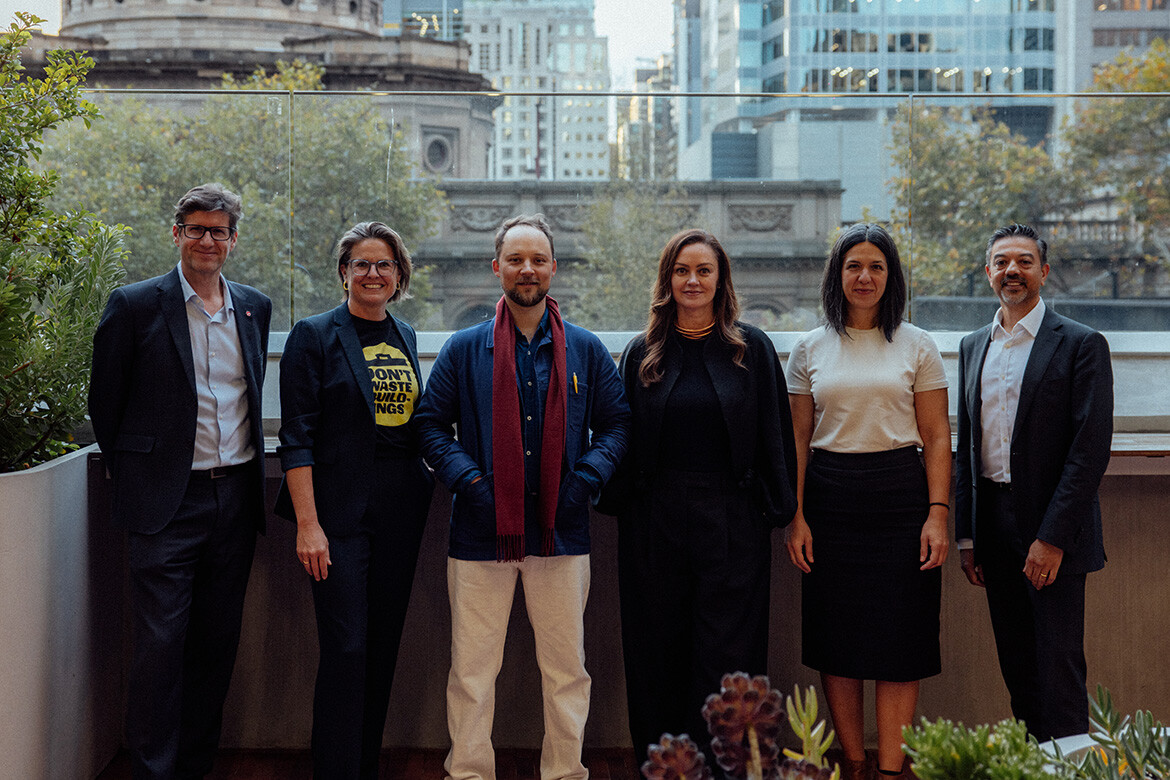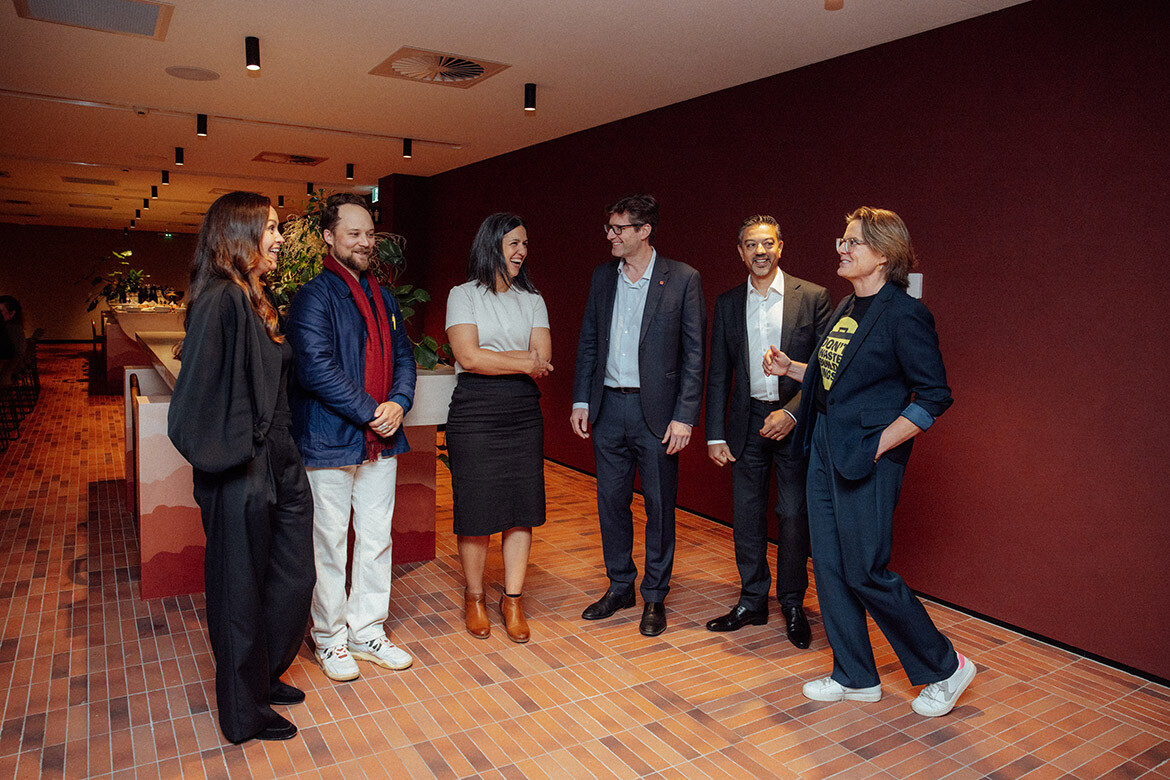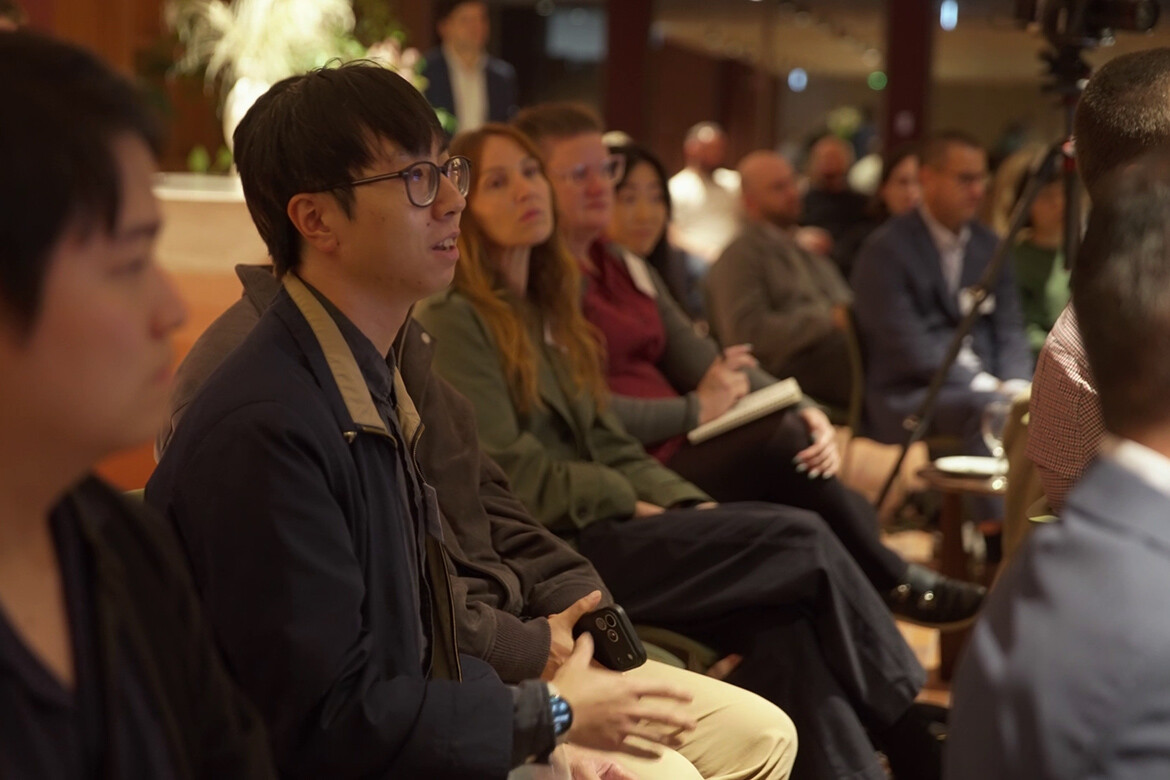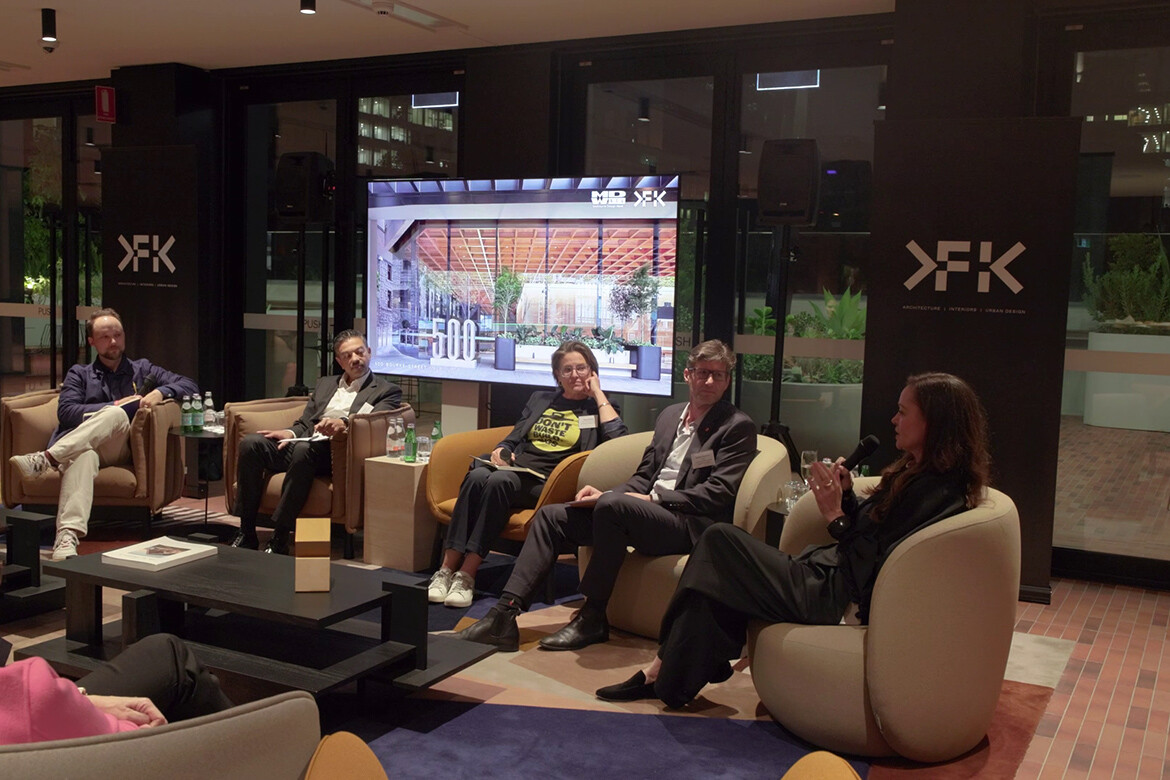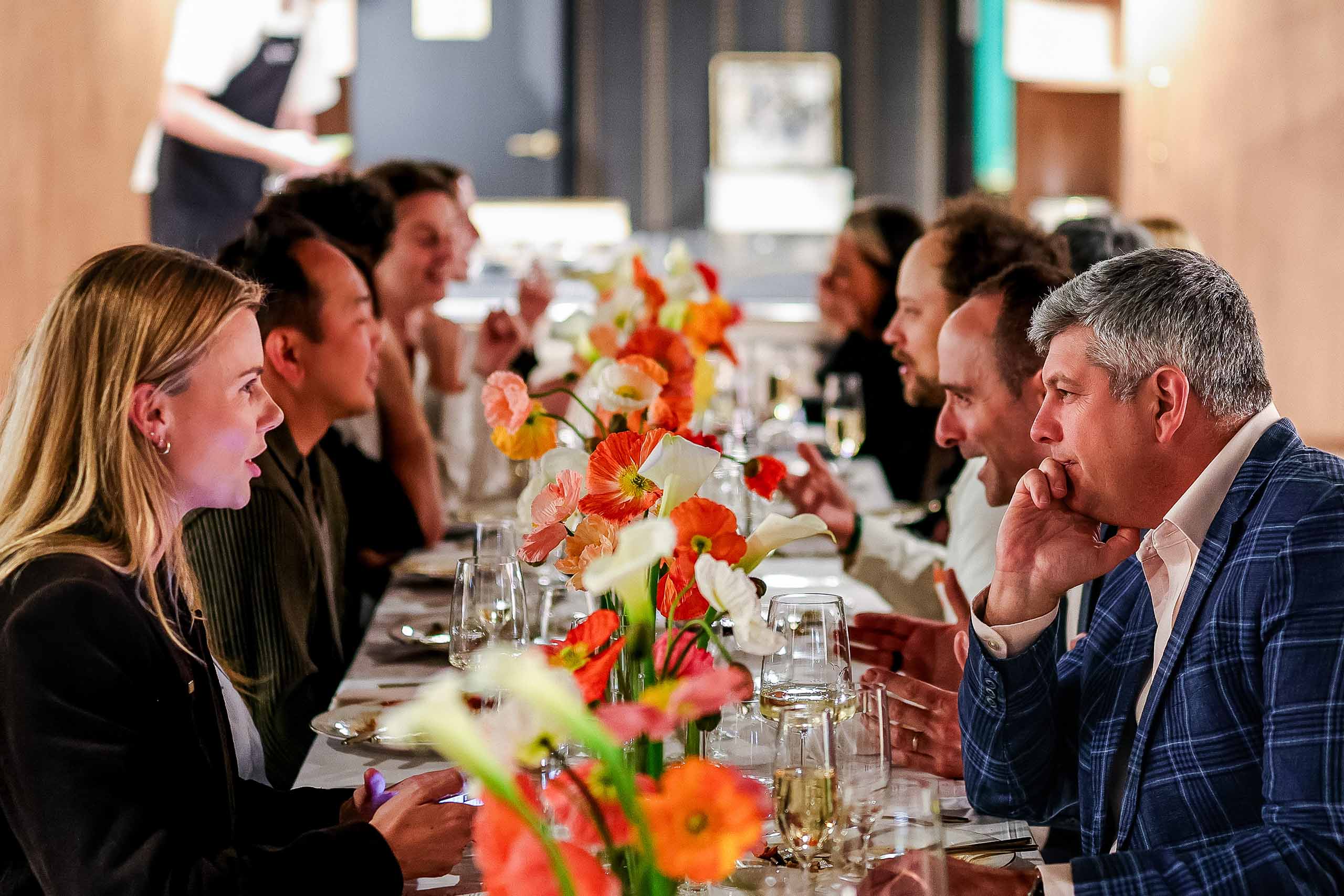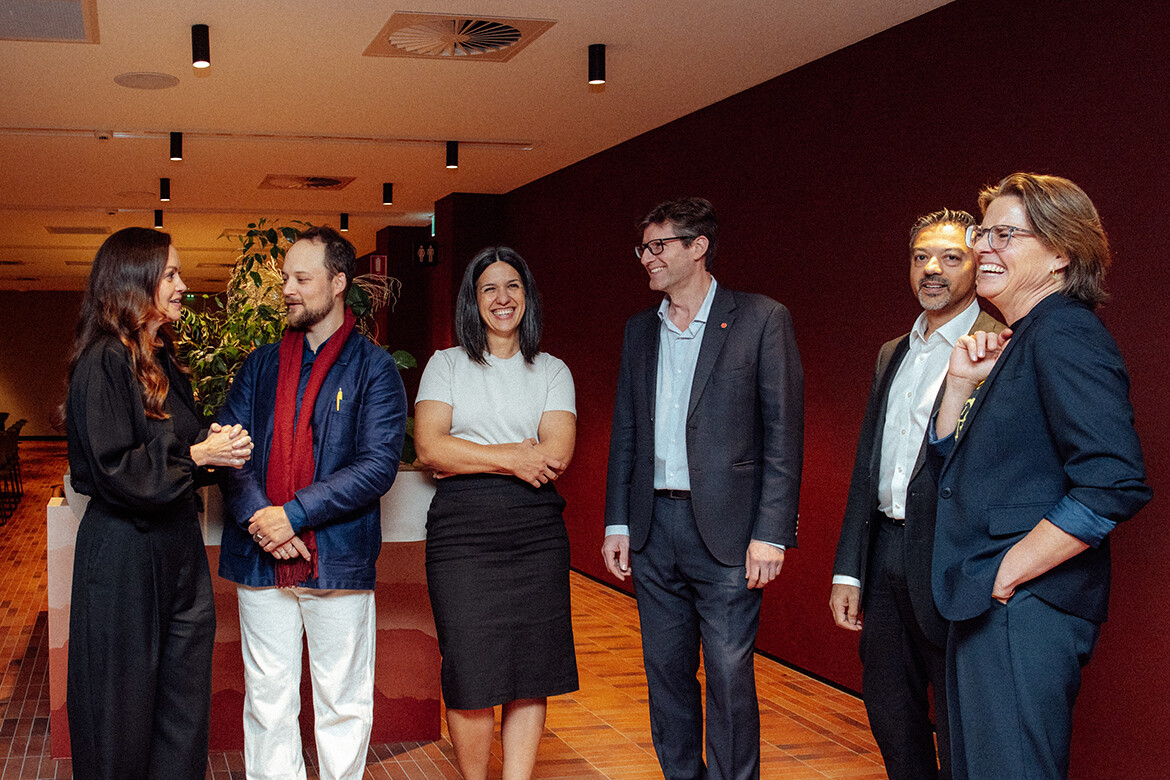
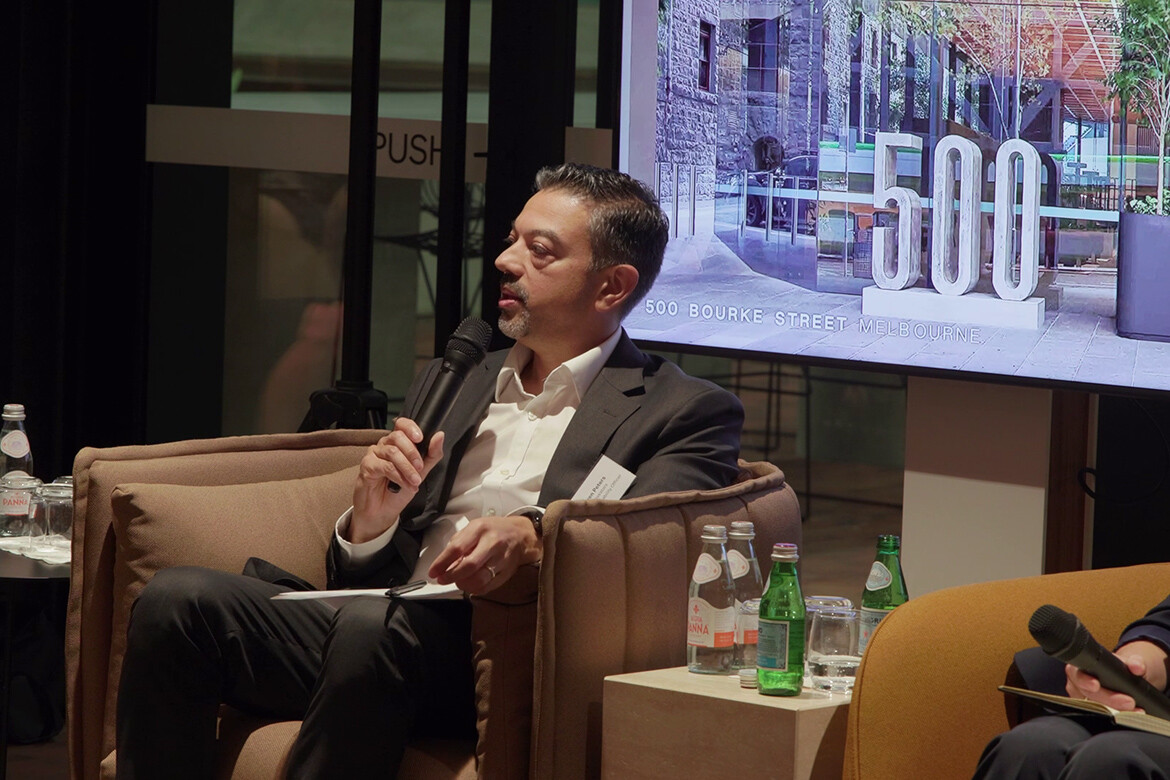
As part of Melbourne Design Week (MDW), FK brought together a diverse panel on Tuesday 19th May entitled ‘Renewable real estate: Unlocking the latent potential of our city’s ageing office assets.’ The event, held at 500 Bourke in the CBD, began with City of Melbourne Zero Carbon Buildings Lead, Dr Maria Panagiotidou, providing opening remarks to contextualise the conversation. Moderated by our editor Timothy Alouani-Roby, the panel itself comprised Nicky Drobis (Partner and Head of Design, FK), Steven Peters (Chief Sustainability Officer, Real Estate, IFM Investors), Kriston Symons (Principal AU & NZ, Property Business Leader, Arup) and Claire Bowles (Don’t Waste Buildings, Australia Chapter Lead).
The discussion framed adaptive reuse as an increasingly urgent strategy for renewing commercial workplaces, positioning retrofit not as a compromise to redevelopment but as a primary pathway for environmental, economic and social outcomes. Speakers argued that existing buildings contain significant latent value — in their structure, materials, location and cultural memory — and that retaining and upgrading them can deliver stronger long-term outcomes than demolition and rebuild.
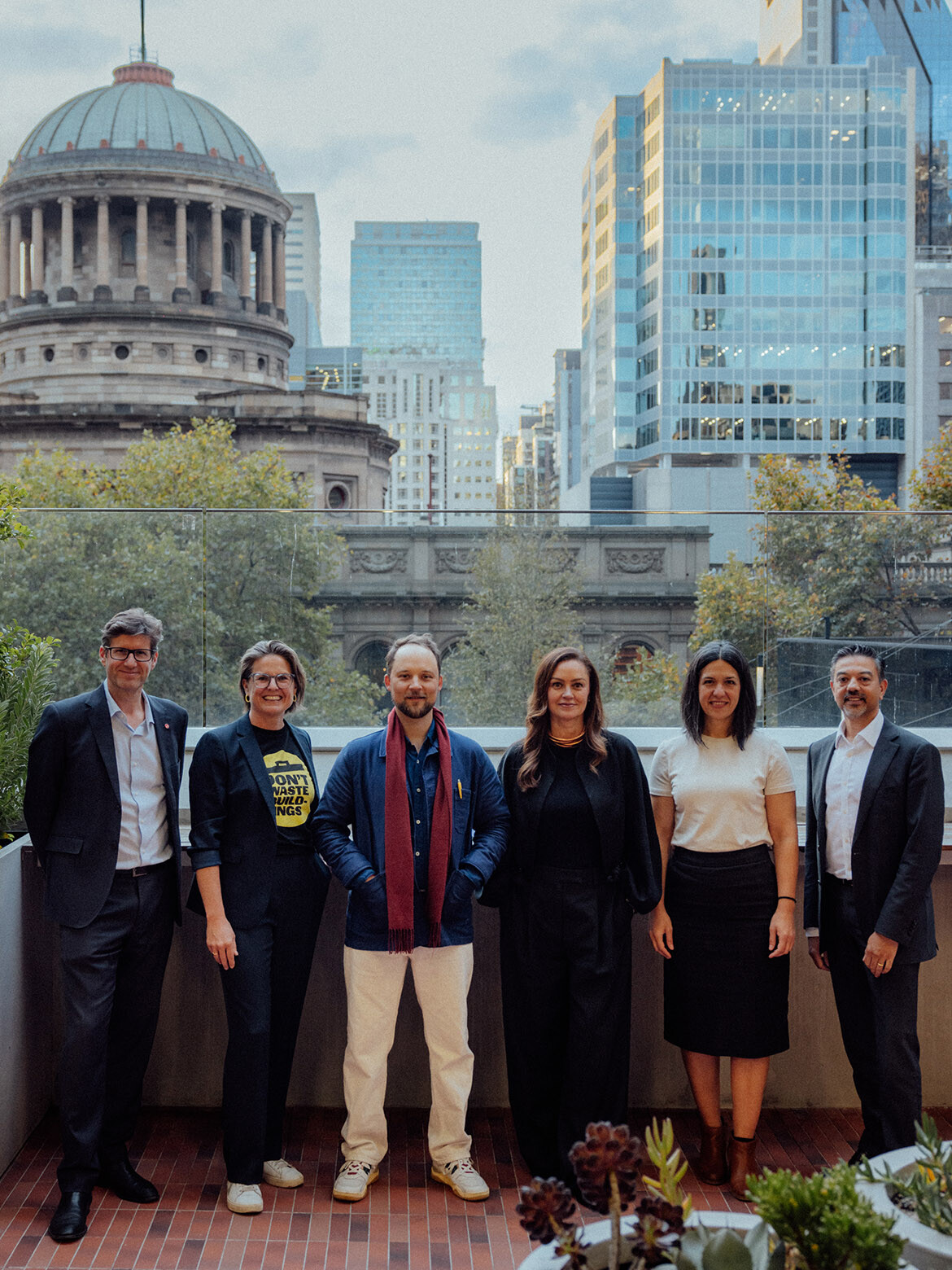
“I think the future of our CBDs is really exciting,” said Drobis during the talk. “I think the biggest opportunity we have in retrofitting existing office buildings is to understand that we need to shift our thinking about them, and understand that they are in fact a resource. We need to understand their inherent value in our cities. I think what’s holding adaptive reuse back in Australia is that there is a pervasive attitude in society generally of disposable everything, actually: disposable items, disposable buildings. It’s become a part of the cultural piece of contemporary Australia, and that really needs to shift.”
A recurring theme was the need to broaden how value is measured. While operational energy performance remains important, participants emphasised that embodied carbon is becoming a critical factor in decision-making as sustainability expectations and reporting requirements evolve. Reusing existing structures was presented as a direct way to reduce upfront emissions, avoid construction waste and support emerging circular economy principles.
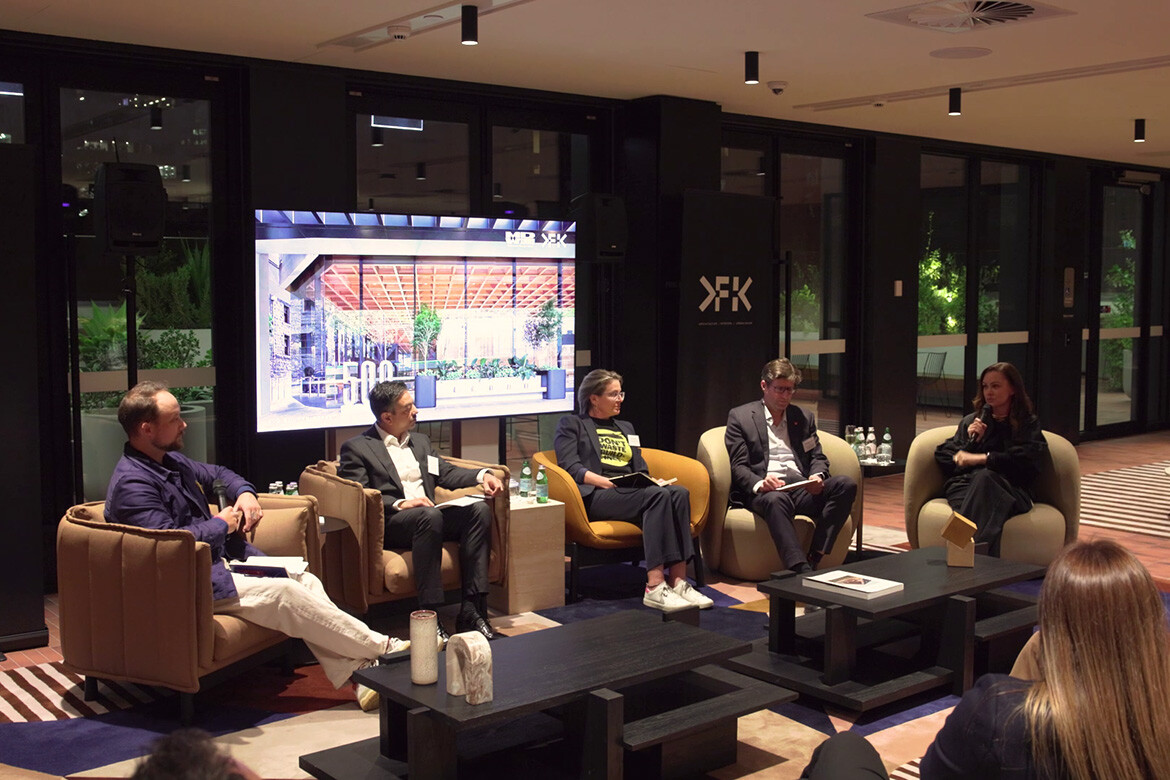
The conversation also highlighted how workplace expectations have shifted in a post-pandemic context. Rather than simply delivering functional office space, contemporary workplaces are increasingly expected to attract people back into the office through flexibility, quality of experience and alignment with organisational values. The panellists argued that adaptable floorplates, stronger amenity and spaces with character and authenticity are becoming competitive advantages.
The conversation then turned to reflections on the role of memory, identity and material continuity in shaping more meaningful workplaces. Older buildings were described as offering qualities that newer developments often struggle to replicate, with retained materials, visible histories and evidence of previous uses contributing to stronger emotional connections as well as more distinctive environments in general.
Related: Installations from Milan 2026
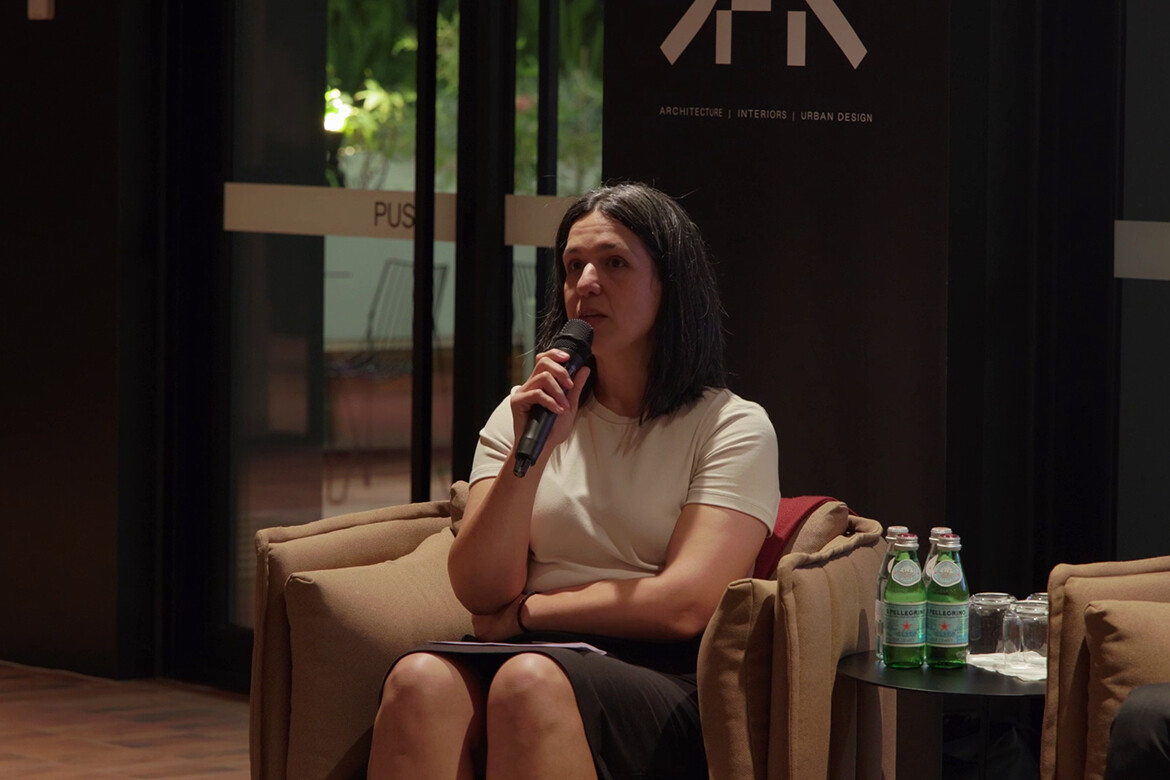
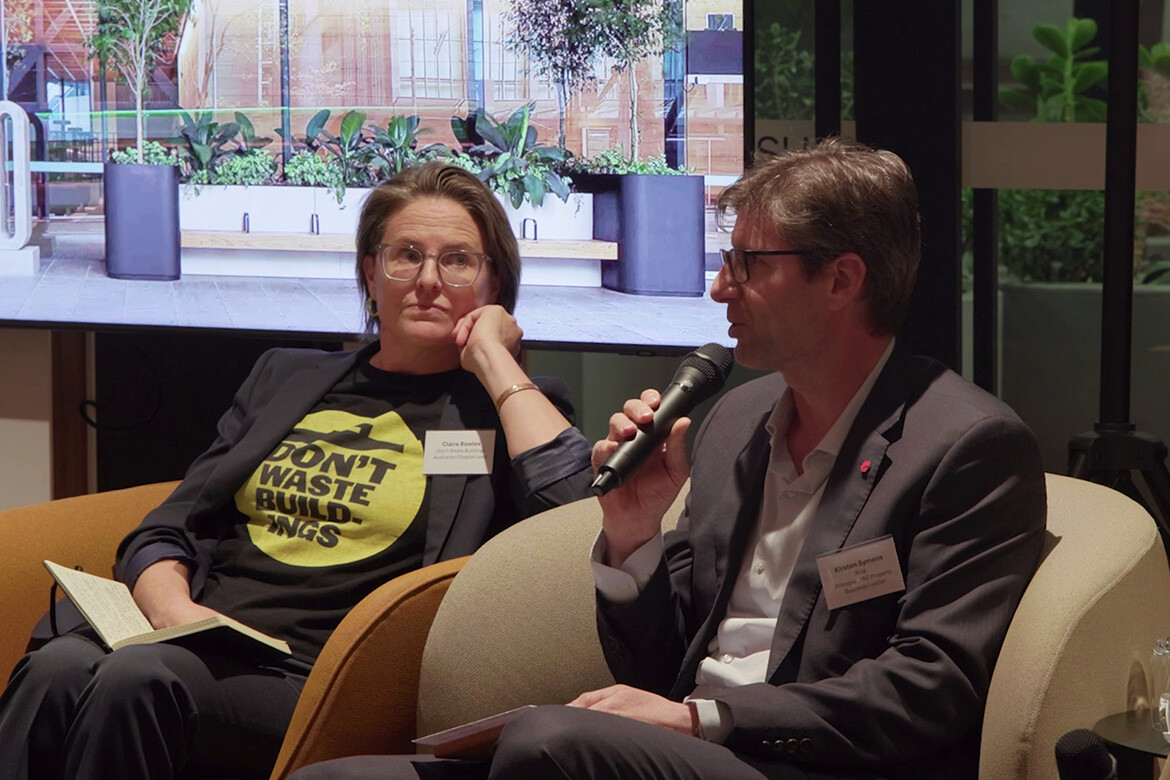
Commercial realities remained central to the discussion. Adaptive reuse was acknowledged as complex and often carrying higher perceived risk due to unknown conditions, regulatory requirements and feasibility pressures. However, speakers argued that current systems frequently undervalue retained materials, embodied carbon and social outcomes while favouring demolition through conventional development metrics.
Looking ahead, the panel — before a packed audience in the most successful MDW yet — suggested that wider adoption will depend on policy reform, clearer retrofit pathways, stronger incentives and industry-wide collaboration. The broader ambition is a shift from a linear model of construction toward a circular approach in which buildings are treated as long-term assets capable of continual adaptation rather than single-use products.
Event Photography
Will Hamilton-Coates