The home of architecture and design in the Asia-Pacific
Get the latest design news direct to your inbox!

Get the latest design news direct to your inbox!
Stephen Lacey speaks with environmental manager Billi Hayes, about the challenges ahead for creating a truly sustainable planet.
July 5th, 2013
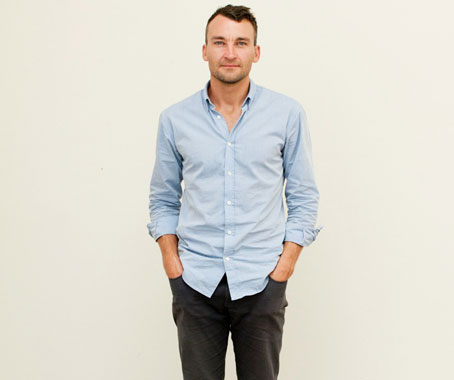
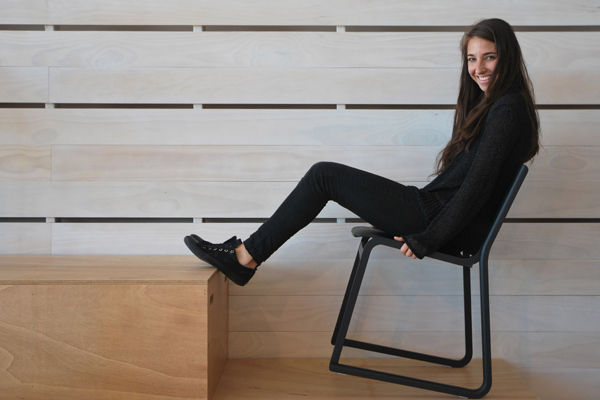
Meeting Billi Hayes is like a breath of fresh air. Indeed, Hayes would like nothing more than the chance for us all to be breathing fresh air for a whole lot longer. But the 25-year-old environmental and quality manager at KE-ZU, a leading furniture supplier in Alexandria, Sydney, is not sure that will be possible unless we see some big changes in the way we consume.
“There is no such thing as a truly sustainable product, there can’t be,” says Hayes. “In fact the most sustainable thing you can do is not buy something in the first place, but that’s not going to happen, because it’s in our evolutionary genes to acquire.”
This being the case, Hayes believes the next best thing is for us to make smart choices when we go shopping. In other words, look for products that have the lowest environmental impact.
“If we’re going to buy something, we should at least make sure that a life cycle assessment has been carried out on it, where the use-phase, maintenance-phase and disposal-phase have been measured,” she says. “The problem is these assessment cost way too much at the moment and so they are out of the reach of smaller manufacturers.”
Hayes says determining ‘good-eco’ and ‘bad-eco’ is not as clear cut as you might imagine. She says it’s only through conducting a life-cycle assessment that such distinctions can accurately be made.
“Take the example of corn kernels, or polystyrene foam as a packaging option,” she says. “You’d assume corn would be more environmentally friendly, whereas a life cycle assessment showed that polystyrene is actually a better choice, because of food security issues.”
Hayes started out her career wanting to be a designer herself, and completed a bachelor of design at UNSW College of Fine Arts. Then she questioned the need to produce more and more ‘stuff’ so enrolled for the master of sustainability at Sydney University.
“I wanted to learn how to break a chair down into its component parts for recycling,” she says. “We put so much effort into manufacturing something, but no thought about taking it apart and disposing of it.”
INDESIGN is on instagram
Follow @indesignlive
A searchable and comprehensive guide for specifying leading products and their suppliers
Keep up to date with the latest and greatest from our industry BFF's!
The internet never sleeps! Here's the stuff you might have missed