From Our Partners

How modularity is redefining today’s commercial environments and tomorrow’s healthy workforce

Published

How modularity is redefining today’s commercial environments and tomorrow’s healthy workforce

In this free whitepaper we explore how modular furniture addresses the modern workplace, today’s workforce and your next client’s balance sheet.

How is modular furniture driving today’s commercial boom?

Commercial projects continue to be the main driver of growth in the Australian construction industry. According to the Australian Performance of Construction Index in March 2018, commercial construction expanded to 65.0 points in the overall combined industries’ performance indices matrix, the highest recorded level since the survey’s inception in 2005. The ongoing growth and high-performance of commercial construction and a dynamic, fast-moving construction culture in Australia has impacted architects and designers in two key ways:

  1. Increased competition has provided an additional impetus for creativity and innovation; and
  2. New and/or alternative options for commercial space design and fit out are being considered.

Both trends emphasise a greater focus on delivering new solutions that meet the evolving needs of end-users. To this end, furniture specification has entered new realms of demand and expectation, particularly with regard to the breadth of possibilities that modular systems can bring to the end client’s balance sheet and corporate responsibility agenda.

In the commercial sector, the rising popularity of shorter-term commercial leases, alongside the transformation of the workforce into the ‘gig economy’, and greater focus on employee health and wellbeing, has radically redefined the requirements – and, in a large part, the operations – of ‘modularity’. No longer defined by token stackability or castors, modern modular furniture has been re-envisioned by design practitioners and end users alike as a tool to achieve greater agile behaviours and adapt alongside the potentially disruptive changes to business culture over time.

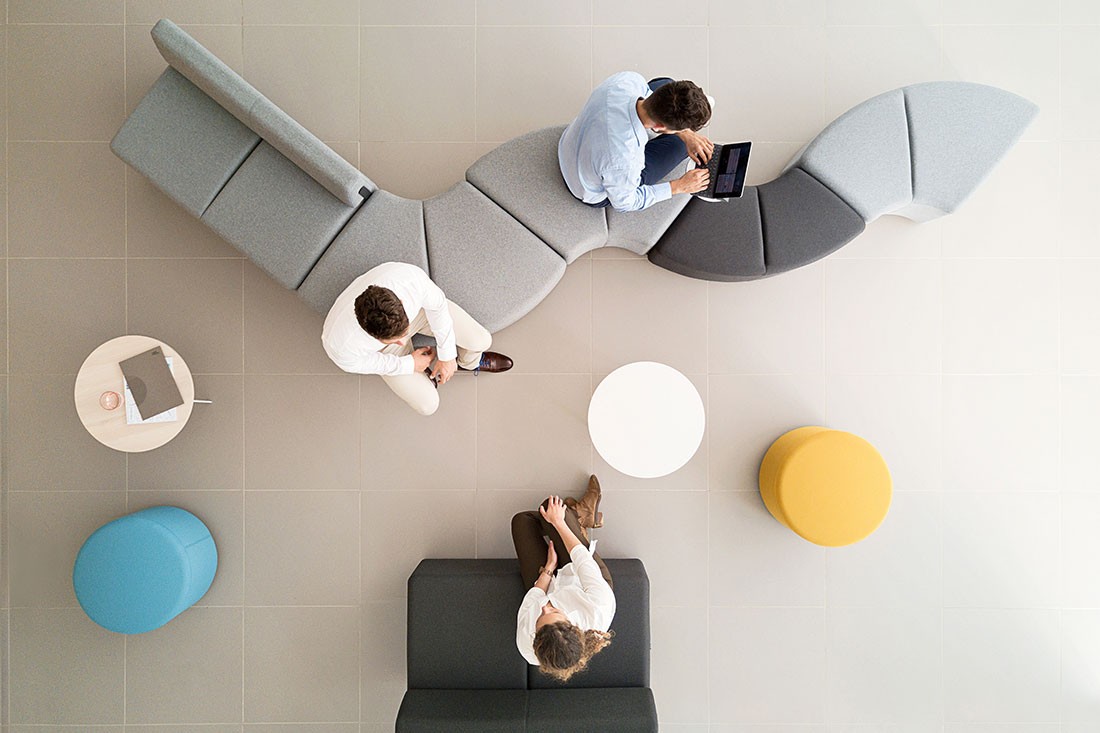
In the free whitepaper below, we explore how modular furniture addresses the concerns of the modern workplace, the changing nature of the workforce. Modular furniture solutions can be instrumental in providing a flexible, healthy and productive workspace for many types of uses and users.


Download your whitepaper for free, here:

This whitepaper is proudly presented by Business Interiors.

Related Articles

A new designer-led trade program takes the guesswork out of rug specification

Advertorials

A new designer-led trade program takes the guesswork out of rug specification

Developed by designers, for designers, Miss Amara Trade is the latest launch by leading Australian online rug specialists, Miss Amara. Working in partnership with designers, the trade program provides the expertise and tools to combat the pressures and uncertainty involved in specification.

From Our Partners
Shapeshifters of workplace design: a furniture brand providing flexibility across diverse design visions

Articles

Shapeshifters of workplace design: a furniture brand providing flexibility across diverse design visions

Today, workplace settings are fluid, ebbing and flowing between focus, informal discussion and collaboration. For this reason, versatility is at the core of Klaro Industrial Design’s perspective. Their designs continue to push the boundaries of what commercial furniture can offer, as demonstrated in a new collaboration between Klaro Industrial Design and Concept, a design and construction company focused on commercial interiors.

From Our Partners
Small Gestures, Distinctive Design: Inside Gaggenau’s Approach to Interaction

Articles

Small Gestures, Distinctive Design: Inside Gaggenau’s Approach to Interaction

With Gaggenau’s floating control ring, interaction and interface designer Soeren Strayle brings physical presence to the digital interface, finding room for precision and familiarity.

From Our Partners
Three conversations about the future of home

Articles

Three conversations about the future of home

What does the future of the home look like? And, perhaps more importantly, what should it feel like, how should it perform, and what should it leave behind?