A short stroll from Rome’s city gate, designed by Michelangelo, is the historic Via XX Settembre. Overlooking this grand street is Leon’s Place – a boutique hotel by Planetaria Hotels, which connects the Quirinale to Porta Pia.

An enchanting symphony of modern design, culture, and heritage, Leon’s Place is a result of the restoration and renovation of the historic Palazzo Fabi Altini. The hotel’s location reflects the design’s character: a curated combination of the old and the new. Situated between the historic Villa Borghese and ultra-modern Stazione Termini, Leon’s Place blends classic Italian architecture with revitalised modern touches.
Bringing a joyful abundance of colour, texture, and linearity to the restored Palazzo Fabi Altini is Italian furniture brand, Pedrali. The renowned brand brings their expertise in iconic design pieces to the hotel’s lounge area and breakfast room.

Nestled in a hand painted garden is the hotel’s lounge area, elevated with the Pedrali touch. The luxurious haven is the perfect space for sipping a drink on hot Summer days or having a coffee break while taking in the fairytale-like atmosphere.
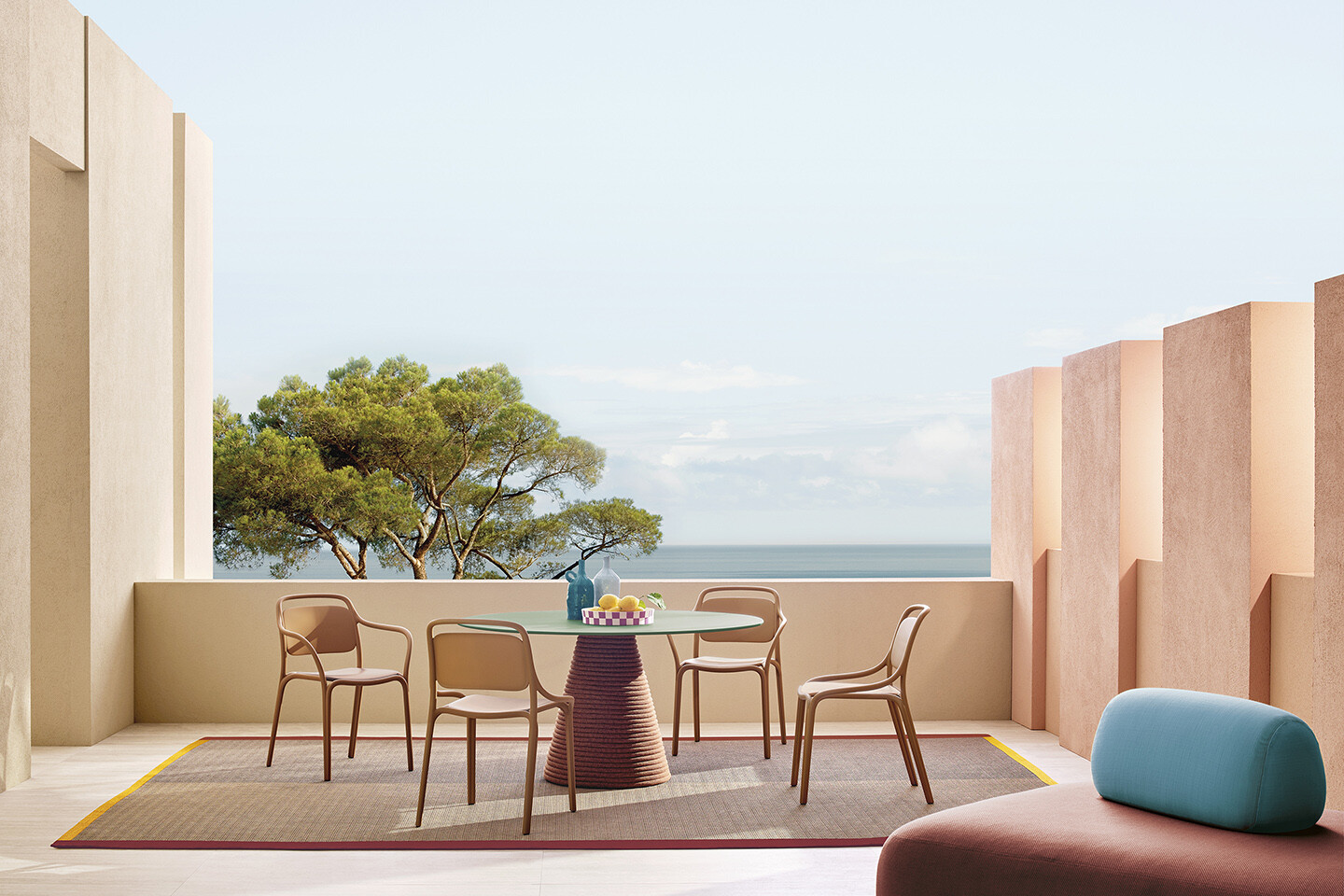
Like something from a dream, pastel pinks and blues surround the courtyard. The centrepiece is the hand-painted floor, with soft pink clouds floating across a cornflower blue sky. Here, the Tribeca Collection by CMP Design invites guests to relax in pure style.

A modern reinterpretation of classic Sixties patio chairs, Tribeca is the perfect balance of function and style. The collection features a sophisticated steel frame, combined with the durability and versatility of vertically woven plastic material to withstand exterior environments.
A subtle complement to the chairs are the Ikon tables by Pio and Tito Toso – spread across the courtyard in neutral colourways. The final touch on each table is the iconic Giravolta wireless lamp in a soft green. With a shape reminiscent of traditional lantern design, Giravolta is rendered in modern materials including a swivelling diffuser for ultimate control over the light’s direction.

Situated nearby in a more intimate, enclosed setting is the hotel’s breakfast room. A bespoke room of grandeur and contemporary detailing, bold marble flooring and a striking vaulted ceiling welcome the guests in for their morning meal. The elegant Jazz armchairs grace the space, with a harmony of sculptural profiles, enhanced by its upholstery in a bold, orange velvet on antique brass steel frame structures.
This antique brass tone also stars on the structural Inox tables. Soft textures of velvet are another theme in the space, dressing the Modus modular seatings along the walls in a soft green. Comfort is key here: Pedrali succeeded in retaining an elegant, classic luxury without compromising on the space’s functionality.

Leon’s Place is, above all else, a journey in itself. Whether guests use the hotel as a residence during their travels or a place to visit for refreshment and inspiration, Pedrali furnishings welcome them with a playful harmony of colours, shapes and textures.
With a philosophy of “100 per cent made in Italy” and a manufacturing process that blends tradition and innovation, Pedrali was the perfect partner for Leon’s Place. The contemporary furniture selections complement the luxurious and whimsical atmosphere Leon’s Place creates, making for an unforgettable stay.
Photos courtesy of Pedrali