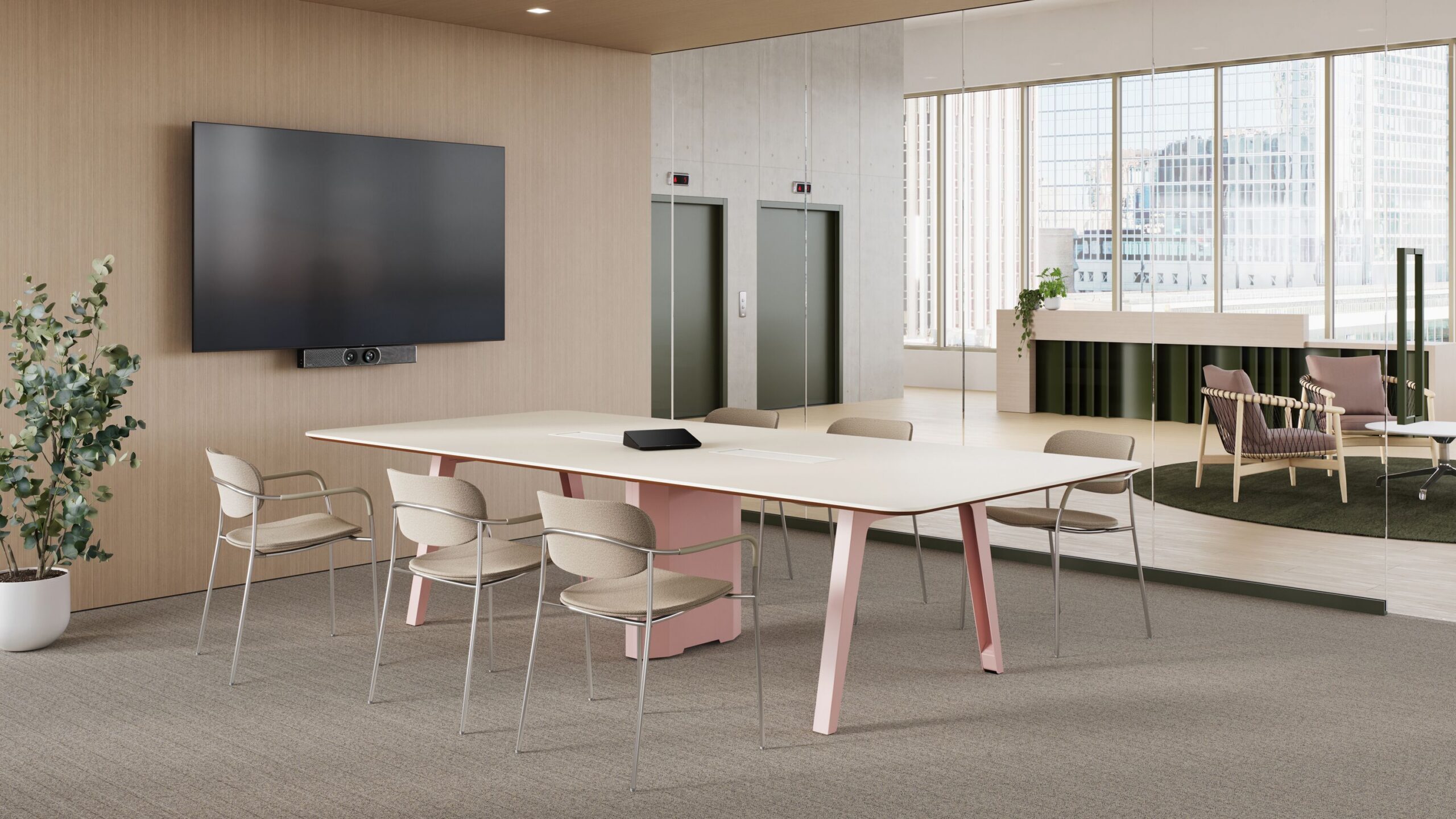
As digital tools become thoroughly embedded in every aspect of the modern workplace, maintaining a balance between aesthetics, comfort, functionality and form requires adroit design. Herman Miller is known for designing and manufacturing exceptional, ergonomic and elegant furniture for office environments, taking a human-centric approach that puts the nature of experience at the centre of design.
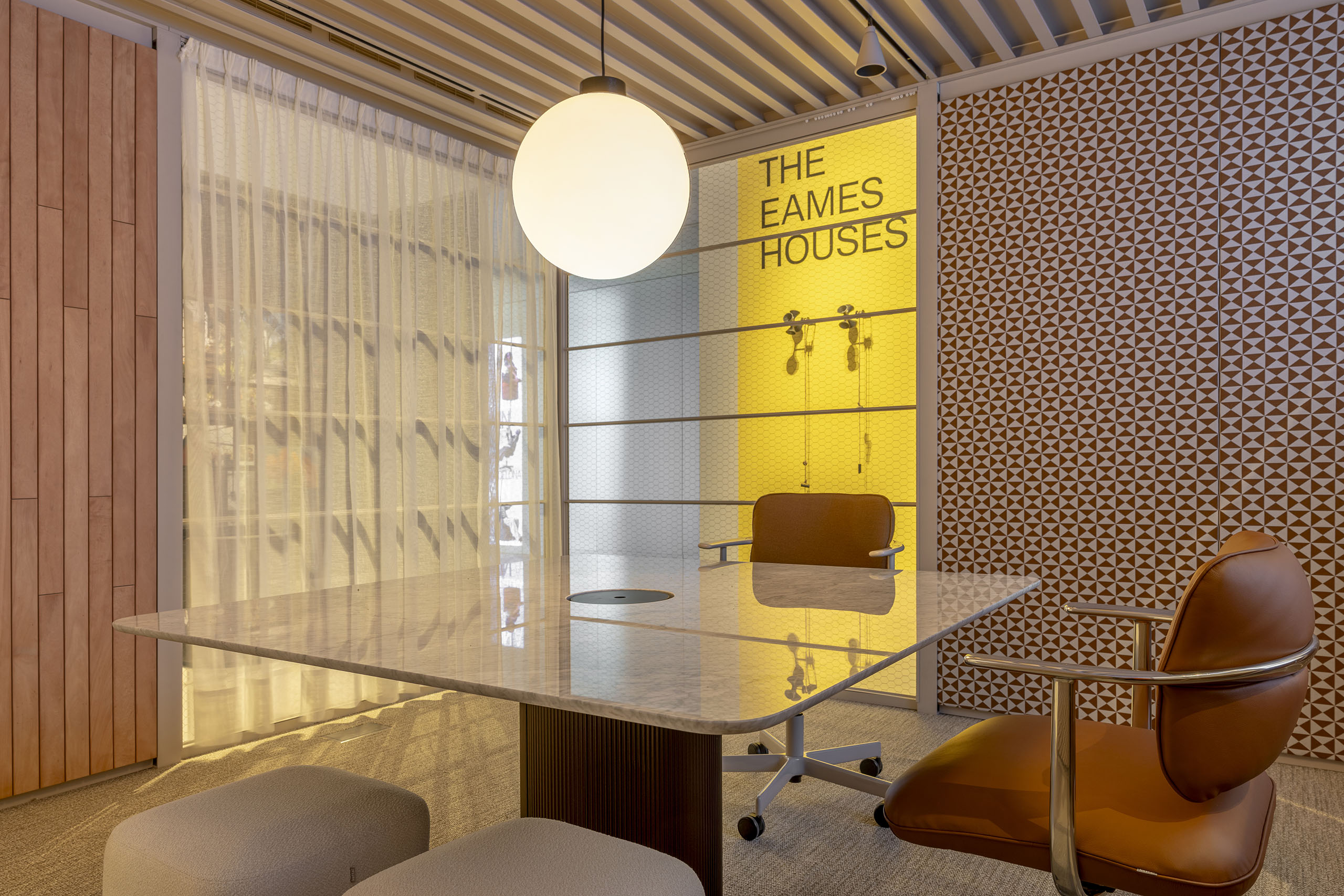
The newest release, the Byne Meeting Tables, is being introduced across Asia Pacific, the Middle East and Africa. It extends the Byne commercial workplace furniture range into the centre of the boardroom and other meeting and collaboration spaces.
For agile workplaces and those with hybrid teams, the use of technology in meetings including laptops, audio visual technology and other smart devices has become standard practice. This has resulted in a new design challenge – how to manage power and data cabling in such a way that the integrity of the interior design is maintained, and the plethora of cords and peripherals is managed in s seamless, safe and efficient way.
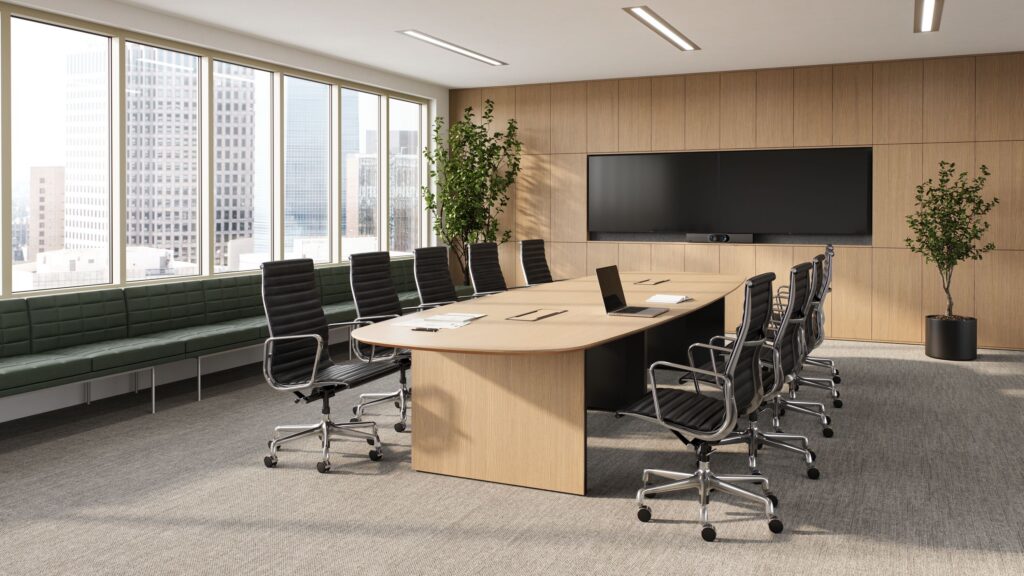
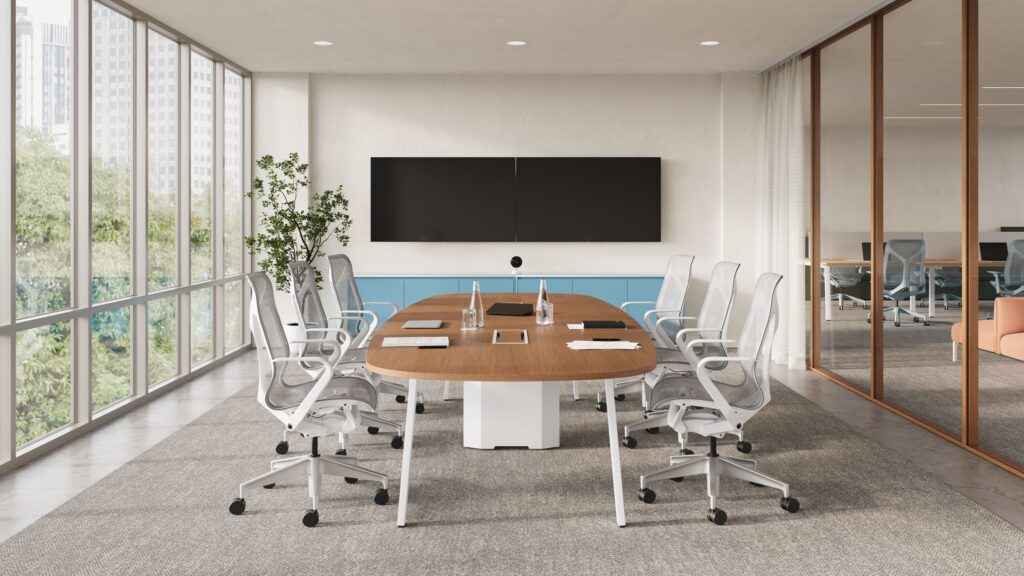
The Byne Meeting Tables range resolves this with a design that connects purpose, comfort, flexibility and functionality in an aesthetically cohesive manner.
On the visual level, Byne Tables suit a range of workstyles and scenarios, from more casual huddles and informal collaboration, through to structured, formal meetings with larger groups, in-house seminars or team training sessions.
Because the range incorporates scalable options, it is also possible to define a coherent interior language across a floorplate.
The larger rectangular and boat-shaped tables are available in sizes for up to 16 people comfortably seated. The rectangular form is familiar, efficient and suits a wide range of office design styles.
The boat-shaped table is a more democratic layout with improved sightlines and biophilic curves and lends itself to both in-person and video-enabled collaboration and discussion.
The key to the functionality is in the central riser or leg designs, with three options including a Bow Leg style, a Vertical Riser style and a Universal Centre Leg.
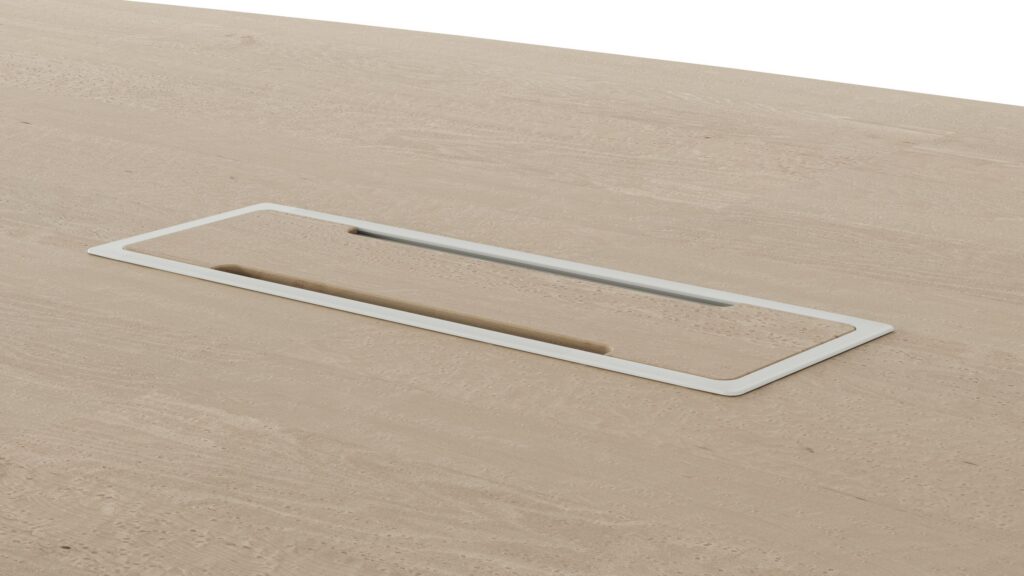
These hollow and elegant forms are designed to carry cables for power and data from an architectural designed outlet at floor level. They are partnered with cable trays, with two depths available, that enable multiple cords and cables to be safely contained. Then, there is the option for the tabletop to incorporate impeccably designed flippers that enable those seated at the table to connect to power, data, audio-visual and other cabling.
The table becomes the technology platform in an uncluttered, structured and user-friendly manner.
From a visual perspective, the Byne Table finishes are compatible with a diverse spectrum of finishes and interior palettes. Table tops can be specified in either premium timber veneers, melamine or high-pressure laminate (HPL), with either a rectangular edge or a chamfered edge for added elegance. The flippers that reveal power connections can be specified in a complementary veneer finish or a contrasting aluminium.
The legs are available in four styles including Bow, Imagine, layout Arena and Optimis. This range of styles enables architects and designers to coordinate the whole Byne Table visual identity to reflect the broader interior solution and ethos, whether that is a vibrant, airy feel, or a considered establishment aura. All the leg styles feature a durable, powder coat finish with a wide array of colours available to further complement the wider office finishes scheme.
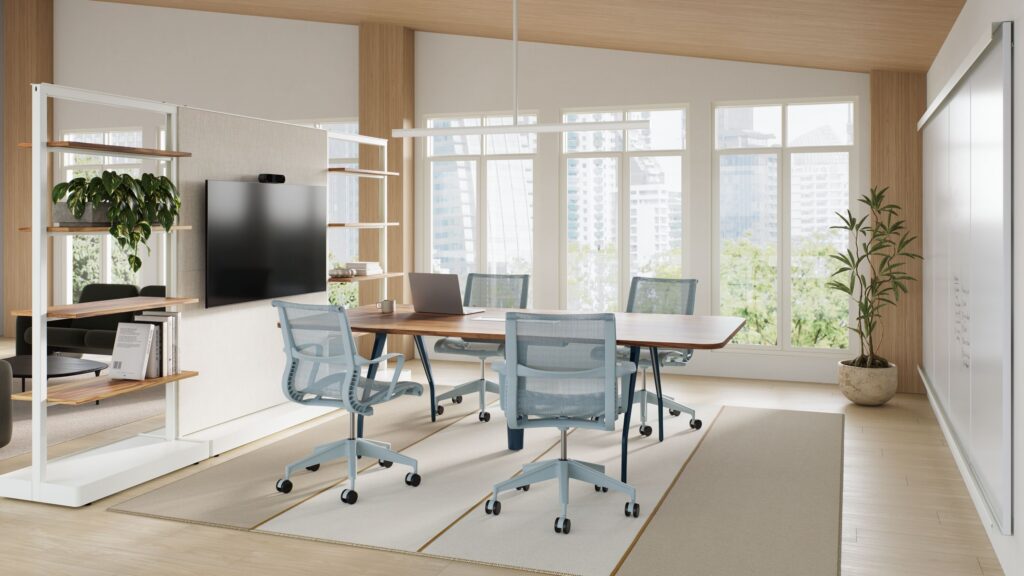
Having the capability to resolve the detailing at a granular level adds another dimension to the flexibility benefit for designers, while also enhancing the contribution the tables will make as a central, visual anchor in the office fit out.
As part of the Byne System by Herman Miller, they offer an exceptional extension to the system’s superbly executed solutions for the evolving needs of the modern workplace.