As part of the SpeakingOut! series for the 2026 INDE.Awards, Program Director Jan Henderson sits down with past winners, jury members and leading voices in design to unpack the thinking behind their work.
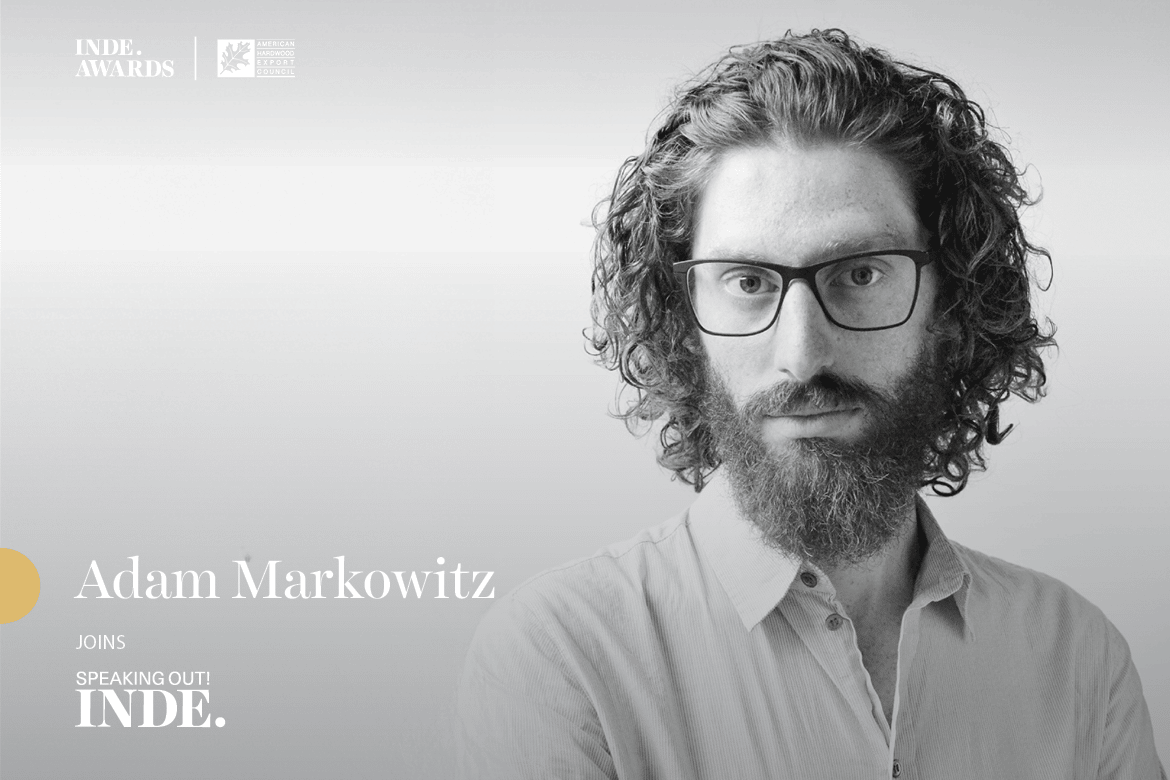
In this episode, proudly supported by the American Hardwood Export Council (AHEC), partner of The Object category, Henderson speaks with Adam Markowitz, an architect, designer and maker whose practice continues to challenge the boundaries between disciplines.
For Markowitz, the line between architecture and object-making is far more fluid than it might appear. Rather than treating them as separate pursuits, he approaches both as part of the same continuum, a dialogue between hand and mind. This perspective underpins his work, where design and craft are not distinct stages but an integrated process shaped by both thinking and making.
Trained as an architect, Markowitz has extended his practice beyond buildings into finely crafted objects that respond to space, light and use. His work reflects a strong engagement with materiality and a sensitivity to how objects sit within a broader spatial context. Collaboration plays a key role in this approach. Working closely with master craftsman Simeon Dux, he balances conceptual design with technical precision, drawing on deep expertise to realise complex ideas.
Markowitz’s journey into object-making began with a childhood woodworking program, Learning by Doing, but it was during university that his interest in making was reignited. After a short period working in architecture, he shifted direction, travelling to Tasmania to study furniture design and making. Further study in Denmark and the United States helped shape his craft, grounding it in both technical skill and a wider cultural perspective. While he stepped away from conventional practice, architecture remains embedded in his work.
A defining project is the ‘Cabinet of Curiosities’, created with Dux and winner of The Object at the 2025 INDE.Awards. Designed for a repeat client, the piece responds to a penthouse apartment in Melbourne. The brief called for a workstation that could be concealed when not in use, while also addressing privacy concerns from a neighbouring building.
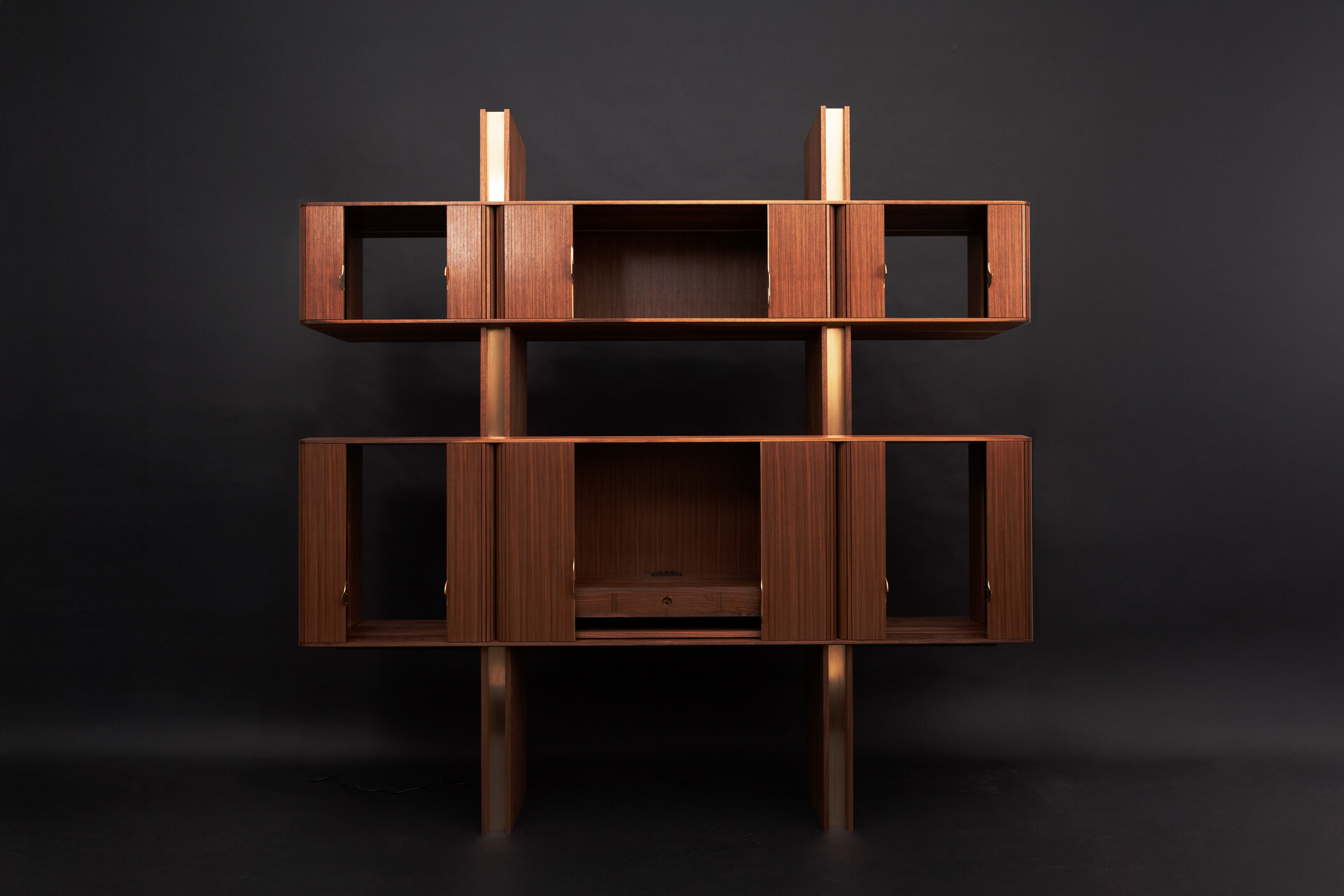
The resulting design operates as both furniture and architectural intervention. A system of bespoke tambour doors allows light to filter through while obscuring views, maintaining openness without compromising privacy. The piece balances practicality with refinement, resolving multiple spatial challenges within a single object.
Its execution required significant technical precision. The cabinet was designed to be fully disassembled to fit into a small elevator before being reassembled 35 floors above ground. Ensuring the smooth operation of the tambour system demanded exact alignment, highlighting the level of craftsmanship involved.
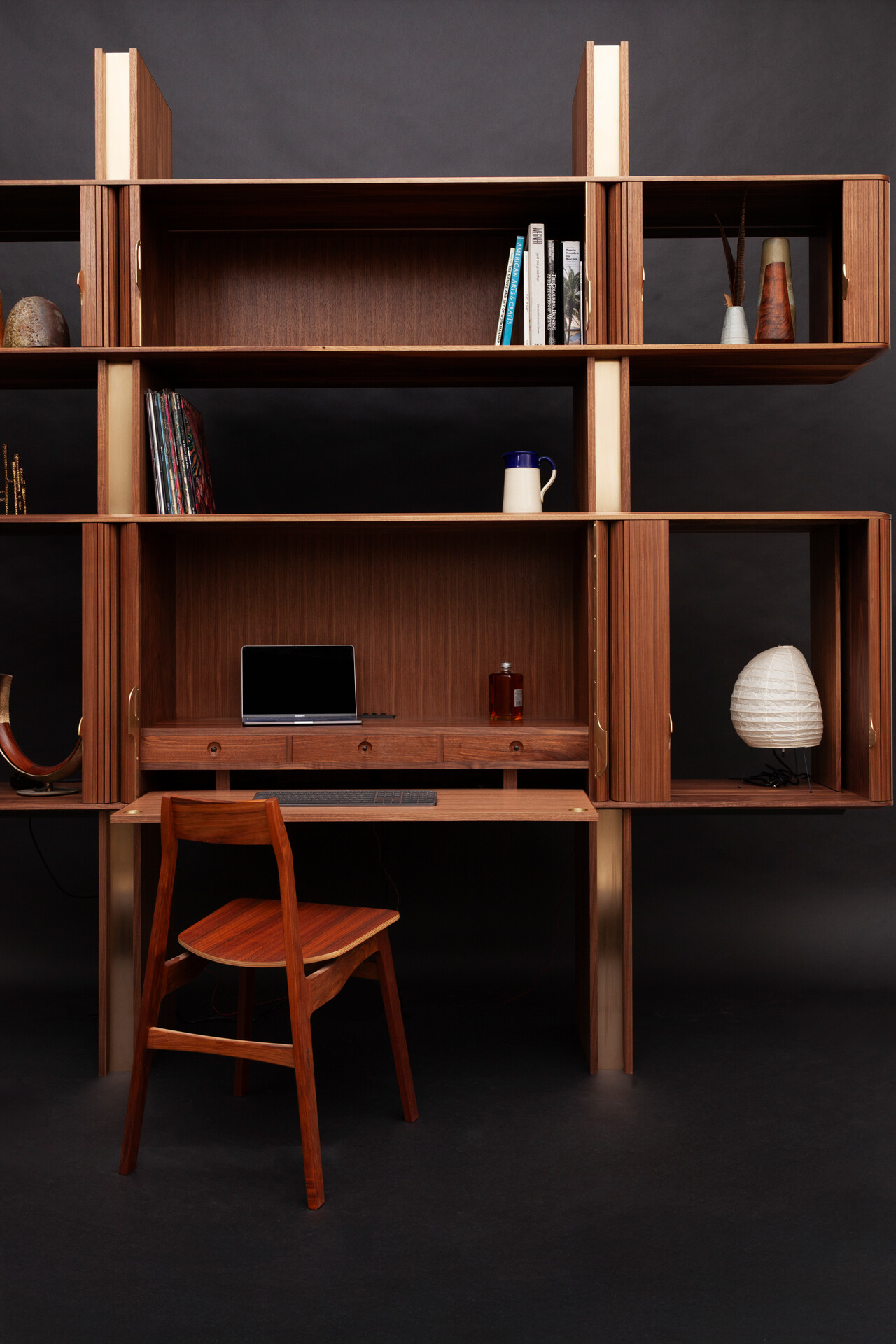
Materially, the use of American walnut introduces warmth and subtlety. Markowitz selected a restrained veneer, allowing the piece to integrate with the surrounding interior rather than dominate it. This approach reflects his broader philosophy, where objects are designed to support and enhance a space.
His work points to a wider shift within the design industry, with a renewed focus on craftsmanship, material understanding and more considered processes. Markowitz encourages emerging designers to prioritise skill development and to recognise that building a practice takes time. In contrast to fast-paced production, he advocates for patience, depth and authenticity.
By bridging architecture and object-making, Markowitz contributes to an evolving conversation about design across disciplines. His work demonstrates how carefully crafted objects can shape not only spaces, but the way they are experienced.
Thank you to Adam Markowitz for sharing his insights, and to the American Hardwood Export Council (AHEC) for supporting The Object category at the 2026 INDE.Awards.
To hear more, listen to the full SpeakingOut! Interview here. Entries to the 2026 INDE.Awards are now closed, with the shortlist to be announced in July.