The home of architecture and design in the Asia-Pacific
Get the latest design news direct to your inbox!

Get the latest design news direct to your inbox!
Cosentino has expanded the range of its XGloss line of Dekton surface finishes with a trio of new natural colours inspired by the earth.


Dekton by Cosentino, the innovative ultra-compact surface by the Cosentino Group, has expanded its range with the addition of three new lustrous colours to the Dekton XGloss line. Nature and natural stone serve as the inspiration points for the new range of Glacier, Fiord and Tundra finishes.
The XGloss range, an innovative line of polished high-tech ultra-compact surfaces, has always been characterised by dazzling, crystalline shine, and came into being first in February 2016, with a range of five colours, included in the Dekton XGloss Solid collection. The addition of Glacier, Fiord and Tundra to the range has given rise to a new collection, Dekton XGloss Natural, so named for the trio’s resemblance to the authenticity and magnificence only found in the colours and textures of natural stone.
Inspired by natural stone, Glacier displays a fine marbling of a golden colour on a white background. This is a lustrous proposal by virtue of its polished finish, and is an understated, subtle option, due to its remarkable colour.
The Fiord finish recaptures the beauty of the most luxurious cream tones of natural Onyx. Yellows, earthen colours and other intense tones make up the range of colours within Fiord, infusing it with a feeling of warmth and unmistakable nuance.
Inspired by natural stone, Tundra offers a white base with grey flecks running through it. Tundra, with its candid, authentic appearance, recreates the properties of marble, with its remarkable structure of veins, its sumptuous luminosity and its subtle white background.
The new shades posses each and every one of the properties of Dekton XGloss, achieved through advanced nanotechnology and mechanical polishing treatment, to produce a dazzling, crystalline shine, and unforgettably high levels of durability and strength.

Tundra
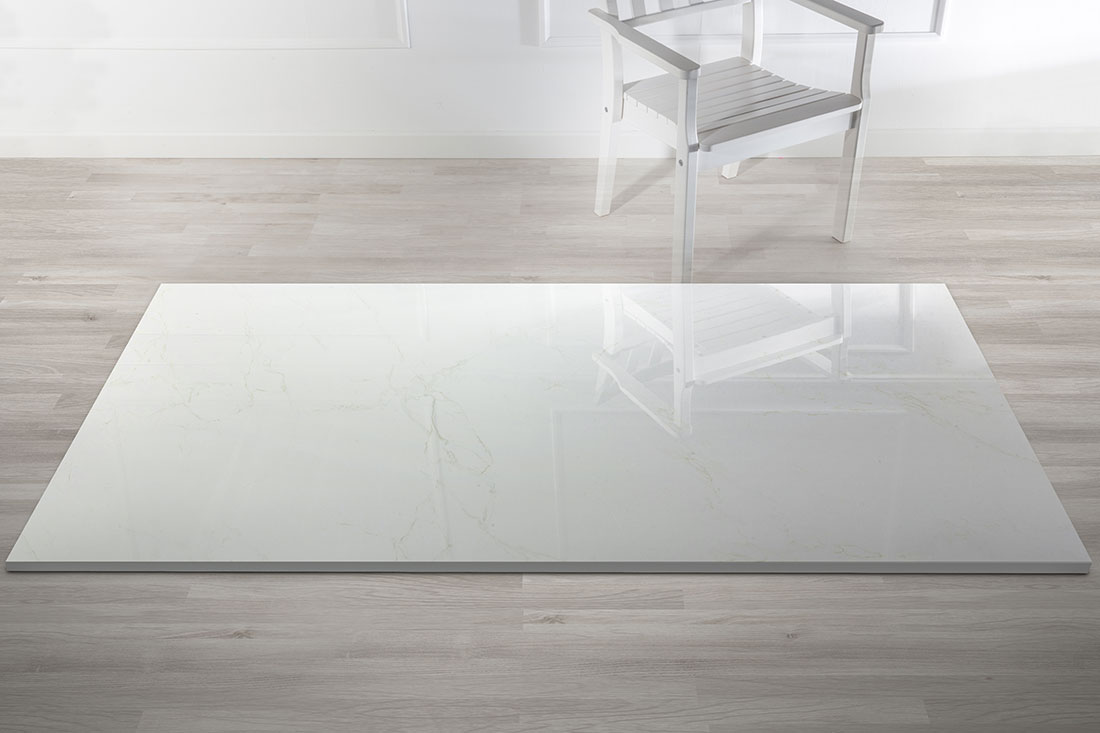
Glacier
 Fiord
Fiord
INDESIGN is on instagram
Follow @indesignlive
A searchable and comprehensive guide for specifying leading products and their suppliers
Keep up to date with the latest and greatest from our industry BFF's!
The internet never sleeps! Here's the stuff you might have missed