The home of architecture and design in the Asia-Pacific
Get the latest design news direct to your inbox!

Get the latest design news direct to your inbox!
Tongue and groove flooring is an innovative design which has allowed for much easier installations of the world’s most popular flooring materials.


November 4th, 2022
“Tongue and groove” is a type of floorboard joint which allows the boards to fit together seamlessly. Each plank made in the tongue and groove style will have a long and short edge – one with a tongue and one with a groove. The tongue slides into the groove of a second plank and the floorboards will fit together.
Tongue and groove flooring is a type of floating floor. Floating floors are pre-adhered flooring materials which are installed over the top of an underlayment or subfloor. They do not require nails or glue to be fixed into place, as they form a unit over the top of the original floor. You can install floating floors over the top of many different pre-existing floors such as concrete, vinyl, laminate, hardwood and even carpet. Tongue and groove is one of the most popular cuts of floating floor because it is so easy to install.
Tongue & groove flooring is the holy grail for a DIY-er. This is because it is cheap, readily available, comes in a variety of materials, and simple to install. Cleaning is easy and the groove can even be watertight when correctly installed, so you don’t need to worry about spills or water damage. There are a huge number of materials that you can purchase in the tongue and groove joint. The most common materials for tongue and groove floors are wood, laminate, vinyl, engineered timber, hybrid, and bamboo.
Tongue and groove is one of the two most popular floating floor joint systems. The click fit system is your other option. Some advantages that tongue and groove flooring has over the click system are:
However, tongue and groove flooring is not perfect. Some of the disadvantages to tongue and groove flooring are:
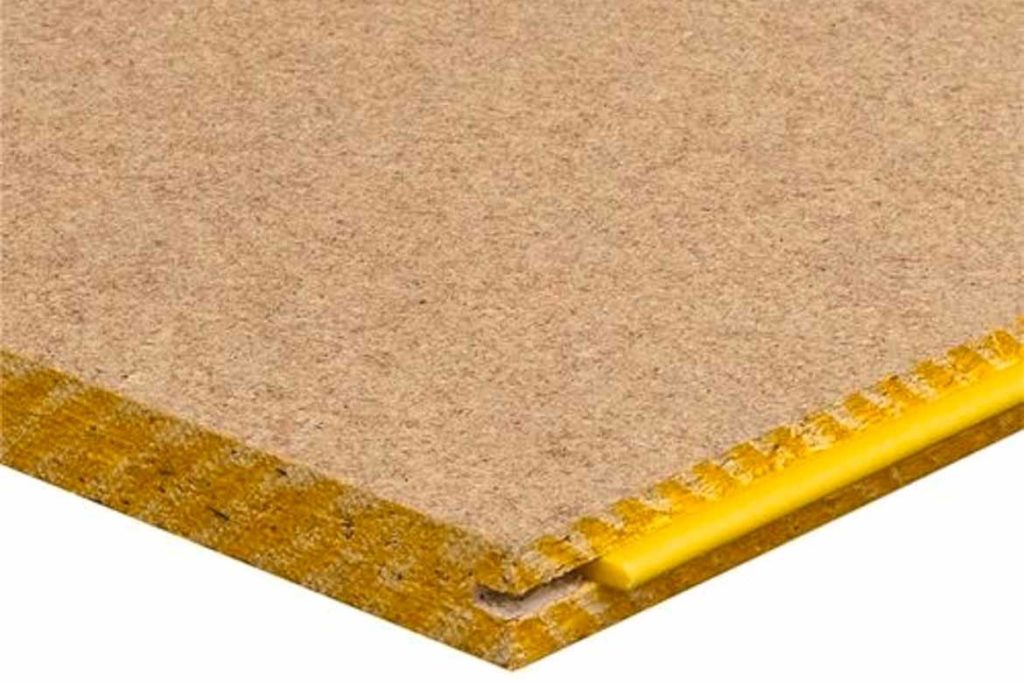
Particleboard flooring is an affordable classic that has many uses in domestic and residential buildings across Australia. The tongue and groove particleboards pictured above are available from Bunnings for $51.40. They are particularly well suited to platform construction and can serve as a sub floor as well as fitted floor construction.

Cypress is one of the most affordable timbers around the world. It is extremely popular in Australia for its lightweight constitution and durability. You can purchase planks of the cypress tongue and groove timber pictured above here from Blacktown Building Supplies for $8.20 per metre.

Jarrah is a native Australian hardwood similar to merbau known for durability and its deep red-brown colour. It is an extremely sought after material due to the high demand across the globe and the general need for sustainable timber collection. You can purchase tongue and groove Jarrah planks here from Blacktown Building Supplies for $15.22 per metre.

Plywood is a durable material which is used for both structural and non-structural flooring. You can purchase the colour coded PVC tongue and groove plywood boards pictured above here from Plyco for $87.06.

Blackbutt timber is another native Australian favourite, used for flooring from Brisbane to Perth. You can purchase the engineered Blackbutt flooring pictured above here for $178 per square metre.

Spotted gum is another Australian classic. Purchase the quality T&G spotted gum timber pictured above here from timber floors online for $115-$152.

Parquet is a gorgeous type of engineered timber floor that comes in a variety of repeating geometric patterns. The most common parquet flooring is herringbone, such as the floor pictured above.
Concrete is a straightforward subfloor that is easy to work with if you use the tongue and groove floating floor system. This will also make sure that the floor is durable for years to come as it will prevent the pooling of moisture.
Laying tongue and groove flooring on joists is a pretty common task for older houses. You will have to take great care to make sure that the floor does not become squeaky. Your best bet would be to hire a professional if you are not experienced yourself. This will ensure the longevity of your floors.
INDESIGN is on instagram
Follow @indesignlive
A searchable and comprehensive guide for specifying leading products and their suppliers
Keep up to date with the latest and greatest from our industry BFF's!
Following five years of collaboration, i2C has formally joined forces with Ryder Architecture to form Ryder Alliance. Ryder Alliance includes i2C in Australia, Ryder Architecture in the UK, Hong Kong and like-minded firms across Europe.
The internet never sleeps! Here's the stuff you might have missed