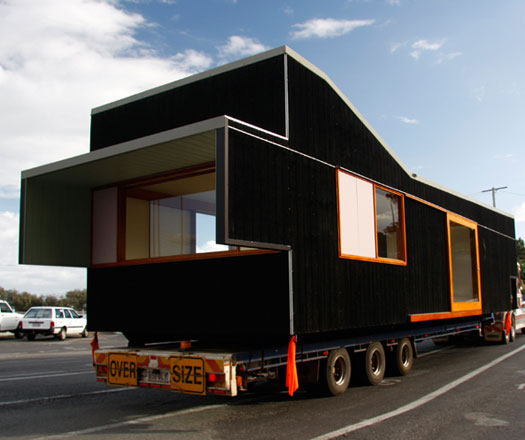
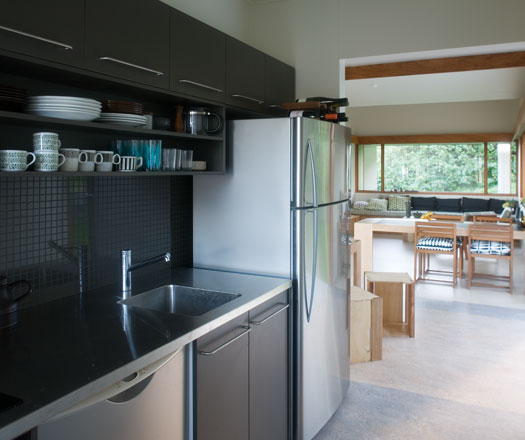
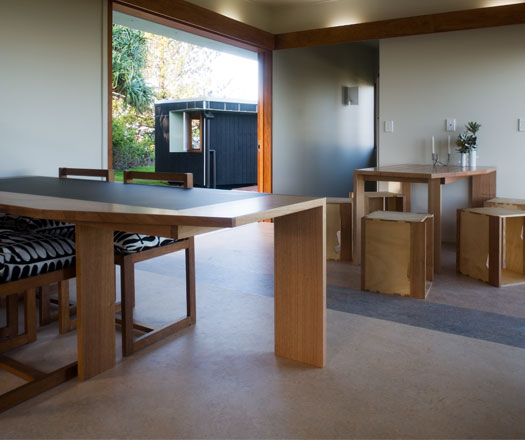
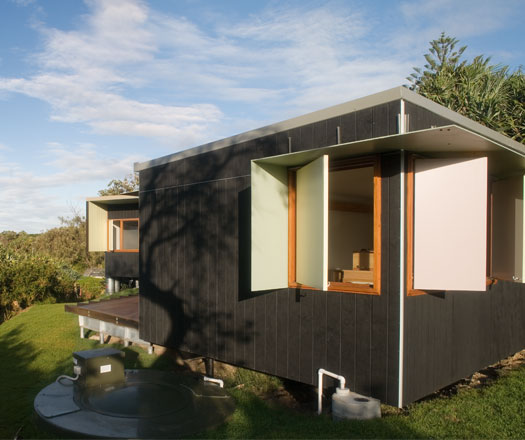
Happy Haus Dhan, by Donovan Hill, is the first in a series modernising Queensland’s love-affair with transportable housing.
July 8th, 2010
You may think the Europeans and Americans have cornered the market in smart transportable housing (think weeHouse, m-ch, or the Loftcube, amongst others).
But as architect Brian Donovan points out, Queenslanders have been doing it for years. You only have to head up the Bruce Highway north of Brisbane to see battalions of preloved houses stationed on the landscape, patiently awaiting new owners and new locations.
Many were assembled from essentially prefabricated parts. Lifting them off their stumps and moving them on has always been part of the program. The fundamental expediency of the region’s historical housing stock melds well with current philosophies informing sustainability and adaptability.
Donovan Hill considered the idea of pre-made houses long and hard before embarking on a new venture with entrepreneur and developer Toby Lewis. The result is Happy Haus, a series of architect-designed houses which roll off a factory conveyor belt south of Brisbane 99% complete, then head to their chosen locations on the back of a truck.
“I realised when I built my own house that there had to be a better way,” says Lewis. “It was so time consuming and the budget kept blowing out. There was such an obvious need in the market for smarter, cheaper housing delivered in a more efficient way.”
For the full text turn to page 156 of Indesign #41 on newsstands now.
INDESIGN is on instagram
Follow @indesignlive
A searchable and comprehensive guide for specifying leading products and their suppliers
Keep up to date with the latest and greatest from our industry BFF's!
In the last instalment of our three-part performance seating series, Alex Bain from Architectus explains why sitting well shouldn’t feel like sitting at all and explores an unexpected success metric of the hybrid workplace: the grounding power of emotional support.
In the second instalment of our performance seating three-parter, we turn to DKO’s Michael Drescher and Jacob Olsen to peek behind Sayl’s confident architectural form and explore the ideas of inclusivity, adaptability and freedom to move as hallmarks of what sitting your best actually means.
The newest brand to emerge from Cosentino’s creative crucible is Ēclos, a next-generation mineral surface that embodies the organic beauty and tactility of marble in a precision-mineral surface or material.
The Geelong College’s Sport and Wellbeing Centre ‘Belerren’ designed by Wardle is designed around bringing in natural light. But Shade Factor’s job was to help modulate and precisely control it for the most important competitive moments.
A creative concept designed by Odosdesign to convey Actiu’s “Cool Working” philosophy has been awarded the prestigious Red Dot Award: ‘Communication Design 2017’ in the Corporate Publishing category.
BLP’s Orygen and OYH Parkville offers a worldclass case study for the role can buildings play in alleviating feelings of loneliness and elevating mental health.
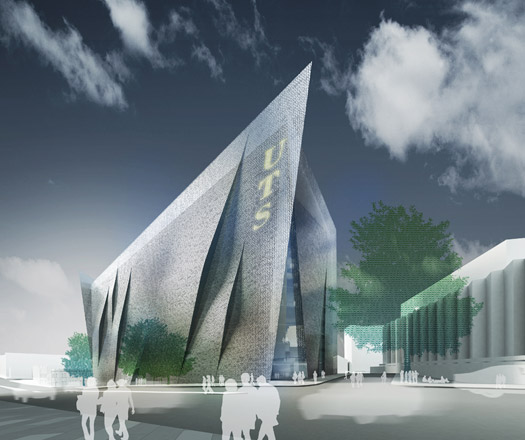
The University of Technology Sydney has announced the winning design for new Broadway Campus building.
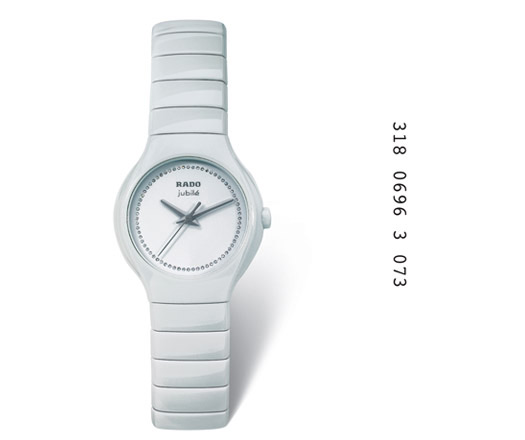
White and round, stand out piece from the traditional RADO collection. Entirely white ceramic, exuding a milky light and decorated with diamonds Dimensions: Comes in 2 sizes Delivery time: February / March Applications: Hypoallergenic Variations: Diamonds and Sports versions Finish: Polished Ceramic
The internet never sleeps! Here's the stuff you might have missed

The renowned American architect stopped by to record a STORIESINDESIGN episode with Timothy Alouani-Roby, delving into his philosophies of design and the landscapes that inspire his work.
With a plethora of talks, installations, exhibitions and happenings responding to this year’s theme (Design The World You Want), the eleven-day festival was the largest to date and arguably the most accomplished since inception.
The Geelong College’s Sport and Wellbeing Centre ‘Belerren’ designed by Wardle is designed around bringing in natural light. But Shade Factor’s job was to help modulate and precisely control it for the most important competitive moments.