The home of architecture and design in the Asia-Pacific
Get the latest design news direct to your inbox!

Get the latest design news direct to your inbox!
Inspired by the historically rich surroundings and traditional craftsmanship, interior design firm FBEYE International mixes nostalgia and contemporary influences in the interior renovation of InterContinental Singapore. Olha Romaniuk writes.
May 19th, 2016
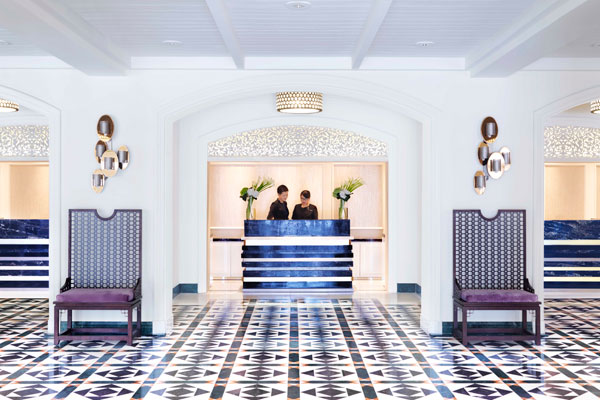
Top image: Lobby
Images courtesy of InterContinental Singapore
Situated in the vicinity of historic districts such as Kampong Glam, Arab Street, Chinatown and Little India, InterContinental Singapore, established in 1995, has recently unveiled its brand new look, revealing the newly transformed interior spaces inspired by the rich heritage and culture of the surrounding neighbourhoods. With the extensive five-year renovation project undertaken by interior design consultancy FBEYE International, the hotel’s refreshed spaces embrace their multicultural context, striking a balance between the old and the new and infusing local flavour into the international hotel brand’s Singapore location.
“The history of the venue plays a large part in the hotel’s lifespan, so we wanted to enhance and bring in more elements to make the design a talking point between the staff and guests as they interact,” explains Warren Foster-Brown, Managing Director of FBEYE International.

Concierge Lounge
To achieve a design that balances the aspects of old and new luxury within the context of modern day Singapore, the team at FBEYE International sought inspiration from the local and colonial architecture of old Singapore and incorporated bespoke details and décor elements into the public spaces, restaurants and guest rooms of the hotel. Within the hotel’s interiors, FBEYE International carefully mixed British, Peranakan and Chinese influences, creating a harmony of textures and colours for a strong unifying theme.
From the moment one steps into the hotel lobby, the experiential journey to Singapore of the bygone era begins. There is a strong correlation between the hotel’s exterior façade, with its architectural forms derived from the iconic Singapore shophouses, and the interior of the lobby, fashioned after a traditional living room in a Peranakan house. Within the lobby, the mix of vibrant colours that evoke Peranakan undertones reinforces the stately architectural features of the space.

Presidential Suite
The guest rooms of InterContinental Singapore strengthen the design essence of the hotel through a careful blend of contemporary luxuries and historical references. FBEYE International selectively used traditional fabrication techniques, like block-printing to create Peranakan-inspired motifs for the padded silk covering on custom headboards above the beds, while choosing more contemporary surface treatments in white, gold, and duck egg blue tones to strike a balance between the old and the new within the culturally inspired rooms.
“The existing architecture of the guest rooms and suites presented an advantageous opportunity for us,” says Foster-Brown. “As we tried to elevate the level of heritage influences in the guest rooms and, at the same time, add a touch of modernity, we were able to retain a key design element – pillars that were reminiscent of the Colonial influence.”

Lobby Lounge
Similarly, the design of the dining establishments at InterContinental Singapore embraces the heritage setting of the hotel. The Lobby Lounge features colonial pillars, whitewashed and juxtaposed with traditional furniture pieces and contemporary lounge chairs. Coloured tiles with traditional laser-cut motifs commonly used in Peranakan houses line the bases of the pillars, while the ceiling treatment stands out with a contemporary interpretation of the Peranakan tile motifs developed from a laser cut-out.
Throughout the spaces, bespoke and custom-made furniture pieces and décor components come together cohesively to evoke a sense of time and timelessness at once. Artworks by Gladys Chow that combine Chinese motifs with a contemporary minimalist approach line the walls of the guest room corridors, while the patterns on bespoke carpets take references from a common symbol of peace – a phoenix – and readapt the recognisable motif in a contemporary way.
For the FBEYE International design team, retaining and emphasising the historical essence of InterContinental Singapore was a continuous mission that drove the design to a cohesive final result, despite the diverse functions and requirements of the hotel’s spaces. “From the guest rooms to the public spaces, heritage is expressed in the essence of the hotel, be it in the colours, artwork, fabrics and architectural details,” explains Foster-Brown. “It would have been all too easy to get rid of everything and start afresh with a modern concept, but InterContinental Singapore is one-of-a-kind and we wanted to retain that sense of place within the Garden City.”
FBEYE International
f-b-eye.com

Executive Suite

Executive Suite, living area

Presidential Suite, living area

Ash & Elm restaurant
INDESIGN is on instagram
Follow @indesignlive
A searchable and comprehensive guide for specifying leading products and their suppliers
Keep up to date with the latest and greatest from our industry BFF's!
The internet never sleeps! Here's the stuff you might have missed