The home of architecture and design in the Asia-Pacific
Get the latest design news direct to your inbox!

Get the latest design news direct to your inbox!
The winners of this year’s SIA-GETZ Architecture Prize for Emergent Architecture in Asia, Sonali and Manit Rastogi, tell us more about how they are making a difference within India’s diverse architectural landscape.

May 29th, 2014
From a tiny room above a garage 18 years ago, Sonali and Manit Rastogi’s Indian architecture firm Morphogenesis has grown into a 100-strong team with numerous awards to their name, and a diverse project portfolio across India and around the region.
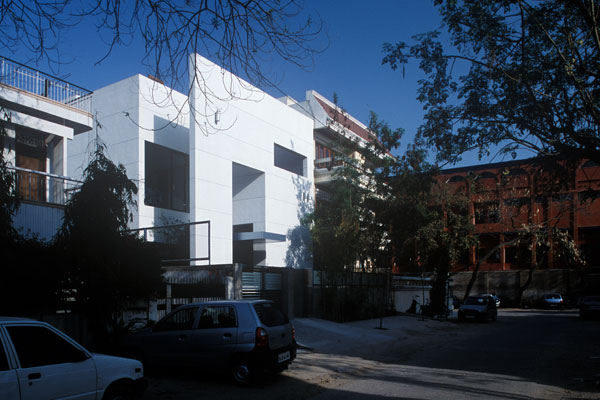
House 1
Those expecting to see a preoccupation with glitzy, flamboyant buildings will find that the firm’s work is instead firmly rooted in the culture, and the climatic, social and economic conditions of India. As Theodore Chan, President of the Singapore Institute of Architecture (SIA) puts it at the media briefing in Singapore to announce the pair’s win of this year’s SIA-GETZ Architecture Prize for Emergent Architecture Asia, “They [Sonali and Manit] have held steadfast to their belief that the duty of the architect is to build quality spaces contributing back to the community, [while] using as little energy as possible and responding to the environment.”
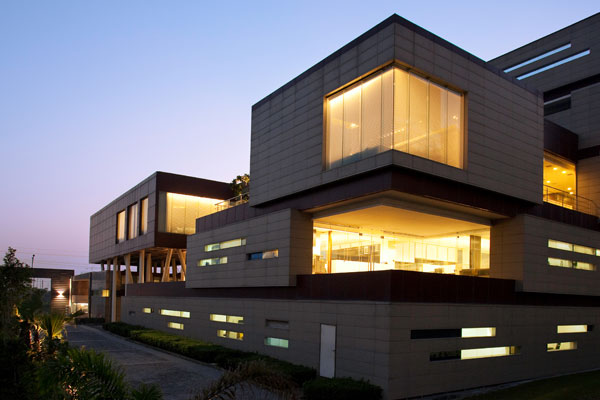
India Glycols
Sonali and Manit studied Architecture at The School of Planning and Architecture in Delhi, before heading to the Architectural Association School of Architecture (AA) in London. After several years away, they made the decision to return to India, at a time when the nation was undergoing big change.
“We were becoming a different kind of people, a different kind of economy, [one that was] opening up to the world,” recalls Sonali. “There were also lots of different types of Indians emerging. And to set ourselves within that environment was very exciting, with a lot of different opportunities to explore all the ideas that we’ve been bombarded with, that we’ve worked upon, as well as combining that with our history, our culture, our heritage.”
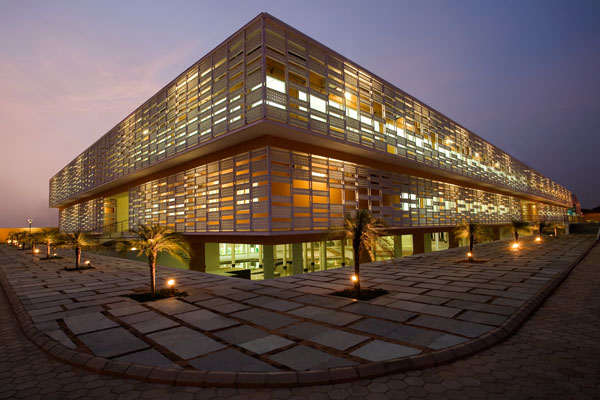
Pearl Academy
For the couple, a sustainable approach became the only logical way by which to engage in architecture in India. This was, as Manit says, before the words ‘green’ and ‘sustainability’ had become common buzzwords.
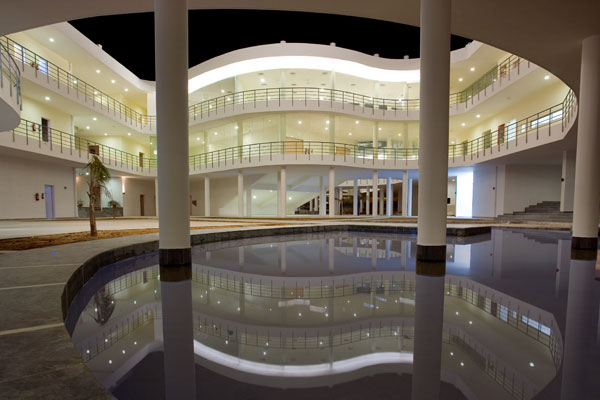
Pearl Academy
Manit points to one of their first projects, the Pearl Academy of Fashion in Jaipur, as a defining moment for the firm. He recounts, “We never actually told the client that we designing a sustainable building. The client said he wanted it to cost $30 per square foot. We set about solving that problem and eventually created it at that price point. It was 46 degrees outside and 29 degrees inside, without air-conditioning.”
“We came up with the idea that a good, sustainable building is about the fact that it must be cheaper to build, not only cheaper to run. It’s not about an ROI.”
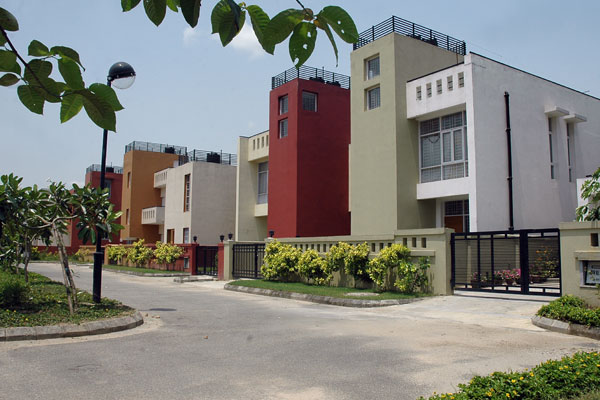
The Uttorayon Township
Which leads to The Uttorayon Township in Suliguri, another notable project where the brief was to build each house on no more than 200sqm of land, and for a selling price of USD$5,000. Here, simple, ecological solutions were used to tackle complex urban planning issues. As Manit says, “The entire infrastructure of the master planning of that project was built in a way that was entirely responsive to how water moves and how energy moves.”
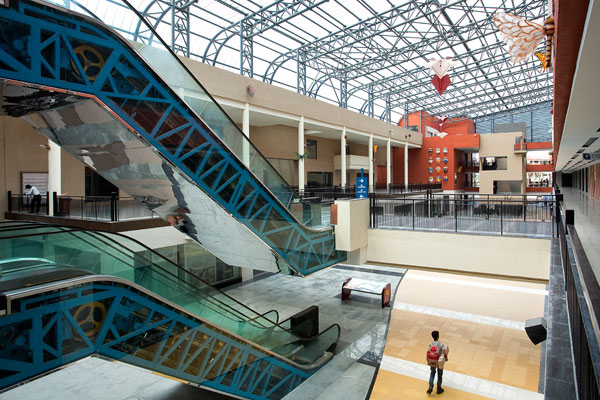
The Uttorayon Township
A third significant, and ongoing project is the campus for Infosys Ltd in Mihan, Nagpur, which is being designed to house 60,000 people. As Manit states, “For 20,000 people we’re at net zero on energy, water and waste to landfill.”
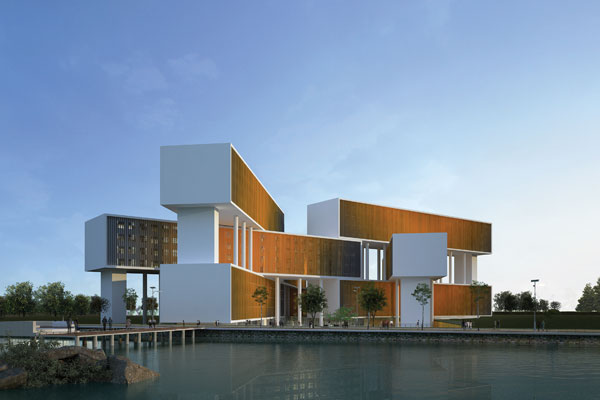
Infosys Ltd
“And that’s doable,” he continues. “The whole argument on density is actually not entirely correct… there are solutions on both micro and macro levels. And it’s the same fundamental [approach]: follow the process, not the product… Cities are the leftover of human activity. Don’t try to design the city, design the process by which people will inhabit the city and interact with each other.”
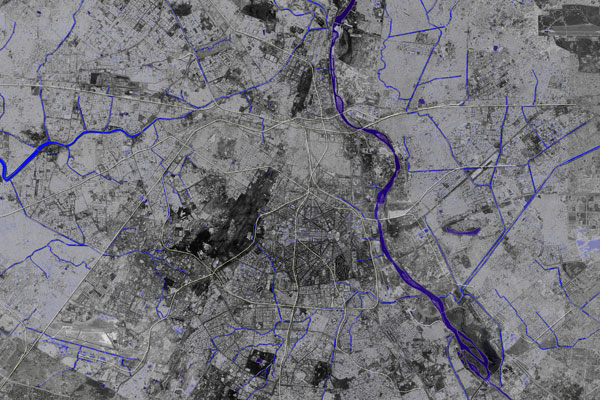
Delhi’s nullah network
In Delhi, Morphogenesis’ proposal to transform the city’s complex 350km-long nullah network (drains) could potentially have far-reaching effects. The plan, which includes an implementation of an organic water treatment system, green walkways and cycling tracks has already been passed in government – no mean feat considering the city has around 82 different planning bodies, all of whom “do not talk to each other” says Manit.
“Hopefully they will implement it now as they said they would. If that happens we would have brought 82 [bodies] to the same table in a broad collective. That’s the real idea.
Coming back to the SIA-GETZ award, the couple says that they are particularly elated to be receiving this accolade. “We’ve won many awards in the past, but all of them have been for a project. [When] you give it to that one building, [you’re giving it to] an object, but when you give it to a body of work you recognise the process. And it’s that single-minded pursuit of that process that is far more important. The buildings will come along the way, but building that process, I think is the most crucial part.”
Morphogenesis
morphogenesis.org
INDESIGN is on instagram
Follow @indesignlive
A searchable and comprehensive guide for specifying leading products and their suppliers
Keep up to date with the latest and greatest from our industry BFF's!
The internet never sleeps! Here's the stuff you might have missed