The home of architecture and design in the Asia-Pacific
Get the latest design news direct to your inbox!

Get the latest design news direct to your inbox!
Elana Castle gains an insight into a ground-breaking exhibition now showing at the Casula Powerhouse Museum.
August 1st, 2013
CUSP: Designing into the Next Decade, currently showing at the Casula Powerhouse Museum, features the work of twelve visionary Australian designers invited by invited by Object Gallery to contribute their individual design-related visions for the future.
Reflecting on the previous decade of Object’s creative program, director Steven Pozel developed a curatorial basis for an exhibition that would present a series of human-centred, investigative design approaches that supersede the scope of beauty, utility and aesthetics.
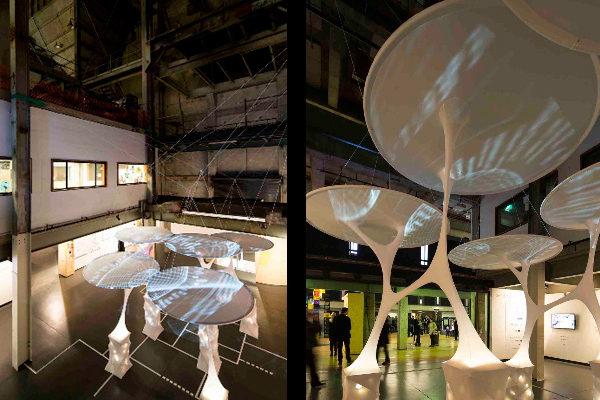
“We were asked to contribute our visions for the future, ideas that could change the way we inhabit the world,” explains Chris Bosse, co-founder of Lava. “The exhibition is a glimpse of things to come.”
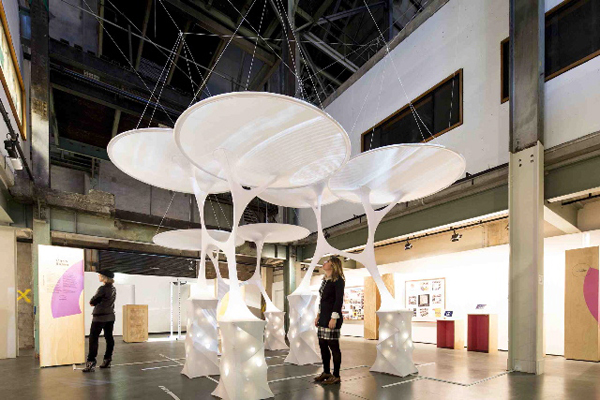
Bosse’s contribution, “Cloud City”, is a soaring, stretched membrane-cloud that is anchored to the ‘city’ by high-rise towers that have been “re-skinned and revitalised”.
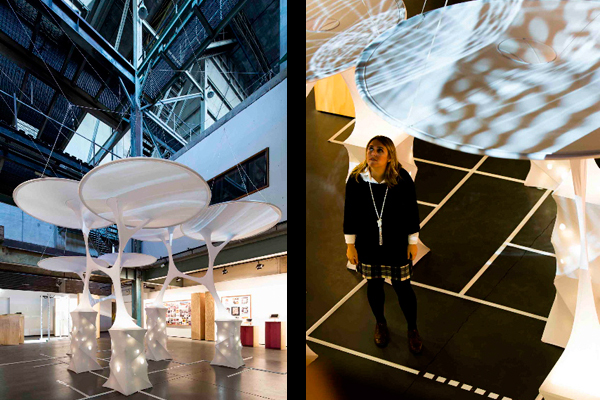
“The installation represents Lava’s concept for a future city, “explains Bosse. “The critical idea is that the future is not about what buildings look like, but how they perform, interact and how they connect with each other. The networked city is a connected, inter-dependent organism where buildings are not singular structural entities (designed, serviced and accessed as isolated units), but part of large networked system. A distributed cloud communicates, shares smart building technology, joint infrastructure, connectivity and data transfer allowing transport, housing and urban infrastructure to adapt in response.”
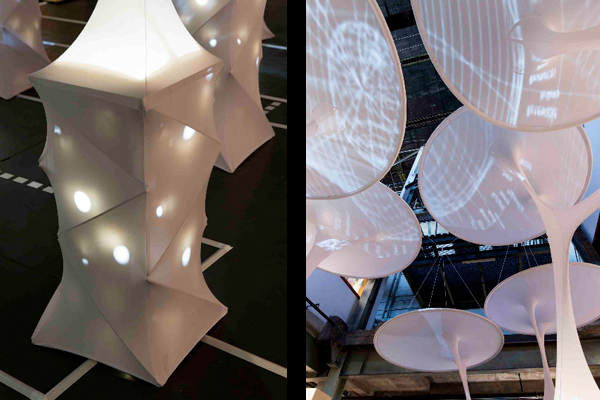
In essence, Bosse’s installation poses a critical question: can cities of the future be organisms that respond and adapt to their environment? “I hope people will think about the society we live in today and how architecture should respond, “adds Bosse. “I hope that they understand that you sometimes have to break with the past to be ready for the future.”
CUSP
LAVA
INDESIGN is on instagram
Follow @indesignlive
A searchable and comprehensive guide for specifying leading products and their suppliers
Keep up to date with the latest and greatest from our industry BFF's!
The internet never sleeps! Here's the stuff you might have missed