The home of architecture and design in the Asia-Pacific
Get the latest design news direct to your inbox!

Get the latest design news direct to your inbox!
With technology on the move, the pressure on designers to consider online retail is growing. But how does it stack up against experiencing products in person?
July 22nd, 2014
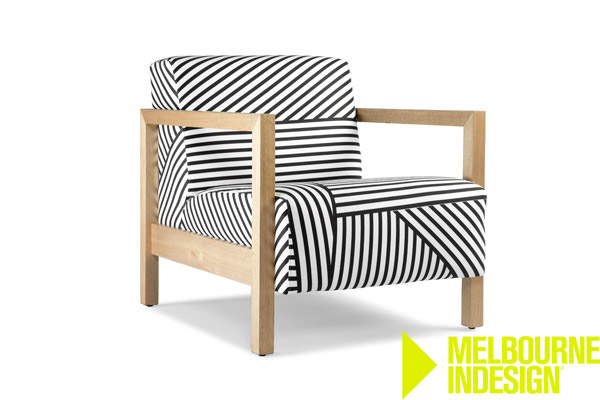
(Above: Arthur G ‘Max Chair’)
“Technology is just a tool,” Bill Gates once famously quoted, and the function of a tool is of course predicated on the needs of the user. While the benefit of a digital presence for any business is undeniable, a ‘one size fits all’ mentality does not effectively exploit the potential of the tool.
The Australian design industry is somewhat divided on this issue, specifically the online integration of an eCommerce network– or ‘buy it now’ option.
For those unfamiliar with the principle of eCommerce, it is, in essence, an online transaction space where products can be purchased directly from a brand’s website without the need to enter the bricks and mortar store.
This technology, while advantageous for some, does not meet the needs of all enterprises, and has led many designers and suppliers to re-evaluate their digital strategy to accommodate this trend in some form.
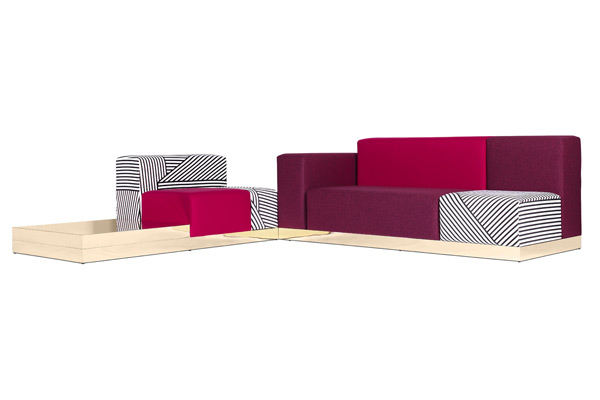
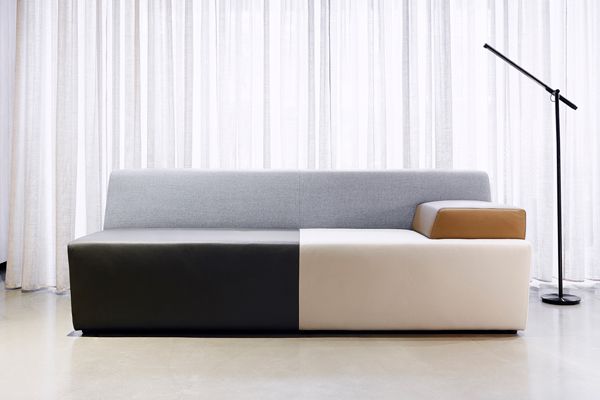
Arthur G Modular Couches
Here, Melbourne-based designer Ross Gardam suggests that online retail is far from resolved, and plays no role in the structure of his business. Initially, Gardam’s aim was to integrate an online presence so as to engage his target consumers. “I spent a lot of time researching and planning the way my website was going to interact with people prior to going online,” says Gardam. “The aim was to create a website for specifiers, architects and designers to obtain essential information.”
To this end the website includes downloadable 3D and 2D models, high-resolution images and PDF product information sheets, and while these functions are certainly beneficial for his brand, the pressure to ‘keep-up’ with this digital existence has prompted Gardam to re-interpret the trend to better suit the needs of his business.
Gardam explains: “There is not a ‘buy now’ button, however there is an ‘enquire now’ button. I respond to enquiries personally as there is usually a level of customisation required or a level of engagement prior to purchase. As to how this impacts my brand it could be argued that not having pricing creates a more exclusive offer, however there are more practical reasons behind the decision.”
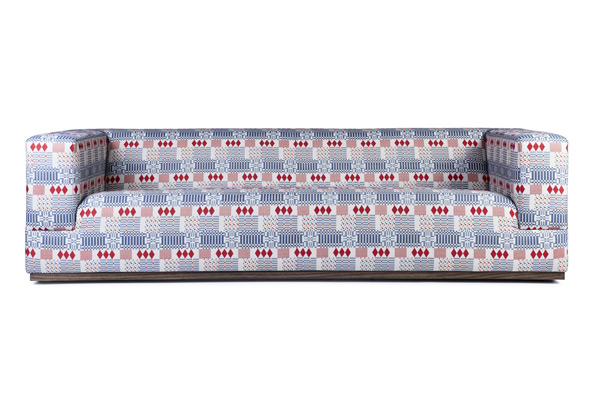
Arthur G ‘Luka’ Couch
For Gardam, his reluctance to bow to the eCommerce trend stems from understanding the needs of his market. “The reason I have avoided doing this to date, is I don’t believe people want to purchase my products instantaneously, there is typically a dialogue prior to purchasing and a timeframe involved as all the lighting is handmade locally by local artisans to order.”
And Gardam is not alone here – Australian supplier Arthur G has also developed it’s digital strategy around the absence of a ‘buy it now’ option or even product pricing details. Arthur G’s director Leonard Georgopoulos explains that: “our products and brands are positioned at the high-end of the market, and are considered as big-ticketed items. When purchasing a tangible product like ours, we’ve found that most people would rather come in and touch, feel and test the product before purchasing.”
In fact, celebrating this idea is the renewed prominence of design symposiums, which allow designers and consumers to interact and experience products on the ground. As for designers such as Arthur G and Ross Gardam, their participation in experiential events such as the upcoming Melbourne Indesign reflect an ongoing commitment to a more dynamic approach of design commerce.
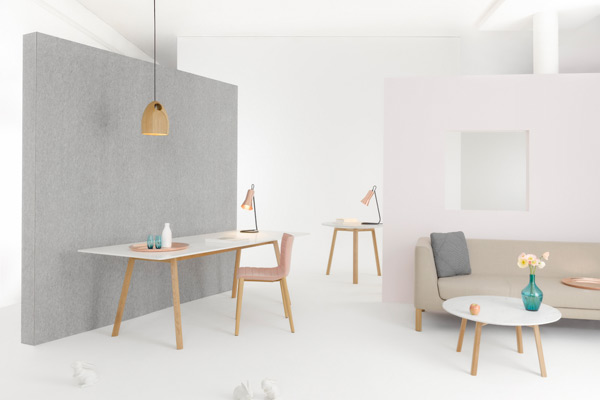
Ross Gardam Tailored Collection
In the case of Melbourne Indesign, exhibitors are encouraged to display not only their products, but their personality, culture, and energy – a direction which Gardam explains is fundamental to the high end design market.
“I agree that the industry is moving in the eCommerce direction for residential sales, however, I don’t think things will change dramatically in the short term for commercial market,” he says. “Architects, designers and specifiers still require showrooms to interact with product, coupled with a highly informative online presence,” explains Gardam.
Every industry and market is different. The high-end furniture market has not yet reached the point where online retail is essential – yet it has still continued to innovate beyond traditional means of showcasing furniture. In doing so, the presence of forward thinking brands in the digital age does not follow a simple formula, but chooses to analyse and respond to the niches in the market which make it unique.
Read the full published article in DQ 52
For more coverage of Melbourne Indesign 2014 visit: indesignlive.com/category/articles/in-review/mid-2014
INDESIGN is on instagram
Follow @indesignlive
A searchable and comprehensive guide for specifying leading products and their suppliers
Keep up to date with the latest and greatest from our industry BFF's!
The internet never sleeps! Here's the stuff you might have missed