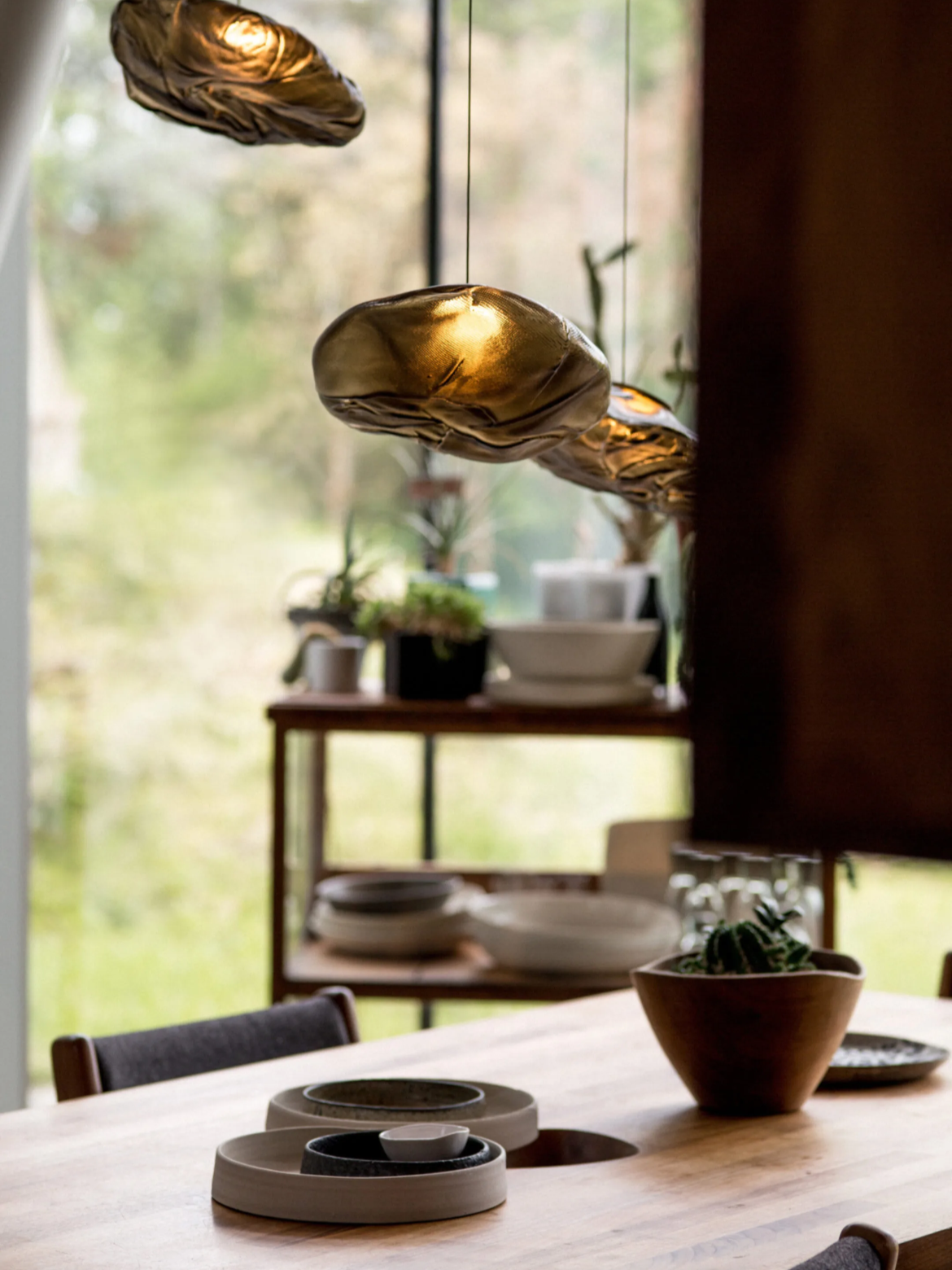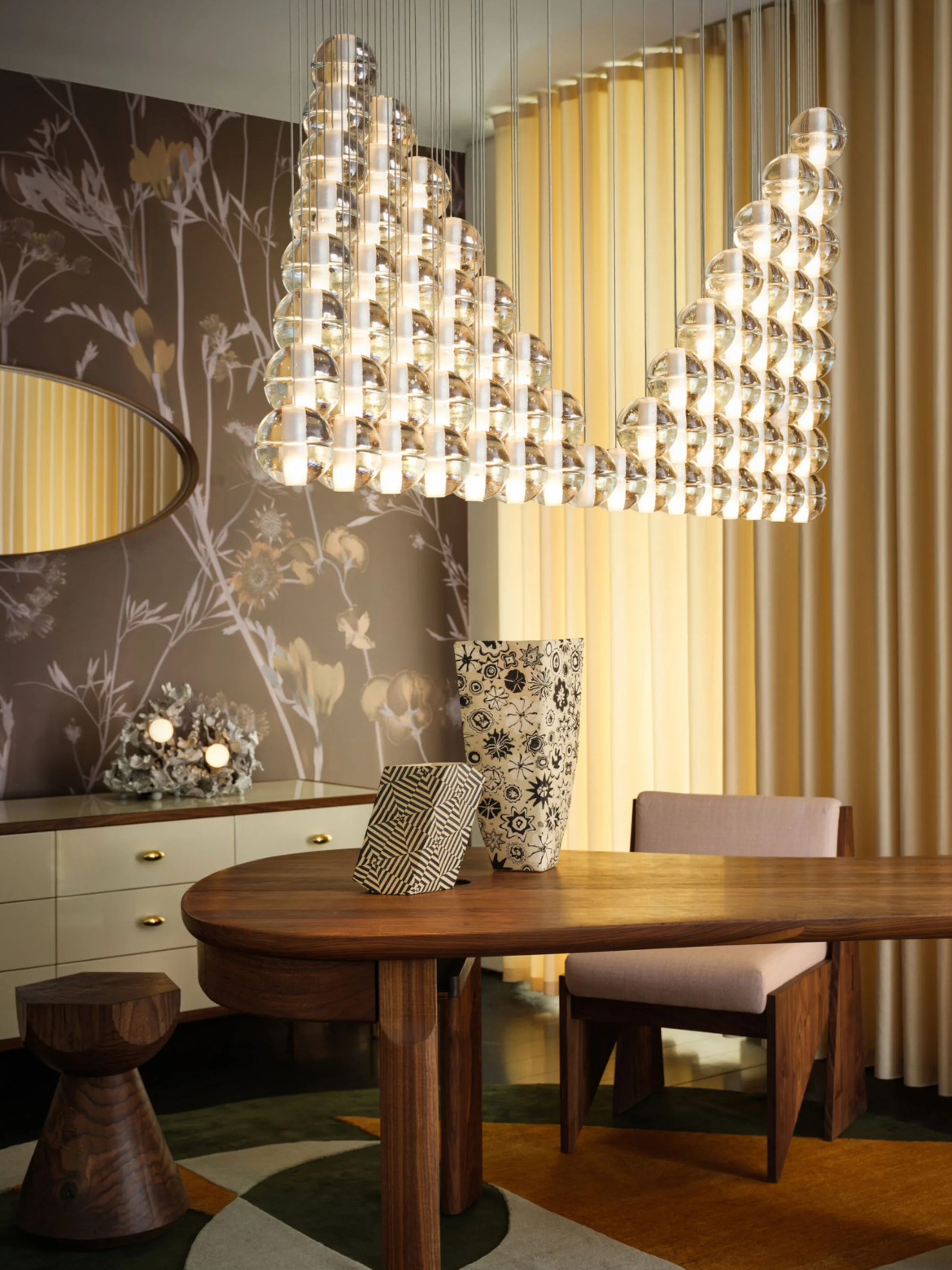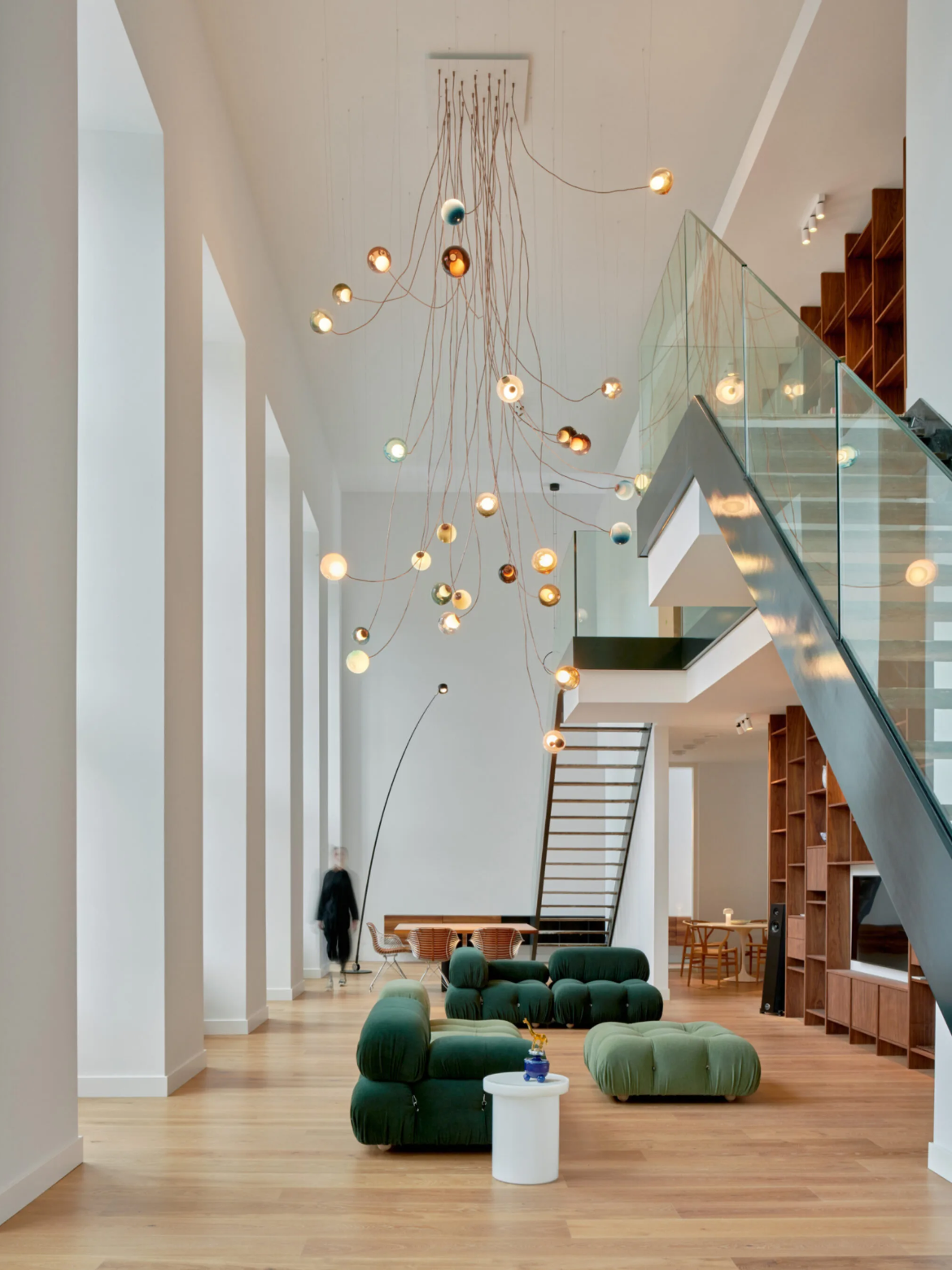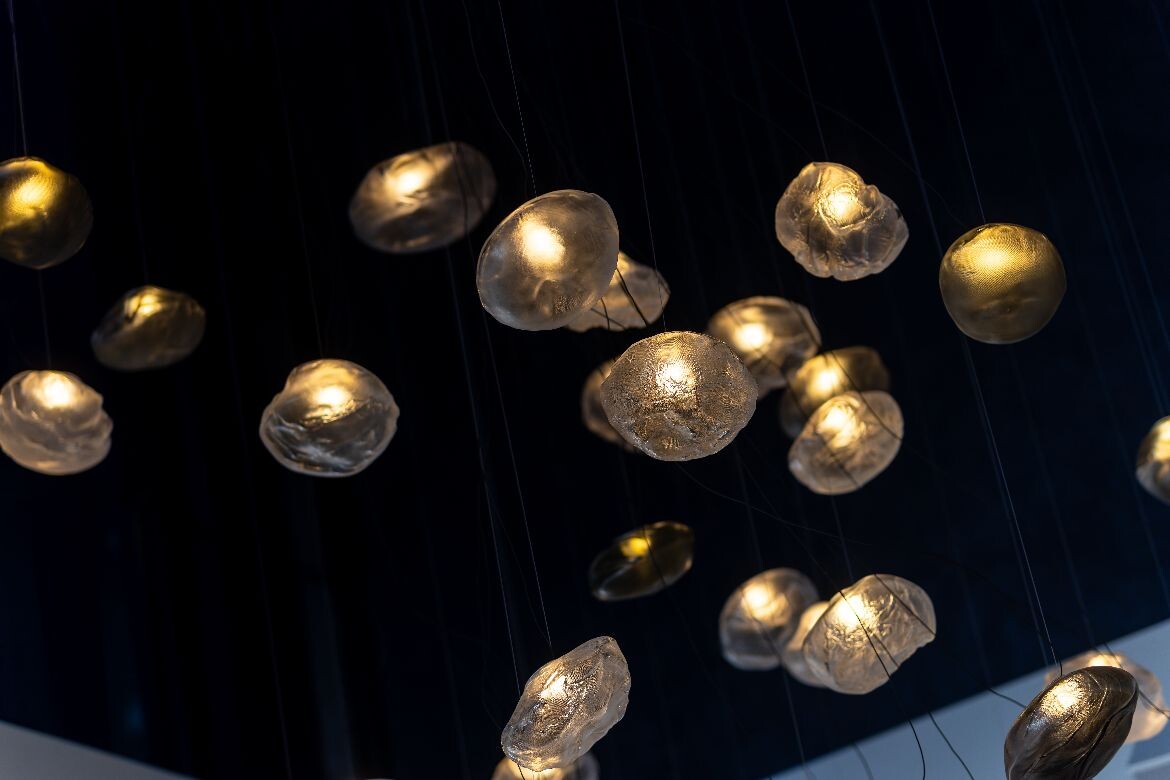
At the Gold Coast’s Blowfish Ocean Grill, a dramatic lighting installation transforms dining into theatre. Bocci’s Series 73 pendant lights cascade across the restaurant interior in a shimmering bloom that resembles a swarm of jellyfish suspended mid-current, and it exemplifies how Space Furniture brings some of the world’s most inventive lighting systems into local projects of every scale.
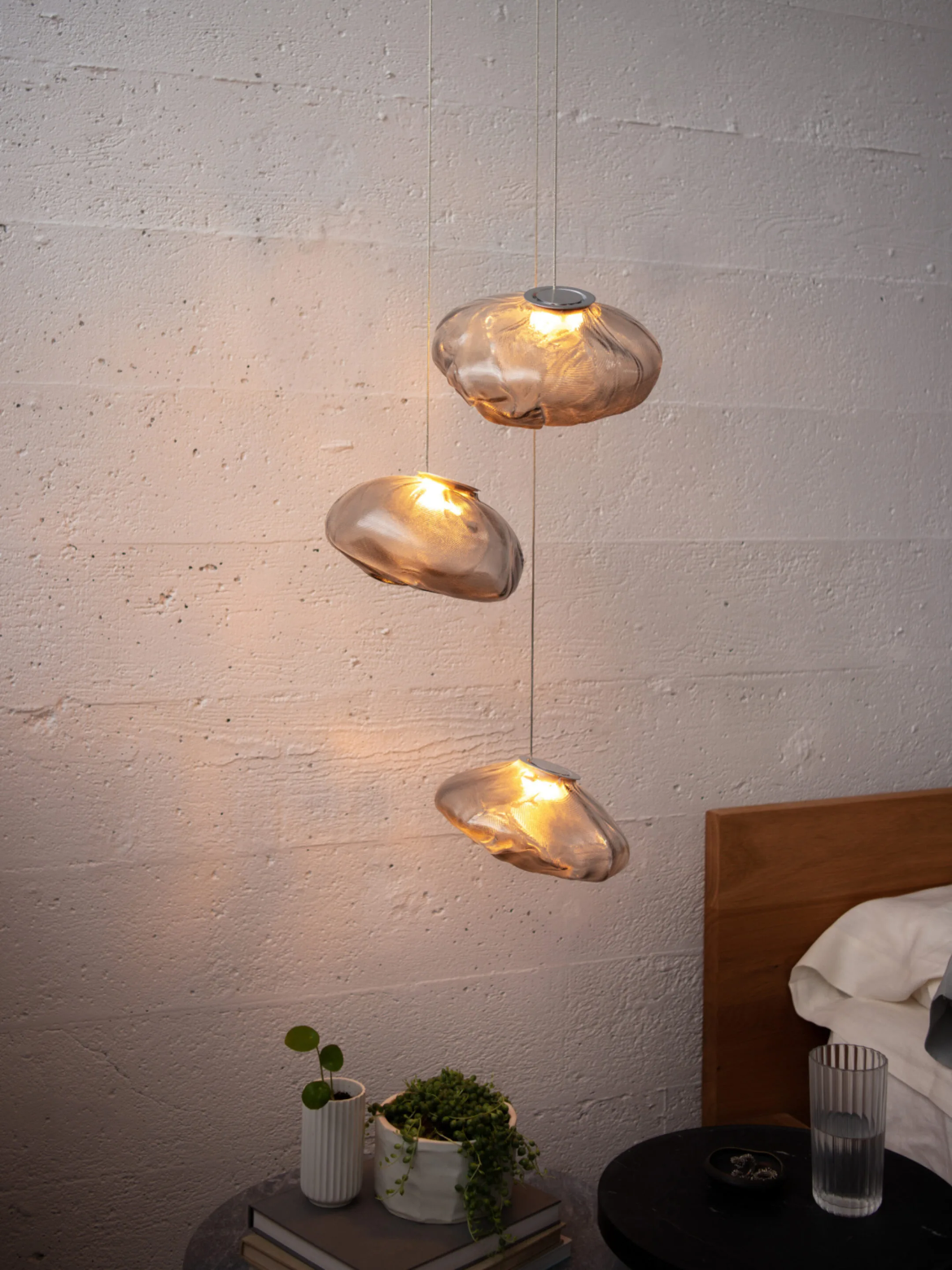
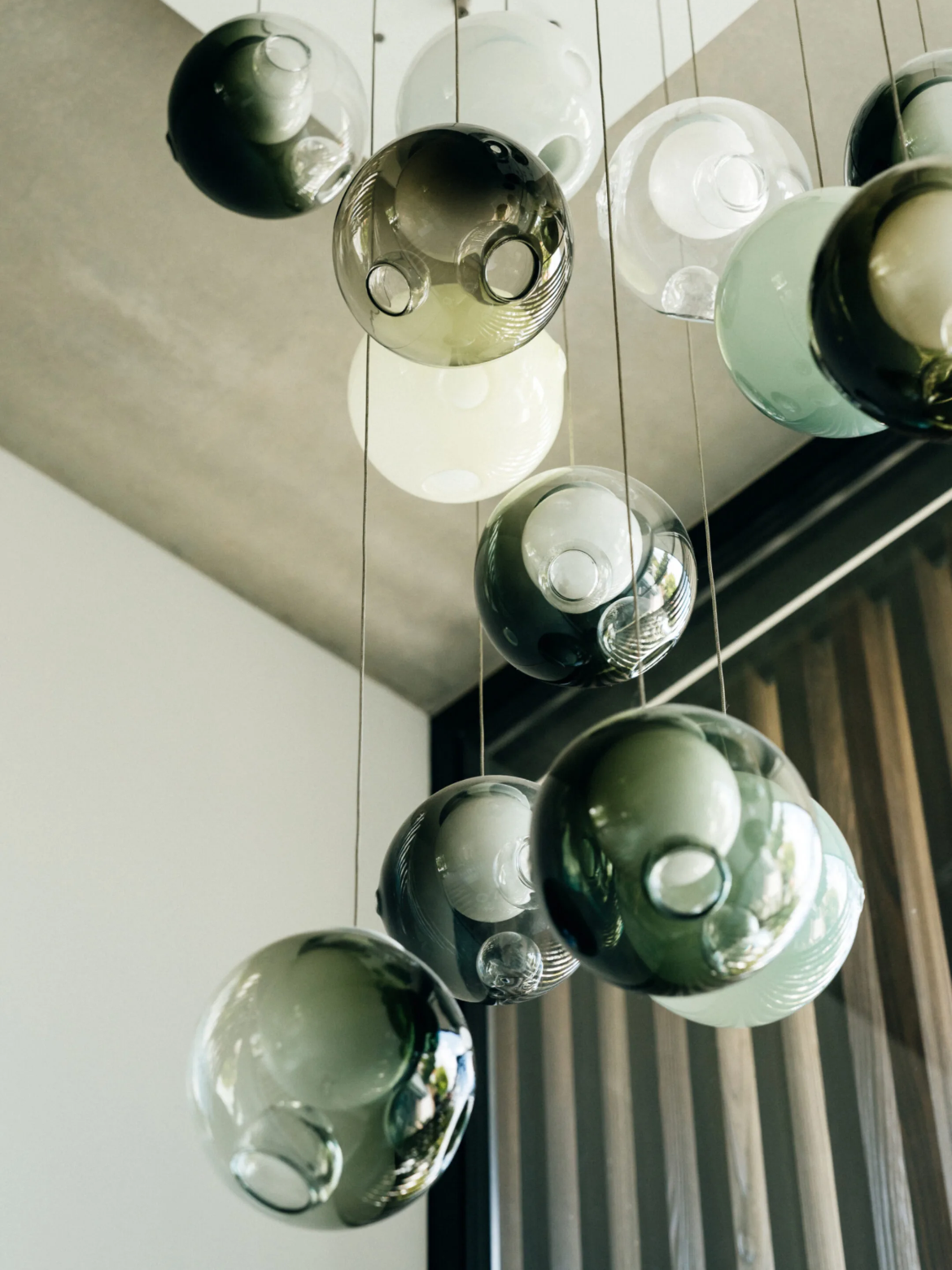
The cluster of 61 hand-blown glass lights – the largest commission in Australia – hang at differing heights on individual pieces of cable. The installation is an exemplar of Bocci’s sculptural impact, designed by Space Cubed Design Studio, a local interior design studio based in Queensland. Far from being an off-the-shelf solution, the installation at Blowfish Ocean Grill is a feat of technical precision and creative collaboration. Each glass pendant is unique, blown using molten glass inflated within woven ceramic-infused textile moulds. The process leaves intricate patterns captured in the surface, producing a diffused glow that reads as organic and cloud-like.


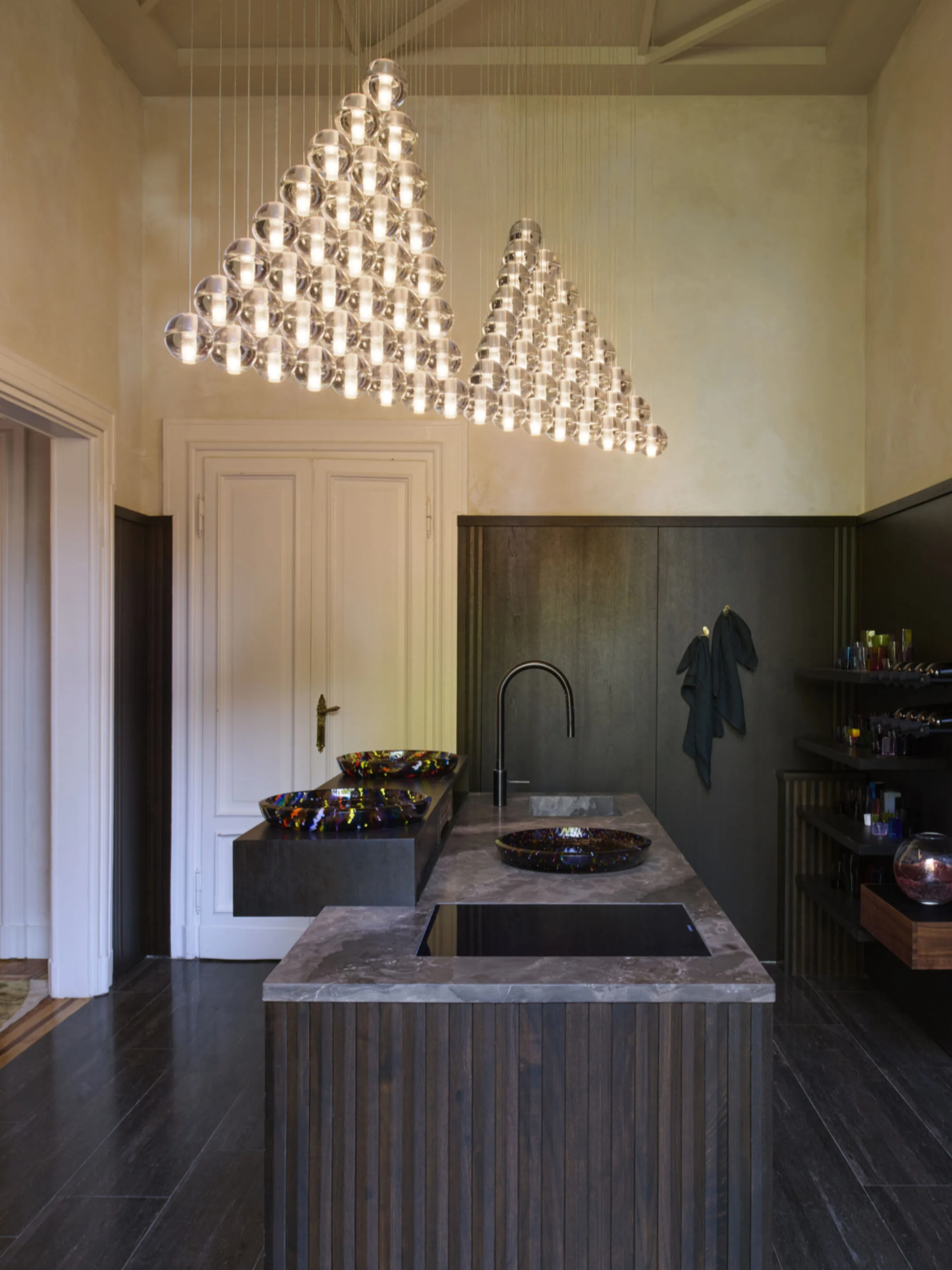
Bocci’s Series 73 is an ongoing exploration of glassblowing’s expressive possibilities. Its sculptural cable suspension system allows each pendant to nestle closely in clusters or stretch out into a field, creating a fluidity of arrangement that makes the installation feel alive. Here, the lights spread like an underwater bloom, where details are orchestrated yet still carry a sense of natural unpredictability.
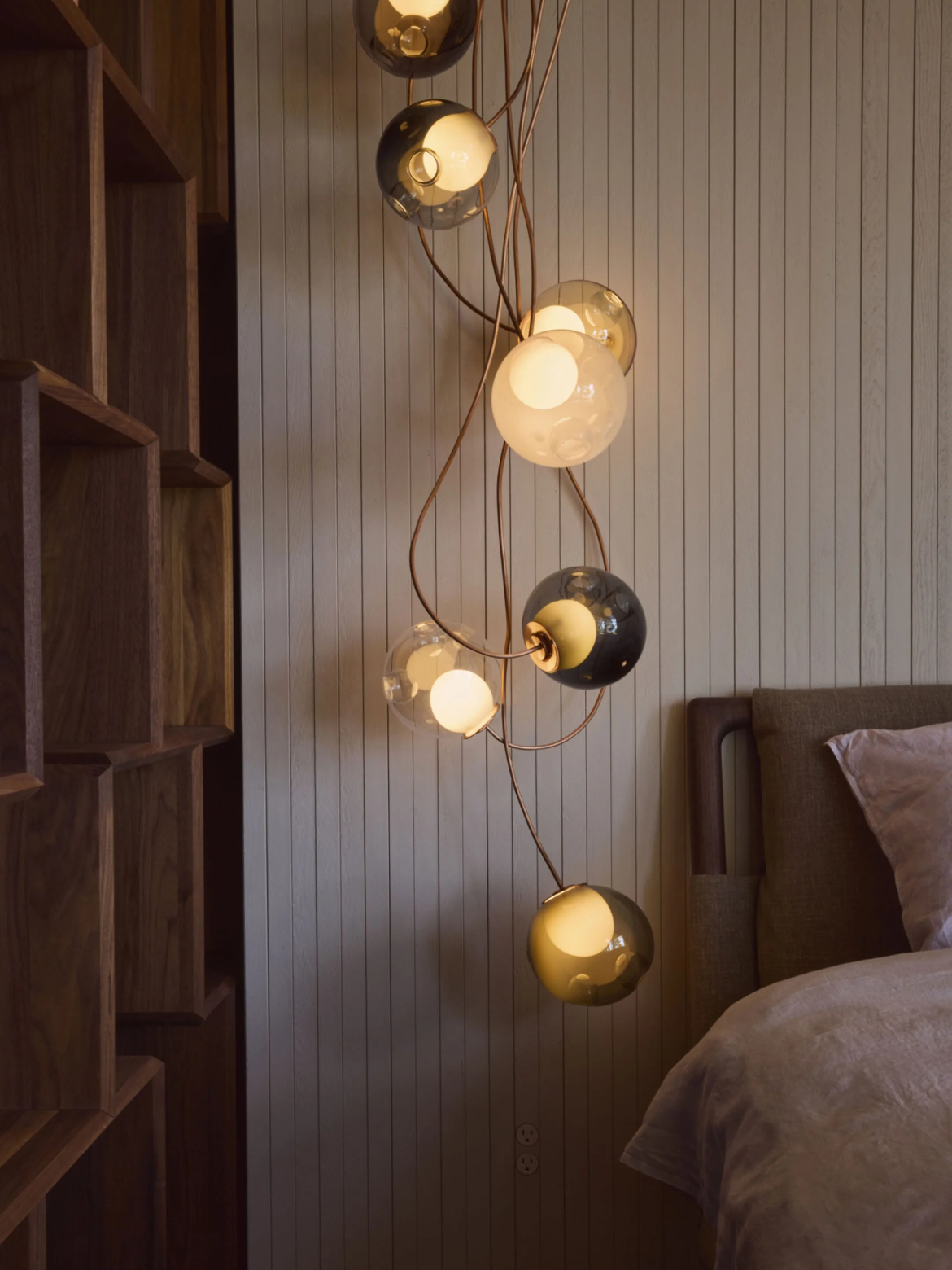
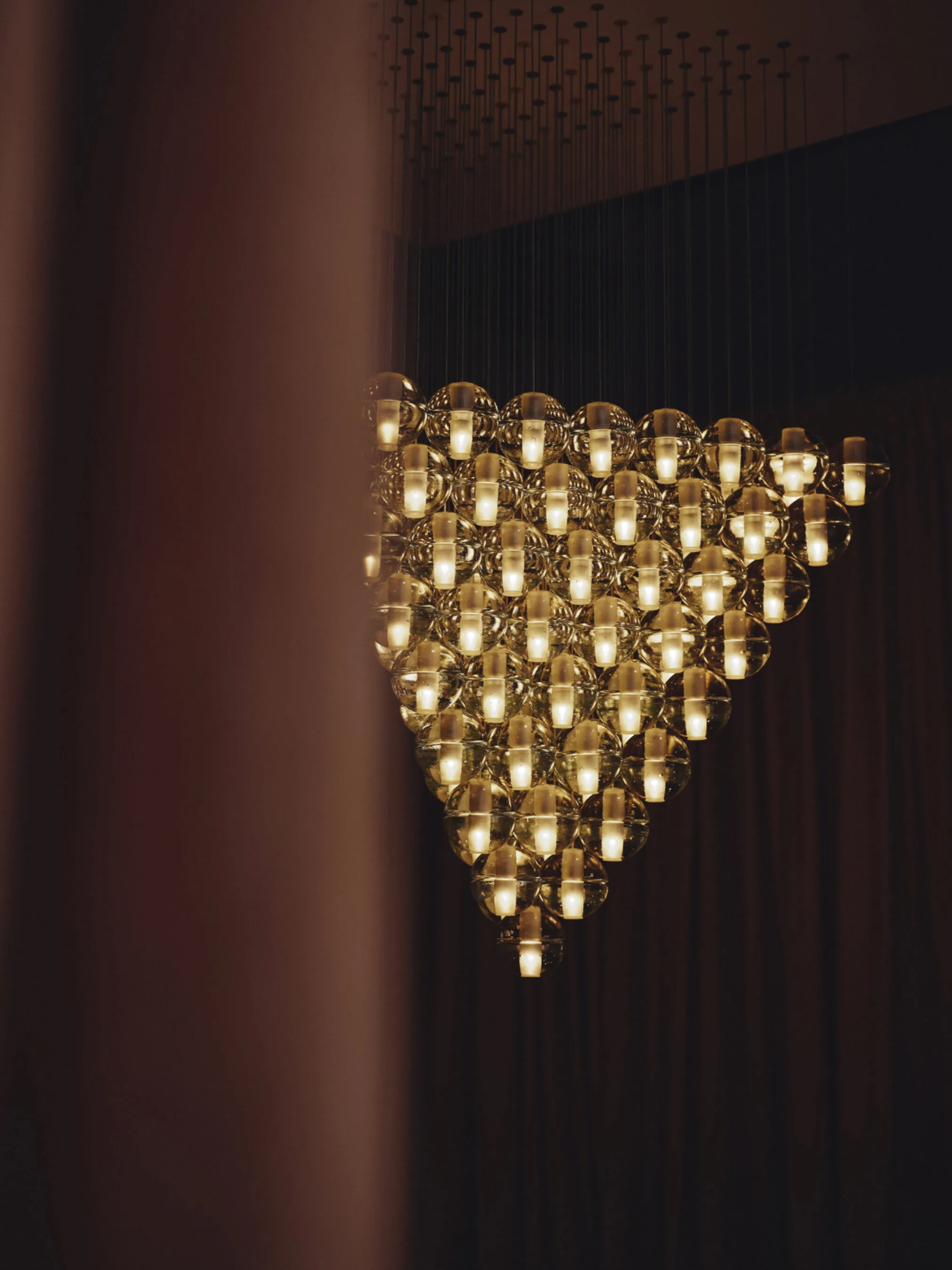
Bocci’s pursuit of technical and material experimentation extends further. The Series 57, for example, embraces imperfection as its defining feature. Through a unique glassblowing technique, collapsed bubbles create abstract forms filled with suspended air pockets. When lit, these voids refract and distort the glow, offering a subtle interplay of light and darkness. Configured on the same cabling system, Series 57 achieves atmospheric clusters that appear simultaneously weightless and dense.

What unites these collections is not only their experimental beauty, but also the infrastructure that supports them. Bocci maintains an in-house technical design team dedicated to configuring lighting systems at almost any scale. From intimate residential settings to vast commercial interiors, Bocci’s lights adapt seamlessly, each iteration an act of spatial storytelling. Only available at Space Furniture, Australian designers and clients gain access to this expertise – whether the brief calls for a cascading chandelier over a dining hall or a tightly configured cluster in a boutique setting.
While Bocci pushes glass to its expressive limits, Moooi approaches lighting as a narrative. Founded in the Netherlands under Marcel Wanders, Moooi creates pieces that double as functional luminaires and statements of imagination. A prime example is the Heracleum III Endless – a delicate yet endlessly extendable lighting system. Inspired by the branching form of a plant, its illuminated leaves stretch across surfaces in flowing configurations. The Endless system allows designers to customise length and direction, running seamlessly down a hallway, across a dining table or through a lobby.
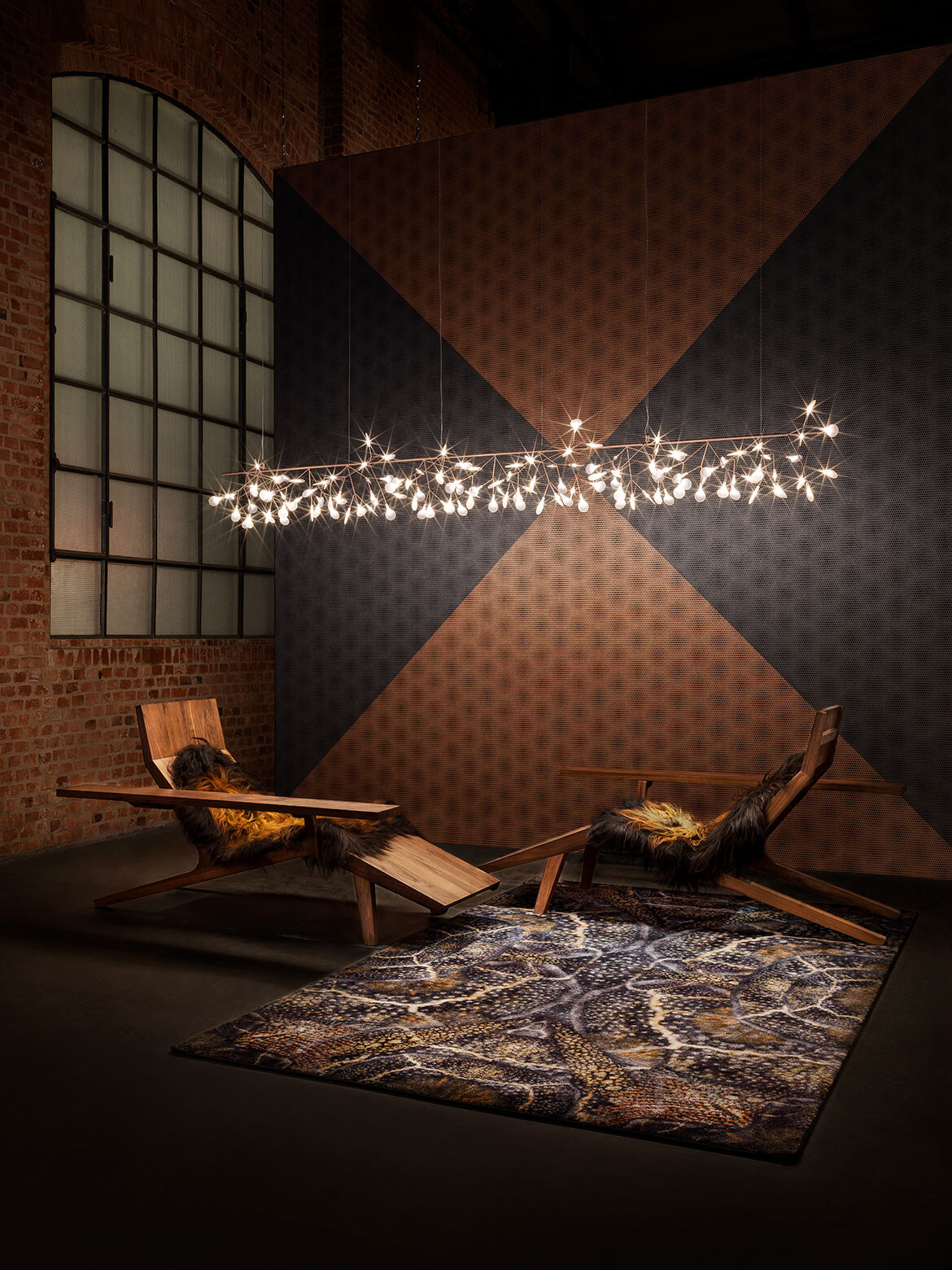
Placed alongside Bocci’s visceral materiality, Moooi’s pieces show the breadth of design language that Space curates. One is grounded in the unpredictability of molten glass, the other in botanical storytelling made possible through technology. Both, however, speak to Space’s philosophy of offering lighting that is as unique as the space it inhabits.
For more than 30 years, Space has built a reputation for introducing leading international design brands to Australia, not only as a retailer but as a collaborative partner. The company’s expertise ensures that technically advanced systems such as Bocci and Moooi can be integrated seamlessly into projects locally. Whether in residential, commercial or hospitality environments, Space enables designers to realise visions that are both ambitious and refined.
The Blowfish Ocean Grill project may be the most dramatic example to date, but it is far from an exception. Space’s portfolio proves that lighting is about creating atmosphere, amplifying narrative and pushing technical boundaries.
Space Furniture
spacefurniture.com.au