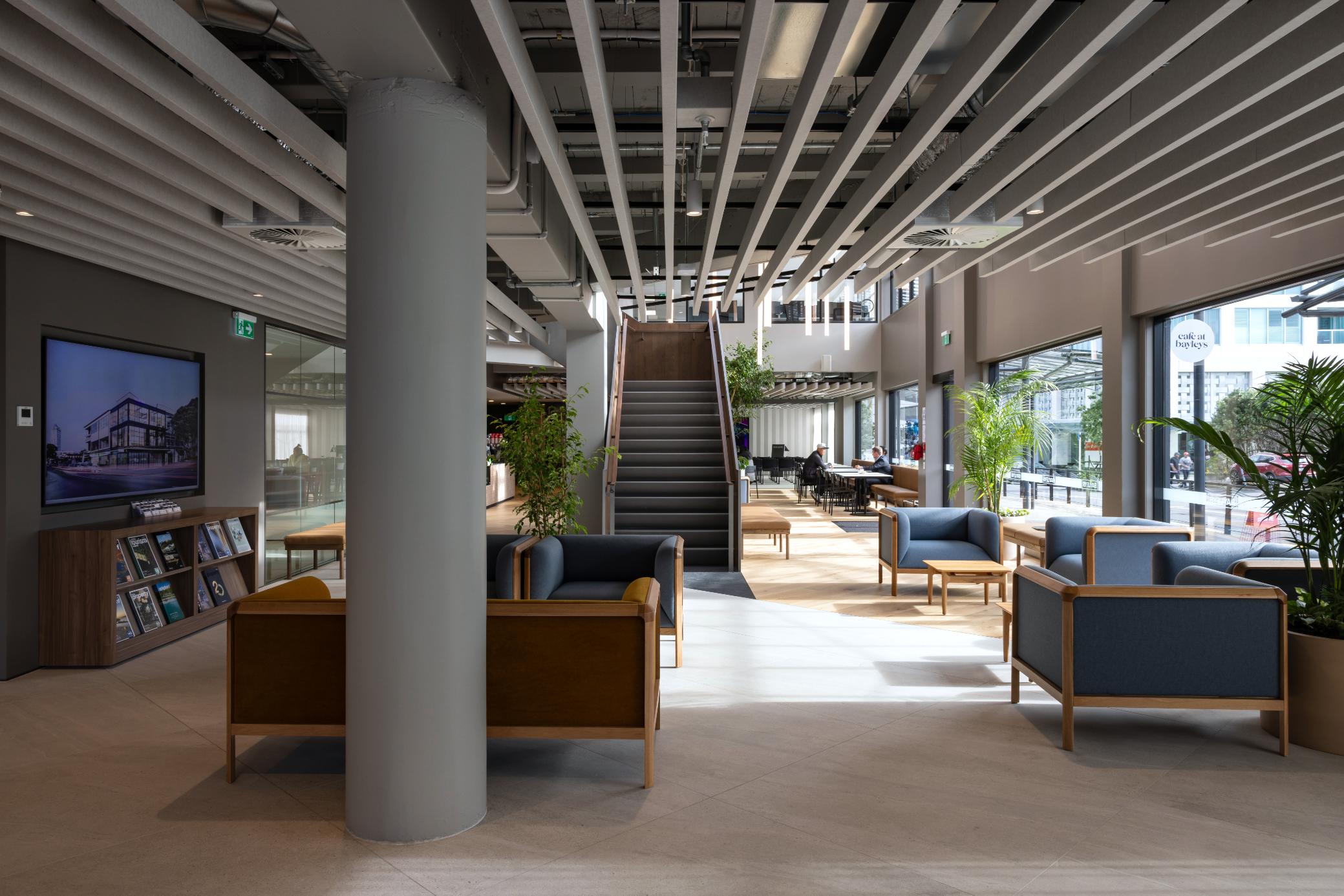
As change continues to firm up its constant presence in our personal and professional lives, our interiors are going through a transformation to better accommodate the fluctuation of our circumstances.
One of the vital contexts where this spatial evolution continues to take an accelerated turn is the office. The pandemic has decentralised the way we work, altering how we interact with office spaces. In that, it has highlighted the importance of furnishing interiors in a way that fosters flexible ways of working and accommodates a wide range of working styles, habits, needs and preferences through instantaneous adaptability. From encouraging socialisation and a sense of community to creating opportunities for collaborative activities and individual work – the future-ready office requires adaptability that allows it to be transformed in response to personal and collective needs at any given time.
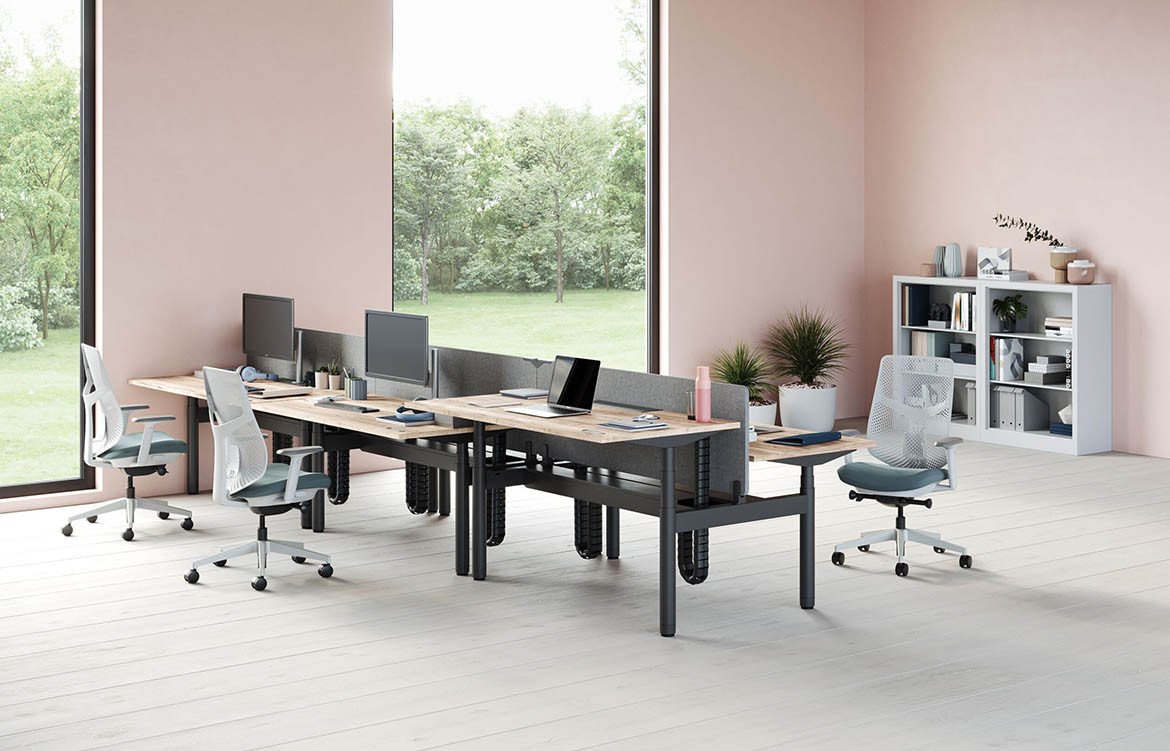
Herman Miller has always stayed ahead of the curve where spatial solutions for the modern office are concerned. With incredible foresight and ambition to centre their designs around authentic human needs, the brand has anticipated – and rapidly responded to – some of the most critical shifts within that space. Herman Miller’s highly adjustable workstation, called Ratio, is yet another expression of their mission to make the office of the future as relevant, comfortable and effective as possible.
<span data-mce-type="bookmark" style="display: inline-block; width: 0px; overflow: hidden; line-height: 0;" class="mce_SELRES_start"></span><span data-mce-type="bookmark" style="display: inline-block; width: 0px; overflow: hidden; line-height: 0;" class="mce_SELRES_start"></span>
Ratio’s existing design has been improved to respond to the change-driven needs of the future workplace even better. The set-up lends itself to individual work, plus it enhances the environment for team collaboration which is known to generate better results when taking place in a cluster of highly adjustable workstations. But Ratio’s future-proof potential isn’t limited to accommodating a variety of working styles and physical formations – it responds to the switching body positions too.
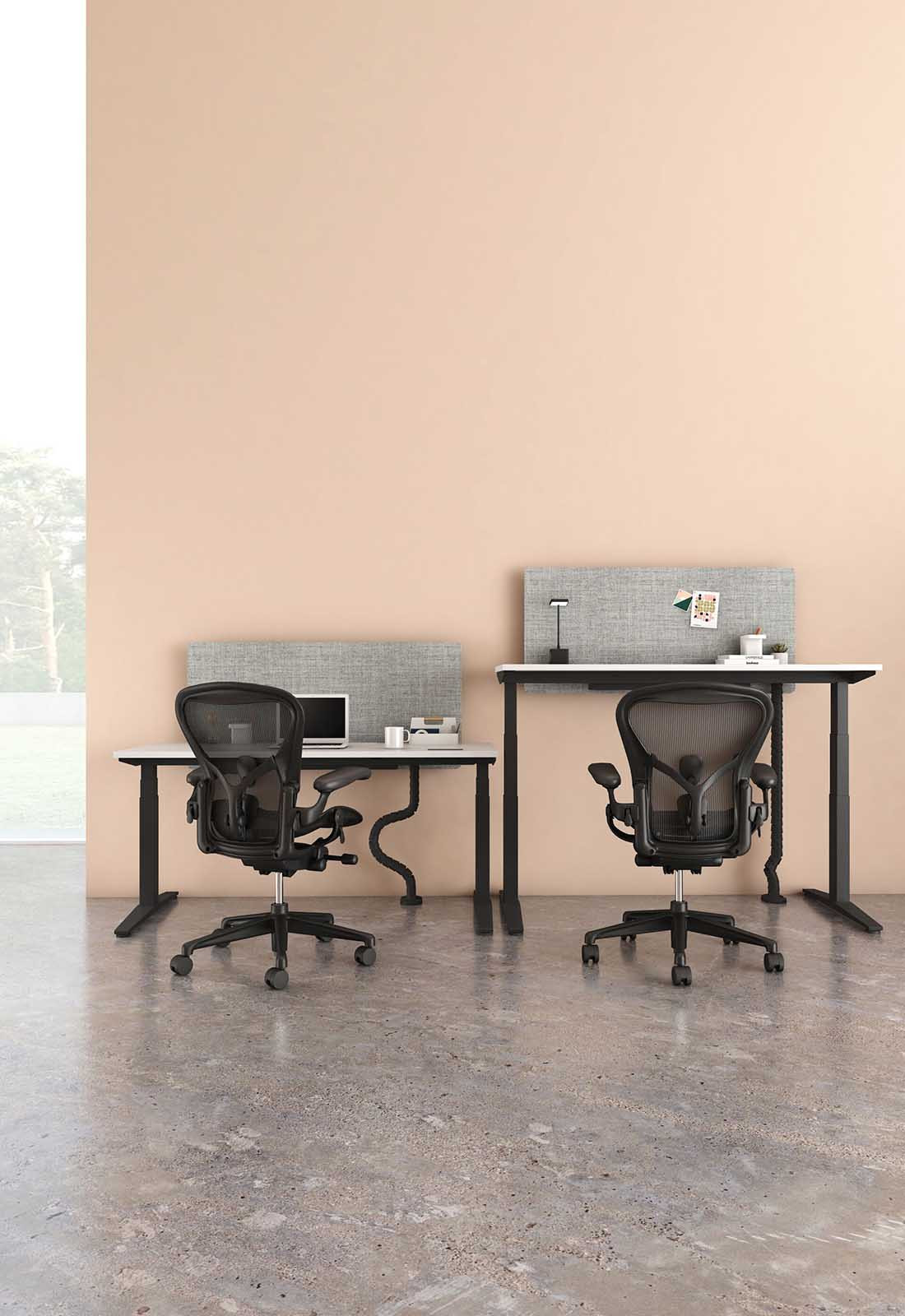
Recognising that shifting from sitting to standing through the day can provide numerous health benefits – such as promoting blood flow, supporting a healthy spine, and overall wellbeing improvement – the workstation has been designed to encourage various postures. This ability to offer an alternative to seating has always been ingrained in Herman Miller’s design history, after being pioneered in 1960 by Robert Propst and George Nelson. The first of the two designers is not only the creator of the world’s first open-plan office system but is also renowned for designing a “perch”, an intuitive hybrid between a stool and a chair. On the other hand, Nelson enjoyed standing around so much he invented a stand-up desk to encourage others to do so, too. And so, before the term ergonomics was broadly understood and popularised, the pair was already able to identify the benefits of standing at work. That, in turn, set in motion Herman Miller’s drive to design office furniture beyond the act of sitting.

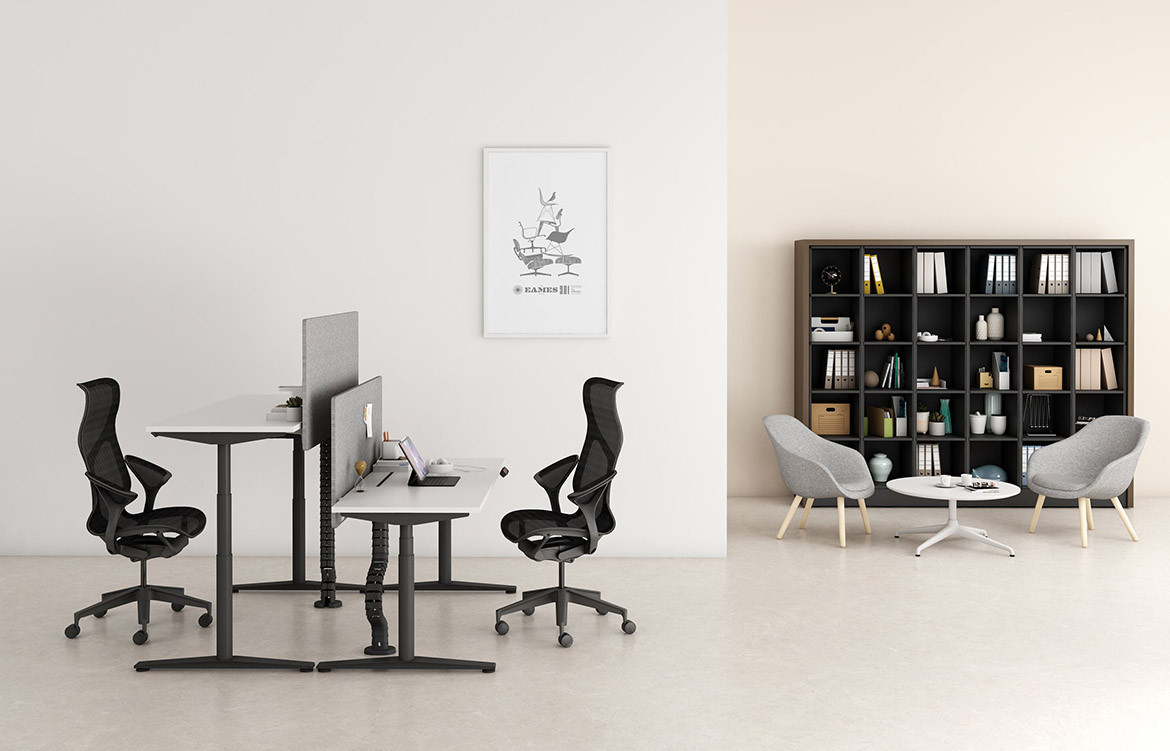
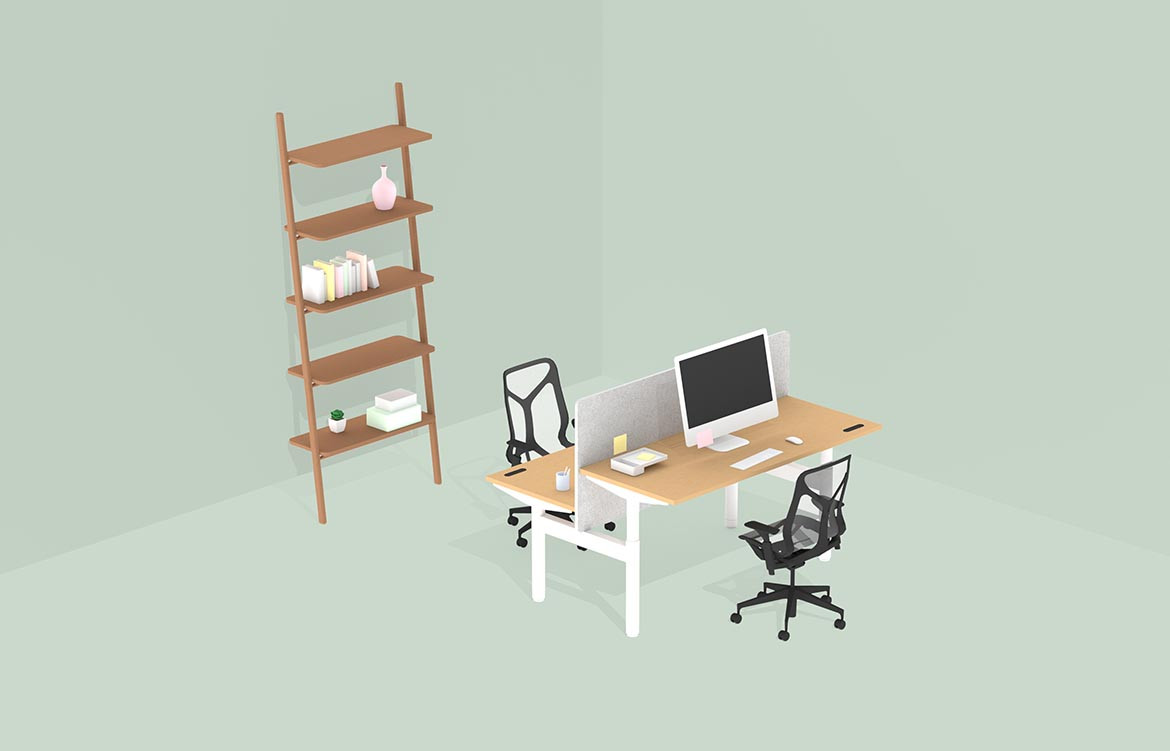
A direct outcome of Propst and Nelson’s insightful design direction, this next generation of sit-to-stand desking solutions offers a broad spectrum of options to create bespoke office spaces. Whether the workspaces are set up with back-to-back screens, next to each other, in a formation of clusters or as freestanding desks, Ratio is all about choice.
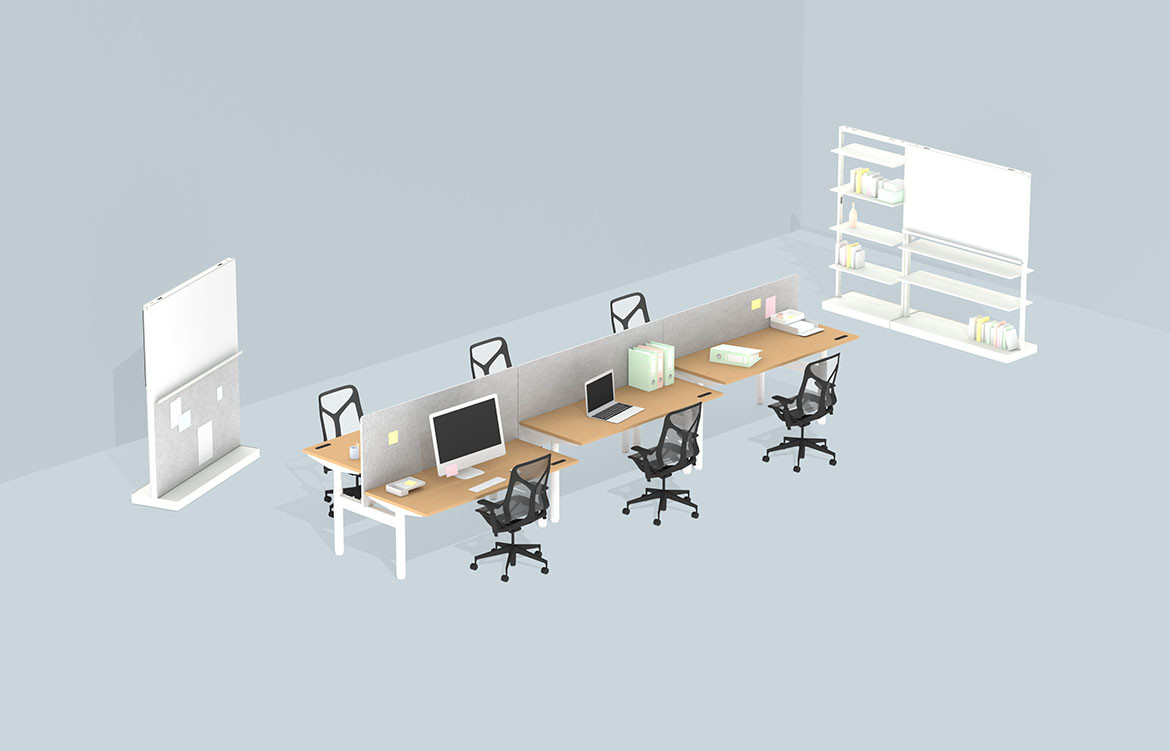
The desk is available with the option of new round legs that give the workspace a more streamlined and lightweight look. In contrast, the standard, more pronounced rectangular legs make for a structured outcome. Going up, the option to incorporate a screen can help increase psychological boundaries and sense of safety when used as a modesty screen – and augments privacy and versatility when mounted atop the desk surface. The screen also comes in handy as a physical divider in a back-to-back orientation or when assembled in a cluster.
Further empowering the user to adjust the workspace in line with their personal preferences, Ratio features one-touch electric controls that shift the desk’s position, adjusting its height. Whether they are integrated into the desk or mounted on its front edge, the controls can be programmed to include presets, making it easy to ensure the desk is at the right height at any given time.
Designed with flexibility at its core, this highly versatile sit-to-stand workstation is poised to stand the test of time well into the future, helping employees thrive in the change-driven working environment. Read about Ratio’s uniquely versatile profile, explore its wide range of surface, base and screen materials – and find inspiration on the possible configurations it allows here.