Since 1993, Sub-Zero and Wolf have brought together judges, entrants and winners who lead the conversation around the modern kitchen island. Our region has long participated in this dialogue, but at the 2024–2025 KDC Winners’ Summit and Gala, held at the Arizona Biltmore in Phoenix on 26 October, Australia’s design flag flew particularly high. From 43 Finalists, the judges selected 13 Global Winners, alongside one Global Student Winner overall, and Australians – including all three professional finalists – took home four of these coveted accolades.
Adam Kane and Daniel Boddam were awarded 1st and 2nd Place in the Contemporary Kitchen category, respectively; Stephen Jolson topped the Small Spaces Kitchen category, and emerging design talent Zeeko Papanicolaou took the Student Winner title. For Adam Kane, this collective achievement, which builds on the country’s sustained momentum across previous editions, reflects a profound shift. “Australia is globally leading the way in architecture and interior design,” he asserts.
Hanby Residence: Twice as nice
The founder of Adam Kane Architects is uniquely positioned to make this claim: having won the same category with Brighton House in 2019–2021, Adam has now secured an unprecedented second win.
“The Sub-Zero and Wolf KDC is the most prestigious global competition of its type, with the Contemporary Kitchen category being the most coveted,” he enthuses. “Being the only entrant to have ever won it twice is incredibly humbling, and I believe it elevates us as experts in our field on the world stage.”
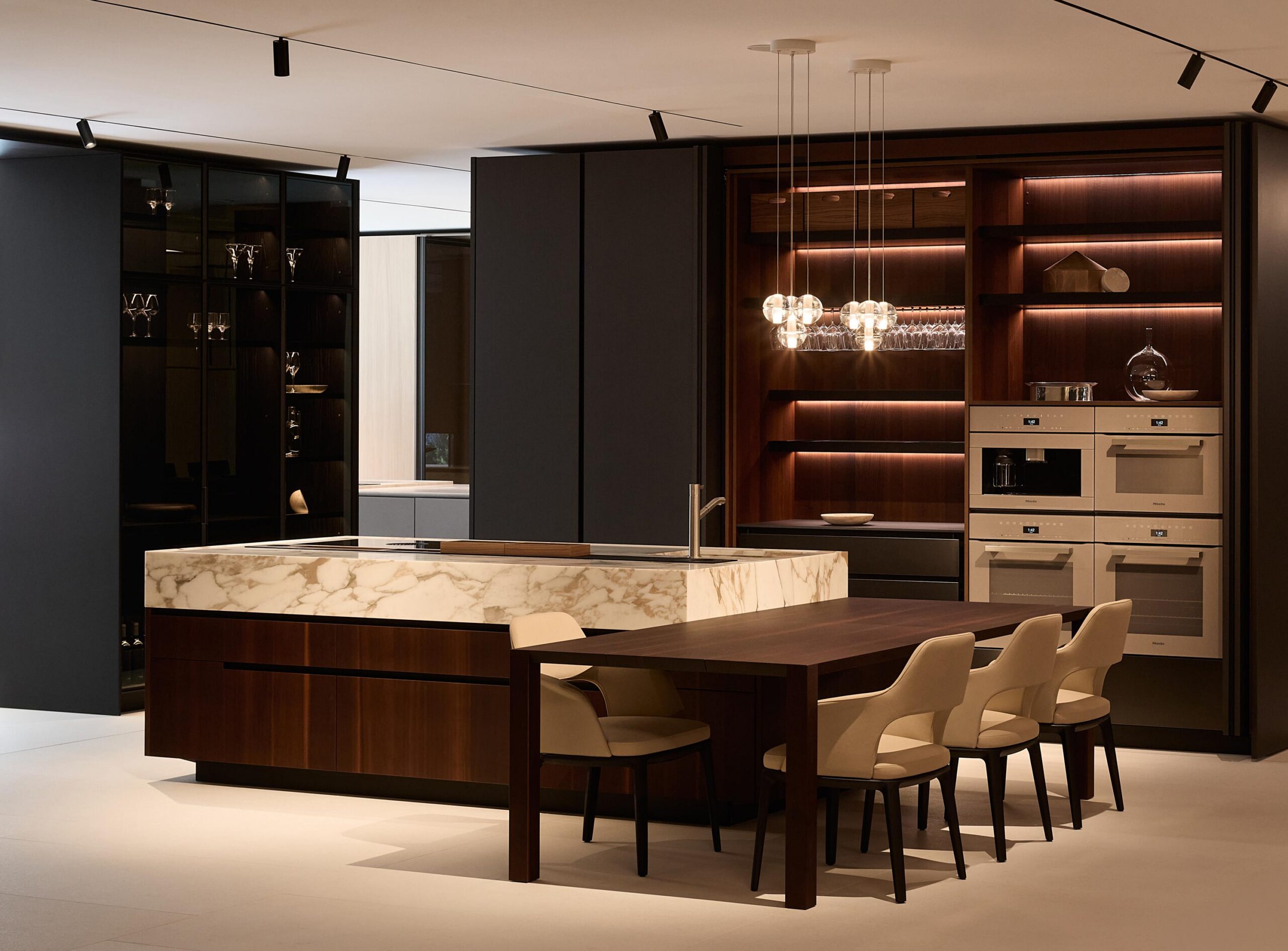
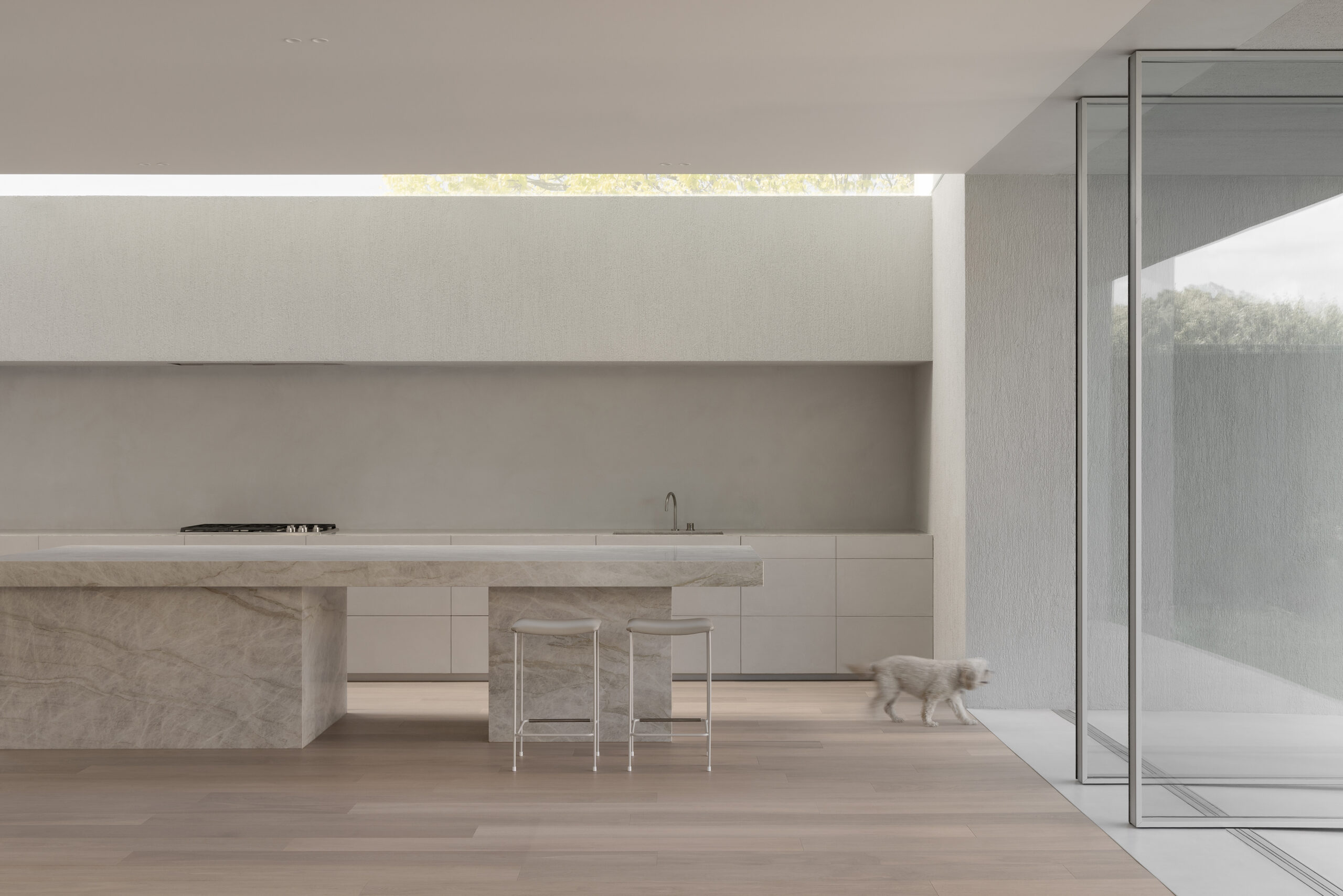
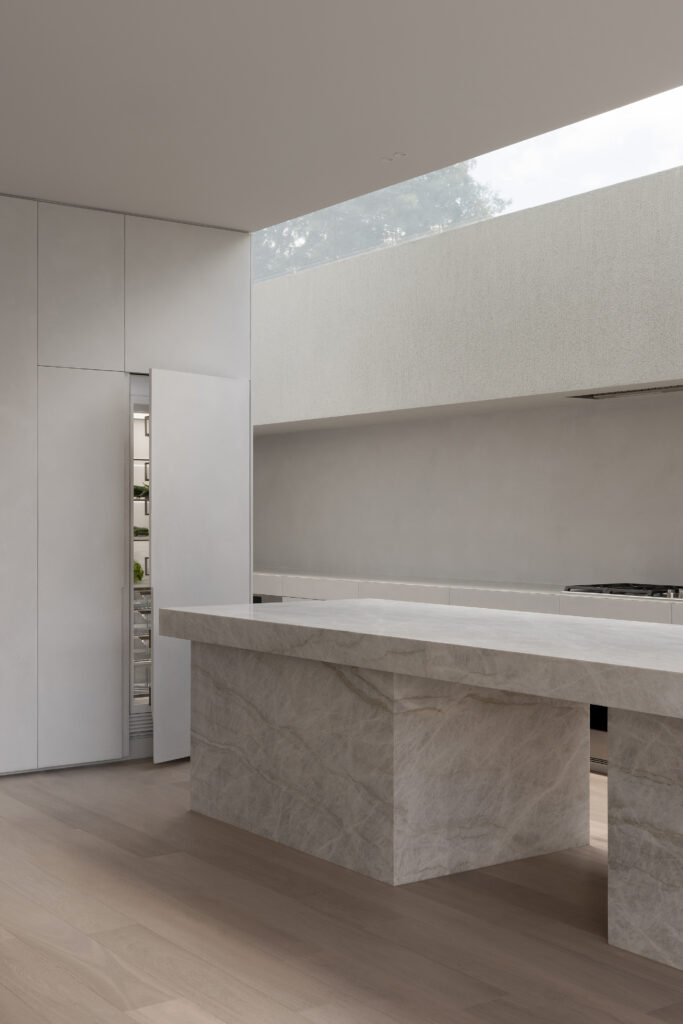
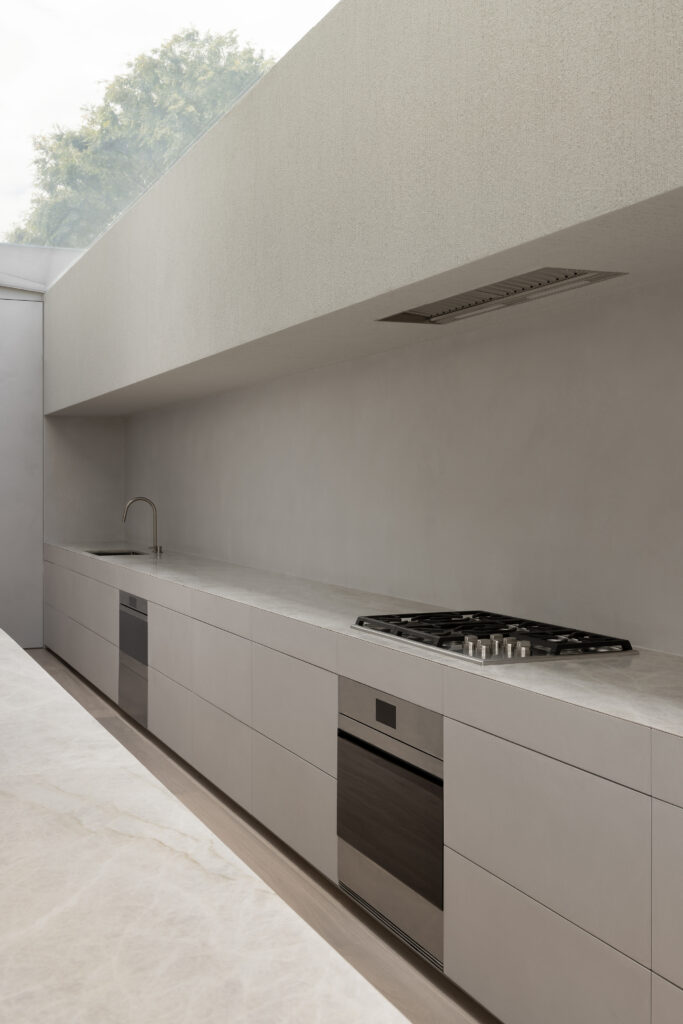
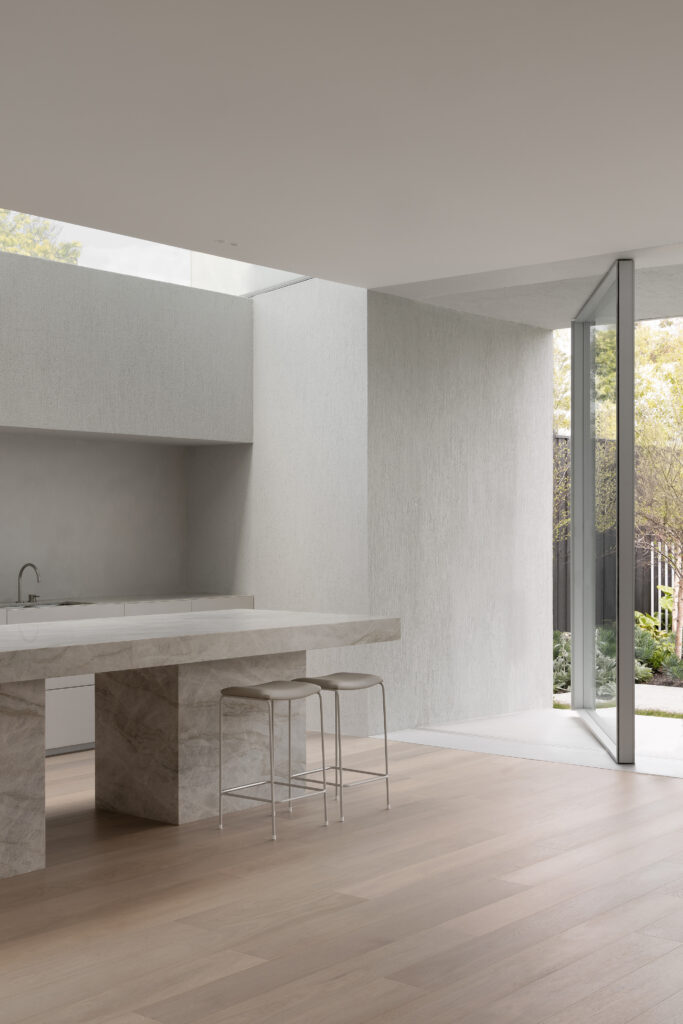
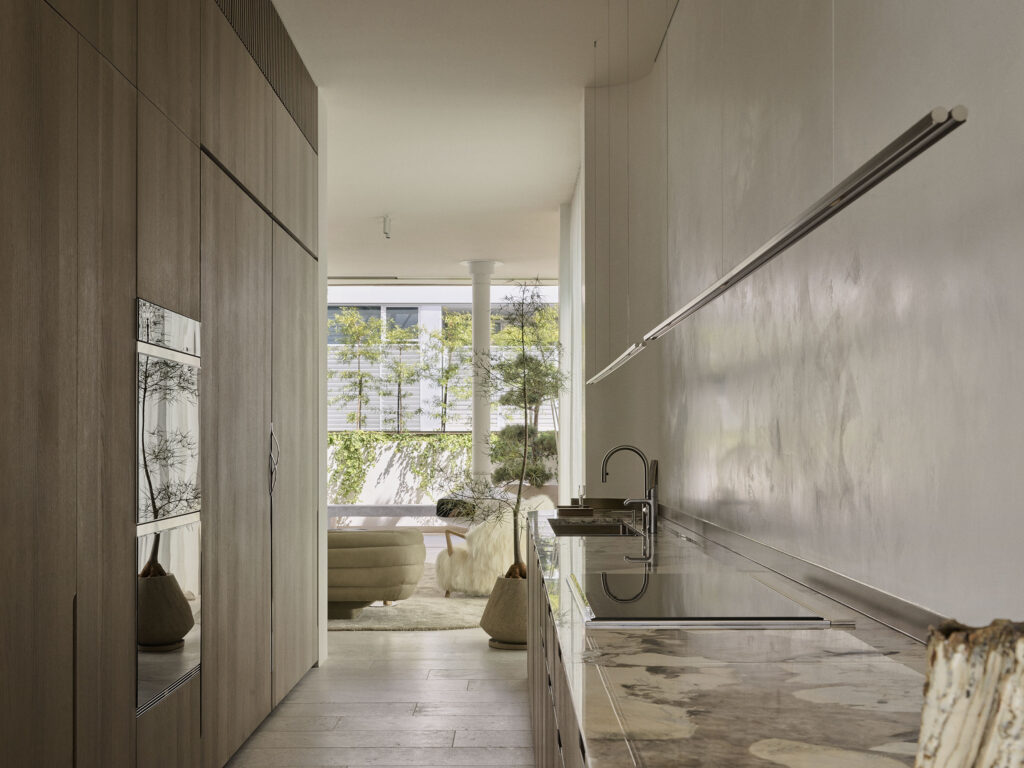
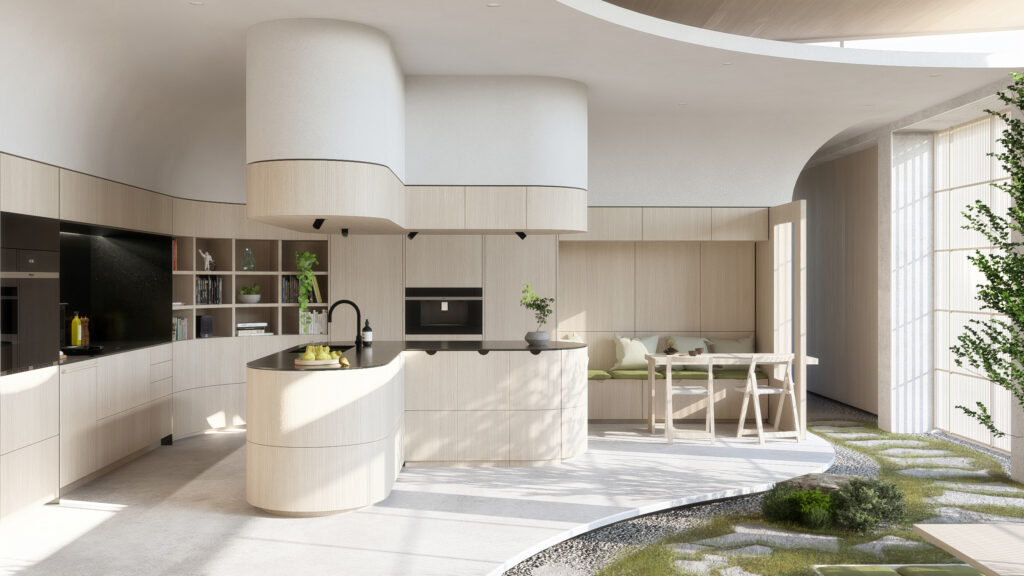
Hanby Residence certainly reflects this standing. Wrapped in polished plaster, scratched render and oak, and anchored by the monolithic quartzite island, the light-filled kitchen intentionally dissolves into the dwelling’s very fabric. “We wanted the kitchen to feel more like an extension of the architecture than a conventional working space,” Adam points out.
The Sub-Zero refrigeration and handleless Wolf ovens sit inconspicuously in this restrained landscape. “By strategically selecting and placing appliances within the surrounding joinery and keeping the area free from visual clutter,” Adam explains, “we were able to preserve the strength and simplicity of the forms, and subtle layering of materials, while ensuring everything remains easily accessible and practical for entertaining.”
Sanctuary House: Between the concealed and revealed
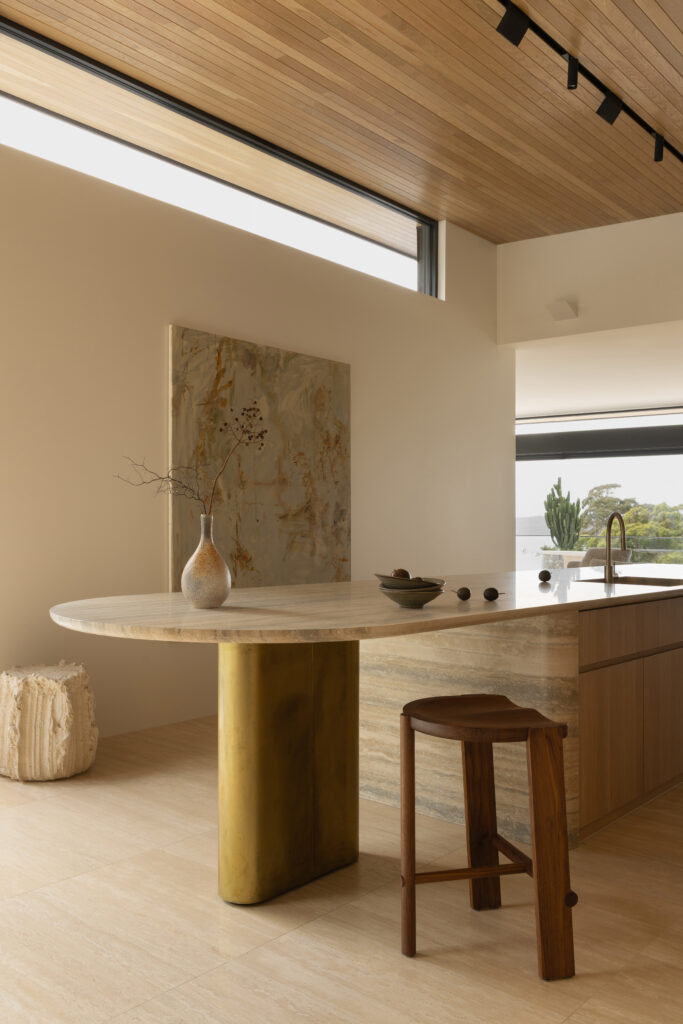
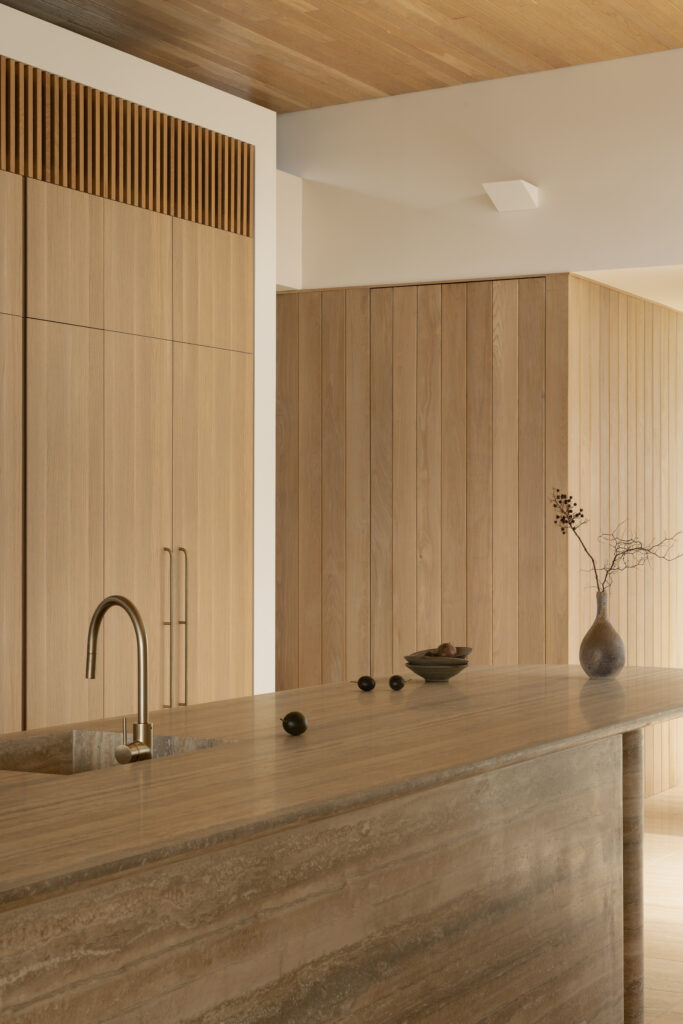
Daniel Boddam’s Sanctuary House, a close second in the same category, captures Australia’s affinity for indoor-outdoor living: ascending four levels to the top-floor kitchen feels like arriving at a coastal lookout, where raised ceilings pull sunlight in and frame expansive harbour views. “You’re always connected to the outdoors, yet held within the comfort of the interior,” Daniel explains. “That balance between openness and shelter is, for me, what defines the Australian way of living.”
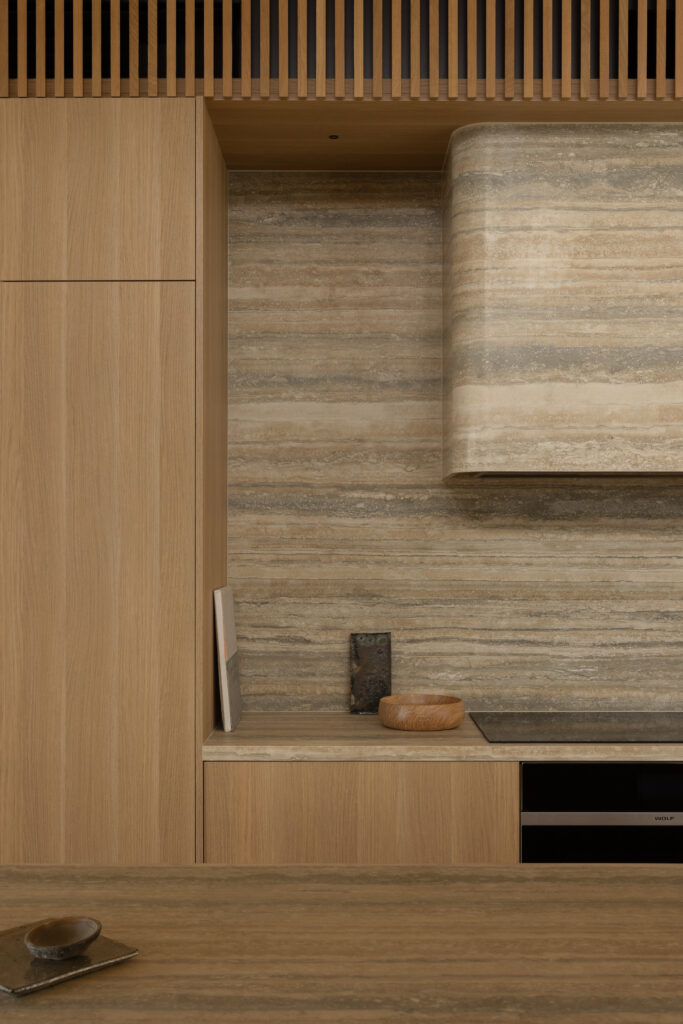
Rather than relying on stark contrast, the calm interior builds depth through subtle material dialogue: vertical timber grain converses with horizontal travertine, the home’s defining curves soften the kitchen’s edges, and colour arrives in the single gesture of a brass pedestal. Part of this layered interaction, Sub-Zero refrigeration disappears behind timber-veneer joinery, while the Wolf ovens and cooktop remain deliberately expressed.
“This balance between the concealed and the revealed allows the kitchen to be highly functional without ever feeling visually busy,” Daniel notes. For him, the award affirms the studio’s core holistic approach to architecture, interiors and detailing. “It gives us even more confidence to keep championing it.”
House of Light: Generosity of compact form
Living up to its win in the Small Spaces Kitchen category, Jolson’s House of Light proves that architectural generosity isn’t measured by scale. “That is determined by its proportions, planning and resolution,” Stephen Jolson explains.
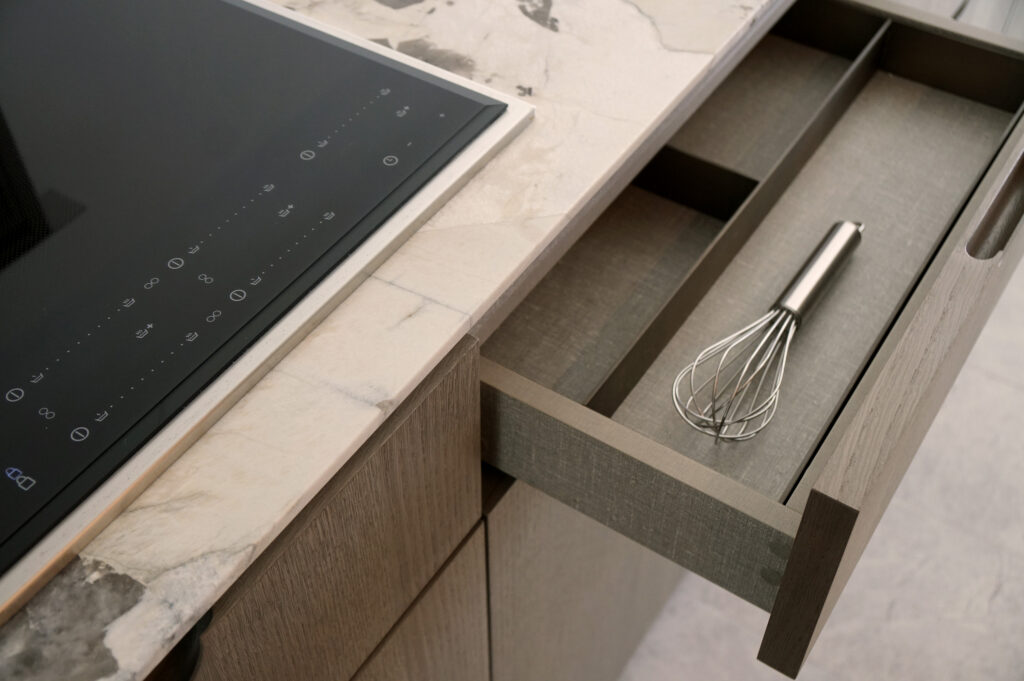
The compact dwelling embodies this concept with rigorous discipline. The continuous bench organically connecting the kitchen with adjacent dining and living rearticulates the transient convention of a galley-style space as an integral part of the dwelling’s architecture. Unadorned walls and restrained textures become a dynamic vehicle for natural light, carrying it through the interior to reveal the subtleties of the material palette and enhance cohesion and openness throughout.
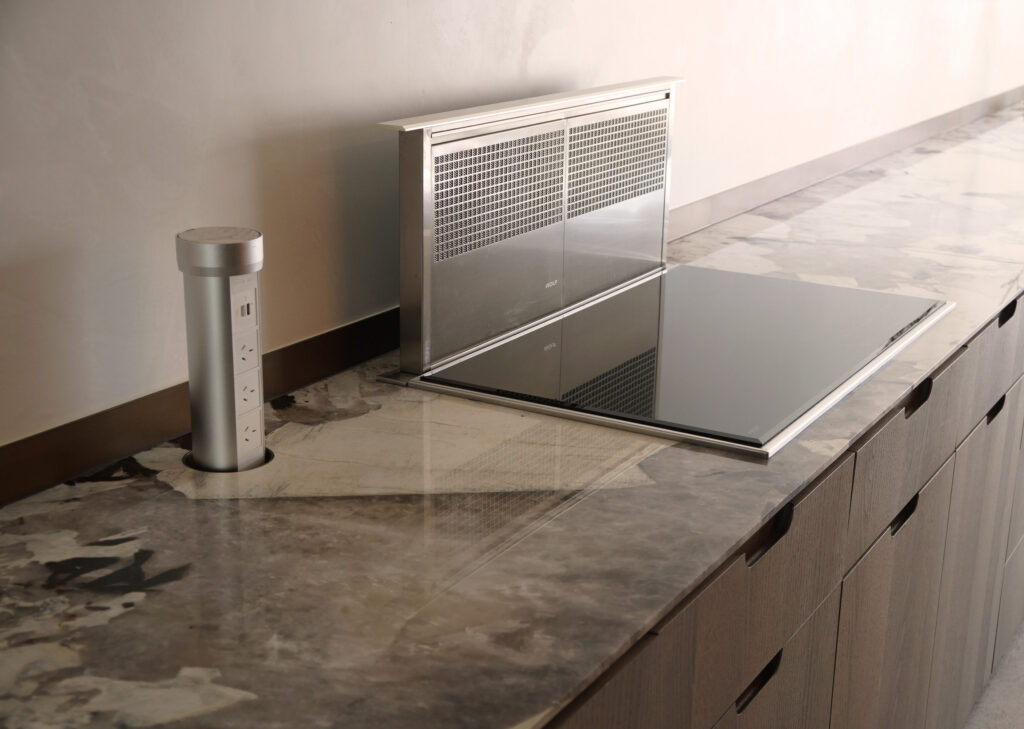
Equally considered, the integration of Sub-Zero and Wolf’s high-performing appliances allows the cabinetry and continuous surfaces to remain both pragmatic and visually uninterrupted, while celebrating the craftsmanship of the details: carved finger pulls introduce subtle tactility to the bench joinery, while the handmade bronze handles of the integrated refrigeration doors and drawers were conceived as delicate ribbons of metal. “There is an almost jewellery-like precision to the detailing, where the smallest gestures contribute to the character of the whole,” Stephen shares.
It’s this nuanced relationship, rather than the footprint, that creates a sense of scale. “The future of compact kitchen design lies in creating spaces that are highly functional,” Stephen says, “but whose complexity is resolved so carefully that what remains is a sense of simplicity and generosity.”
Chrysalis Kitchen: Adaptable space for the “doing”
Zeeko Papanicolaou, who’s completing a Master of Architecture at RMIT, rounds out the Australian contingent recognised in Phoenix, taking home the Student Winner title.
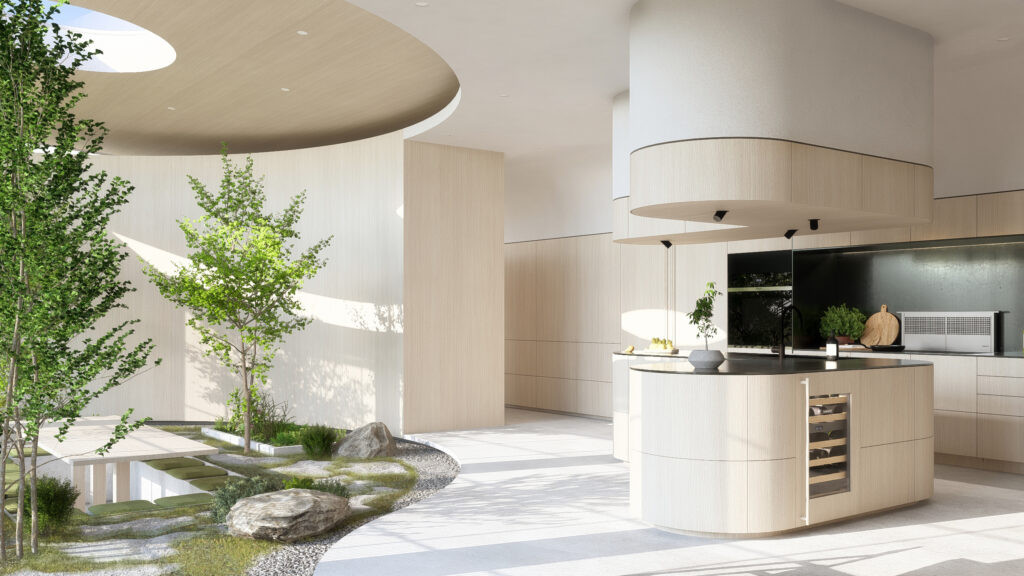
For Zeeko, sharing the stage with people who have shaped his perspective was particularly rewarding and humbling, and the win encouraged him to embrace risks and step outside the design brief. The conceptual Chrysalis Kitchen does exactly that by representing transformation through a cyclical garden-to-kitchen relationship and physical flexibility.
“Water is recycled from the kitchen plumbing and redirected to irrigate the garden, which in turn yields a harvest that returns to the kitchen. This creates a cyclical, interdependent system that informs the project’s approach to environmental sustainability,” he explains.
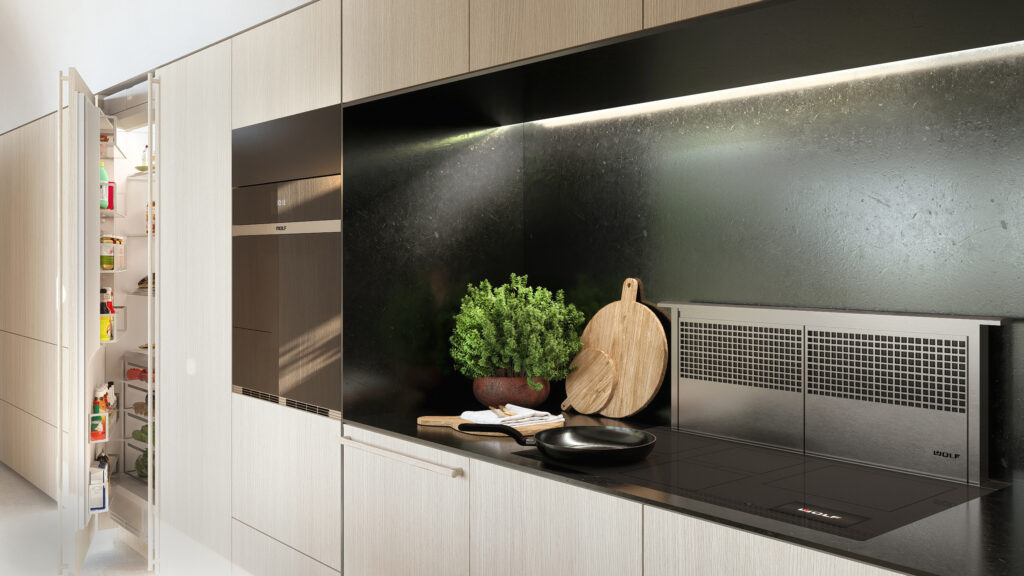
This biophilic softness is met by shapeshifting interior architecture: the operable joinery has been designed to conceal, reveal and reconfigure the space to suit different scenarios. The Sub-Zero columns and Wolf induction disappear quietly into this intuitive mechanism, prioritising experience over pronounced presence. “Kitchens are places that foster connection because they’re spaces of ‘doing,’” Zeeko says. “As the dynamics of the modern home continue to evolve, the kitchen needs to accommodate these changing uses.”
How we reinterpret the enduring heart of the home as a socially responsive space – advanced, adaptable and rooted in country and context – will be one to watch closely, he concludes. And, for industry professionals ready to shape what comes next, the 2026–2027 contest offers the perfect springboard.
Enter the 2026–2027 Sub-Zero and Wolf KDC
Officially open for entries, the 2026–2027 Sub-Zero and Wolf KDC invites architects and designers to submit projects completed between 1 January 2026 and 31 December 2027 (the closing date for entries) for a chance to showcase their thinking globally and win nearly USD $300,000 in total cash prizes.
Entry is free, and entrants can submit multiple eligible projects featuring Sub-Zero and Wolf appliances across all categories: Traditional, Transitional and Contemporary kitchens, as well as Small Space Kitchen, Best Use Outside the Kitchen, First-Time Entrant, and a separate Student category for emerging talent, like Zeeko.
Now, Australian entrants should also tentatively book out May 2028 in their diaries. That’s when the next edition’s Winners’ Summit and Gala will be held, and if this year’s collective success signals anything, it’s that our region’s perspective belongs right at the centre of that global conversation.
CTA:
Curious about architects, designers and projects awarded in other categories? Explore the 2024–2025 KDC Global Winners here. And if you’re ready to share your design on an international stage, get your submission underway now.