Changes introduced under NCC 2025 remove previous Fire Resistance Level (FRL) concessions for certain open-deck and sprinkler-protected carparks. For existing buildings, this can create a significant challenge: structural concrete that complied when originally constructed may no longer provide the required level of fire resistance when a building is refurbished, upgraded or undergoes a change of use.
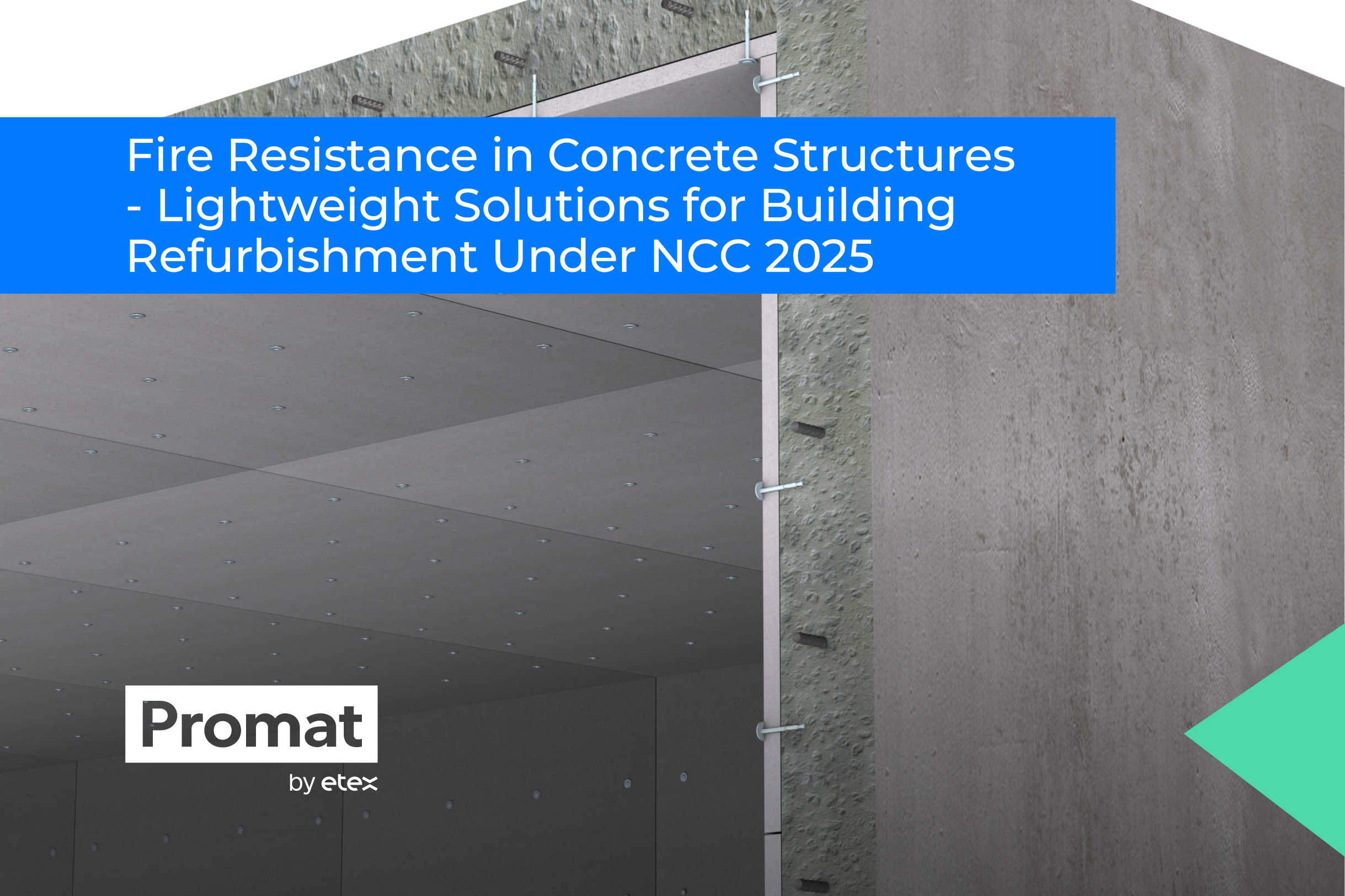
Traditionally, increasing the fire resistance of concrete has often involved adding further mass through recasting or cementitious render. But this approach can introduce additional weight, cost and construction complexity – particularly when working within an existing building.
The upcoming CPD Live session Fire Resistance in Concrete Structures – Lightweight Solutions for Building Refurbishment Under NCC 2025 explores an alternative approach.
Presented by Promat, the session will examine the fire safety requirements applying to concrete structures in Australia and unpack how NCC 2025 changes affect projects such as carpark upgrades and refurbishments.
It will also explore lightweight passive fire protection systems, including boards, sprays and intumescent coatings, and explain where these systems can provide practical alternatives to increasing concrete mass.
Speakers Peter Butler, Head of Technical Services at Promat, and Dr Imran Ahamed, Director at Fyrlink, will draw on extensive experience in passive fire protection, fire testing, technical assessment and structural fire engineering.
For architects and specifiers working with existing buildings, understanding how to address FRL shortfalls without unnecessarily adding structural load is becoming an increasingly important part of refurbishment design.
Fire Resistance in Concrete Structures – Lightweight Solutions for Building Refurbishment Under NCC 2025
Date: 21 October 2026
9:00am–10:00am AEDT
1 Formal CPD Point
Presented by Promat