For decades, improving building sustainability focused heavily on operational performance: reducing the energy consumed in heating, cooling, lighting and running buildings.
As buildings become more energy efficient and electricity grids transition towards renewable energy, embodied carbon is assuming greater importance.
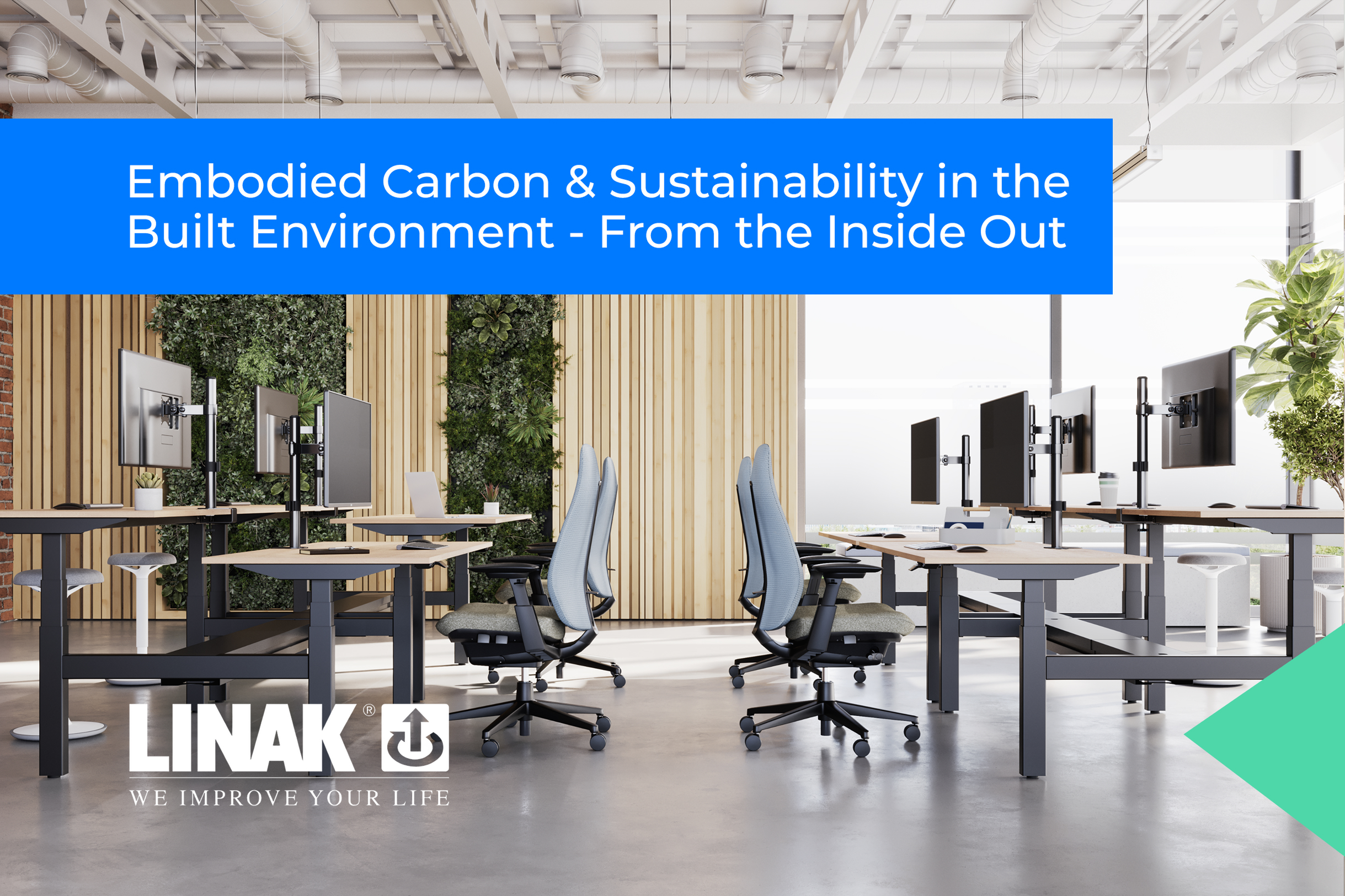
The upcoming CPD Live session Embodied Carbon & Sustainability in the Built Environment – From the Inside Out, presented by LINAK, examines how architects and designers can identify and reduce these impacts through more informed specification.
The session will begin by distinguishing operational carbon from embodied carbon, before examining how each contributes to the overall environmental impact of the built environment.
From there, it will explore the mechanisms increasingly used to evaluate materials and products, including Life Cycle Assessments (LCAs), Environmental Product Declarations (EPDs) and environmental certification.
Circularity will also be considered, challenging the conventional linear model of making, using and disposing of products in favour of systems that keep materials in use for longer and make reuse, recovery and recycling part of the design process.
For architects and designers, these concepts are becoming increasingly important when comparing materials and evaluating sustainability claims.
The challenge is no longer simply to select a product marketed as sustainable. It is to understand the evidence behind that claim – and how the specification contributes to the carbon performance of the project over its entire life.
Embodied Carbon & Sustainability in the Built Environment – From the Inside Out
Date: 22 October 2026
3:00pm–4:00pm AEDT
1 Formal CPD Point
Presented by LINAK