The built environment accounts for 39% of global carbon emissions, of which 11% is embodied carbon and the remaining 28% is from building operations. So how do we build sustainably and effectively? How do we prioritise the reusability and durability of building and building materials? What design techniques and manufacturing productions can help reverse the effects of global warming? What alternative, green resources can we explore?
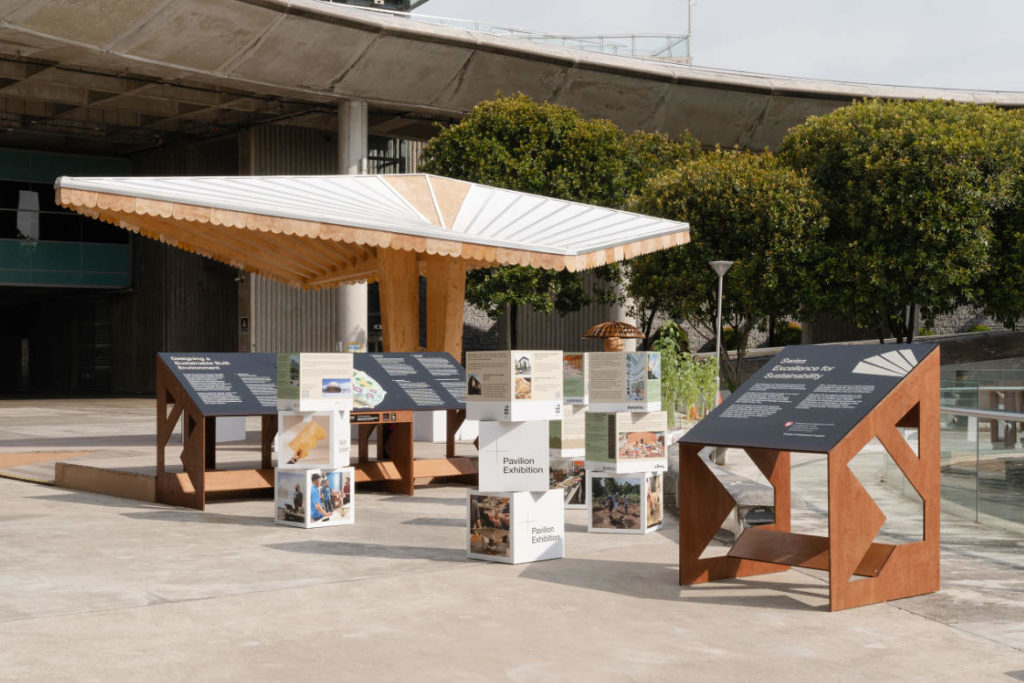
These questions are addressed through +Pavilion, a physical installation that features innovative and sustainable designs, building materials and solutions. Presented in conjunction with the Swiss Weeks 2022 at the Marina Barrage from 26 May till August, +Pavilion was realised by an ecosystem of stakeholders – private and non-profit – which comprise of Affordable Abodes, Deloitte Singapore, EHL Campus (Singapore), Haring Timber Technology, Hilti, Nespresso, Studio SKLIM, UBS, Vitra and the Embassy of Switzerland in Singapore.

Designed by Studio SKLIM and Haring Timber Technology, +Pavilion is inspired by the Swiss cross, wherein the structure is supported by two ‘nested’ main members. The main structure consists of Swiss glued-laminated timber technology (Glulam) that is one-tenth the weight of steel and one-sixth the weight of concrete. These properties allow for a shorter installation time, lightweight construction and lower installation costs.
A pre-fabricated reinforced concrete panel then counterweights the structure via innovative anchoring and glued-in rod connections, which reduces carbon steel usage and avoids the otherwise energy intensive welding works.

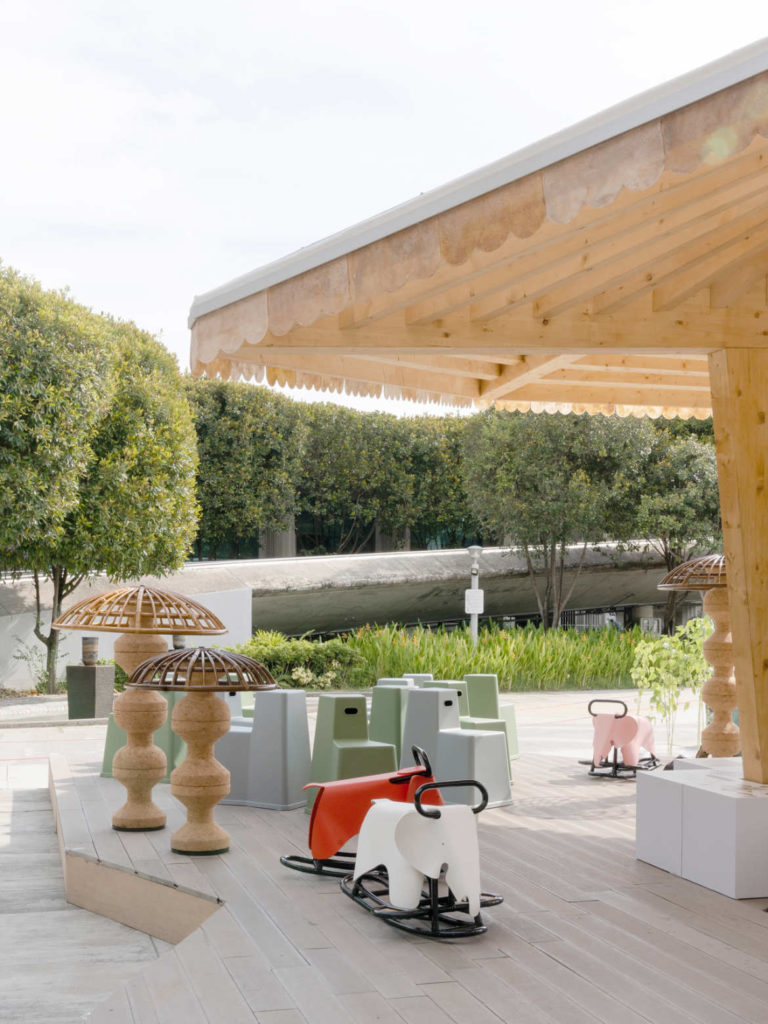
The roof is partially cladded by innovative biocomposite made from the Kenaf plant while boards made of recycled coffee serving are used as exhibition signage. Designed to encourage engagement with fellow visitors, the interior showcases Vitra furniture and playful elements that are made of cork, rattan and recycled plastic made from recycled household waste.
From August 2022, +Pavilion will move to its permanent home on the EHL Campus (Singapore), where it will be used for workshops and education around sustainability in the built environment.