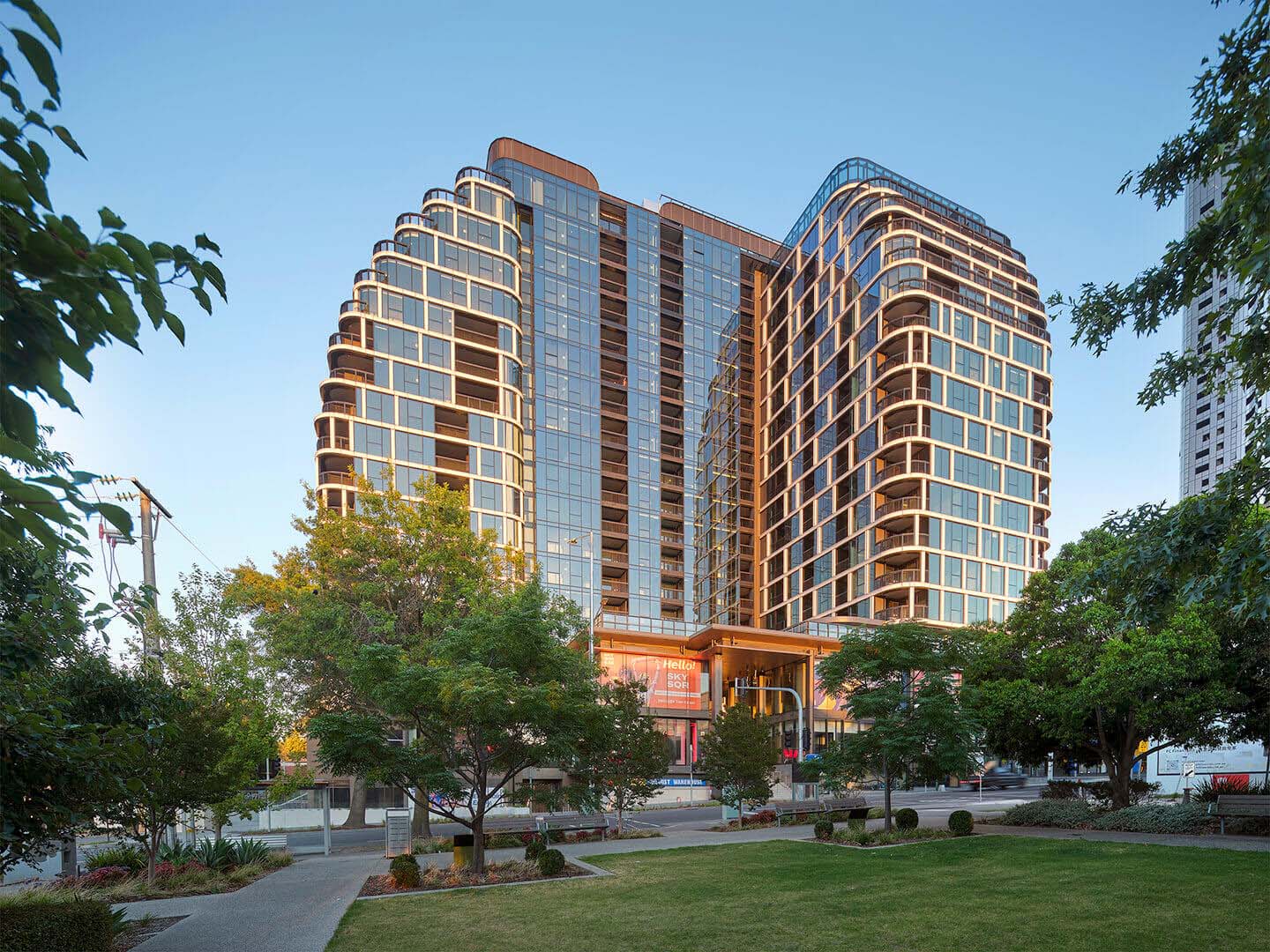
The facade and cladding system is one of the most important aspects of a building from a design perspective. It is required to manage condensation, protect the building from inclement weather, resist the spread of fire and has a significant impact on energy efficiency. However, despite its critical role, facade and cladding design, specification and installation has been the subject of a variety of recent compliance issues in Australia.
A 2019 Australian study conducted by Deakin University in conjunction with Griffith University found that defects relating to building facades and cladding systems were commonplace in buildings across the country.1 These defects ranged from ineffective weatherproofing to the use of flammable cladding. Not only are such defects costly to resolve, they impact property values and can make buildings unsafe.
Against this backdrop, a thorough understanding of the performance requirements and testing procedures that impact facade and cladding systems is critical. Compliance with fire performance requirements is especially important given the recent focus on fire safety in the aftermath of the catastrophic 2017 Grenfell and 2014 Lacrosse tower fires.
In this whitepaper, we identify the compliance pathways provided by the National Construction Code (NCC) and some of the key requirements and testing procedures relevant to building facades and cladding. In doing so, we provide information necessary to evaluate different facade and cladding systems and highlight the benefits of solid aluminium as a compliant cladding solution.