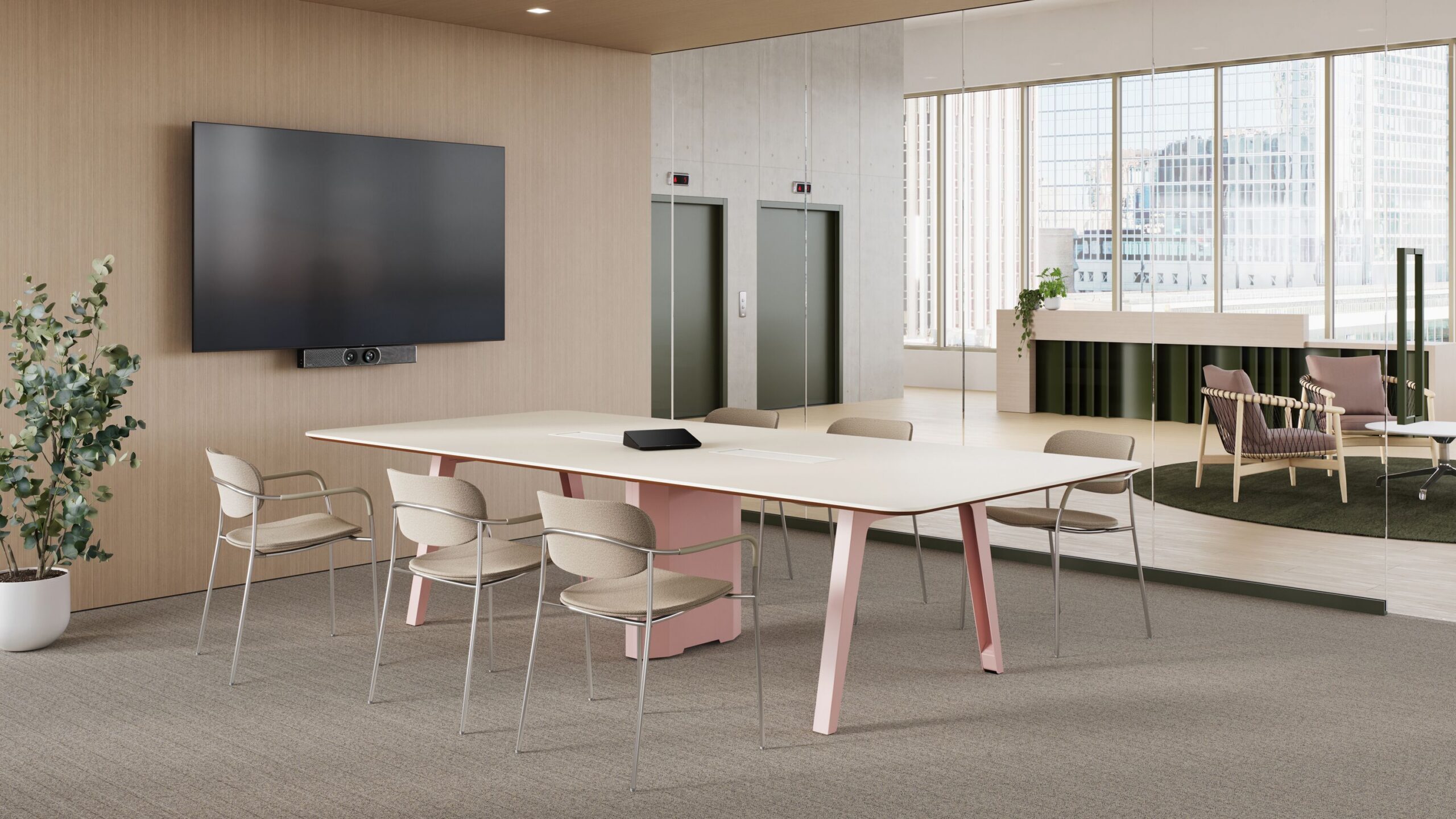
Just like modular wall partitions and desk systems make it easy to reconfigure a workspace in minutes, modular technology mounting systems enable flexibility with the technology support.
The Advantages of Modular Monitor Arms
How can you ensure your technology best accommodates your employees and “moves” with your modular office? Modular mounting hardware enables you to attach many different arm configurations to create (and recreate) your ideal workspace.
- Maximise Your Space. With digital documents eliminating the need for extensive storage space and flat monitor screens requiring less desktop space than their bulky predecessors, desks are getting smaller and narrower and workstations are shrinking up to 40%. Modular mounting hardware helps optimise this space.
- Future-proof Your Investment. In the spirit of flexibility and adaptability, investing in customisable, modular monitor arms will ensure you’re covering all of your bases. Your space and technology needs will invariably change, so prepare for it from the get-go with hardware that you can easily adapt.
- Reconfigure, Anytime. Modular mounting hardware solutions are built to accommodate office expansions (or contractions) as well as different and ever-evolving technologies—not to mention more flexible styles of working, such as part-time in the office and part-time at home, which might lead to desk-sharing or more frequent use of common work areas at the office. In fact, WorkplaceTrends’ most recent Workplace Flexibility Study reveals that 75% of employees rank workplace flexibility as their most important benefit, leading organizations to see improvements in employee satisfaction, productivity, and talent retention.
- Personalize Workspaces. Modular, configurable technology mounting hardware makes it easy to meet user preferences for what types of technology they use while working and how they’re most comfortable using it. Consider the BYOD (bring your own device) trend that continues to impact today’s workplaces: the majority (59%) of companies allowing employees to bring their own devices to work. This means there may be no “standard” solution for technology mounting, making flexibility key.
- Ensure Employee Health and Safety. Your employees engage with technology all day long. They may be sitting at their desk for hours at a time, or changing work locations several times within a day. No matter how they’re interfacing with their office technology, organizations have a responsibility to help keep employees’ health and safety top-of-mind. Knoll research recommends investing in high-quality monitor arms to position screens correctly and help reduce the eye and next strain associated with awkward posturing.
When it comes to creating a functional, productive, and comfortable office space meeting the needs of a wide range of employees and uses, it pays to consider your technology—and the hardware that supports it. Why not explore Atdec’s range of adaptable modular monitor mounts and find out how they can evolve with the ever-changing needs of your growing business.