Applying colour gradients has been a popular technique in many realms of design, and has recently caught on with interior designers. While we see this trend applied primarily through paint or textiles, it has opened the door to a range of gradient-inspired concepts that can transform bland rooms into striking, emotive spaces, including Kriskadecor’s beautiful metallic curtains.
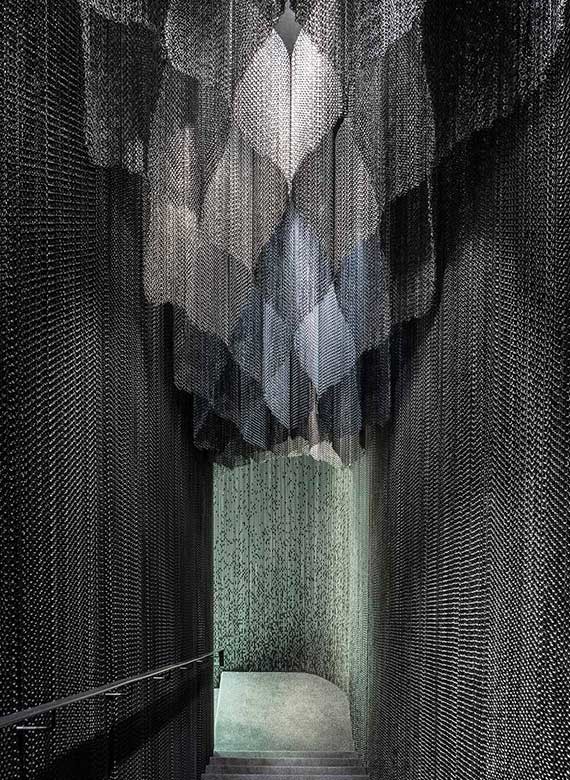
Thanks to their patented technology and wide color palette, Kriskadecor can generate any type of colour gradient in their range of bespoke chain curtains. Each curtain is made from small, linking pieces of anodised aluminium that form a lightweight architectural screen. Each link in the chain acts like a pixel, allowing Kriskadecor to reproduce any image, pattern or gradient in a wide range of brilliant and satin colour finishes on demand.
The material’s light weight and versatility also makes it possible to customise design solutions in almost any size, shape or dimension, offering architects and interior designers a wide range of solutions, including space dividers, wallcovering, ceilings, facades, and lighting elements.
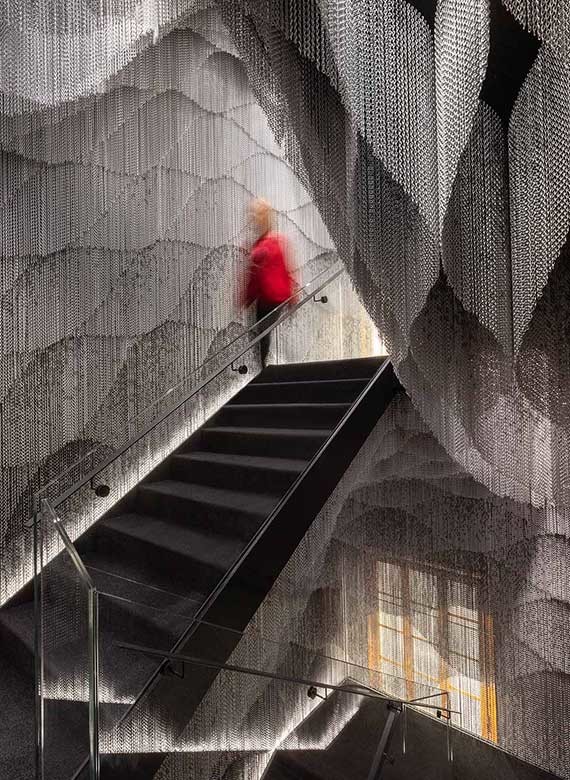
The recently-restored Casa Batlló (Barcelona, Spain), originally designed by renowned architect Antoni Gaudi, includes the architectural intervention of Japanese architect Kengo Kuma – an imaginative curtain comprised of Kriskadecor chain links that adorns the atrium and a new staircase connecting the ground floor with additional exhibition spaces. A tribute to the use of light throughout the house’s unique interior, the shimmering chains have been worked into layers with colour gradients, gradually changing from a lighter shade at the top to black as it descends downwards.
It is not necessary to work with layers to generate a gradient effect, as is demonstrated in Kohakinho restaurant (Lugano, Switzerland), designed by Bruno Huber. A large sculptural lamp in the shape of a fish floats above the tables, while Kriskadecor’s aluminum links on the feature wall transform the space into a metaphorical fish tank. The color gradient begins in the ceiling, with 49 straight pieces in orange, brown and gold, and ends with a wallcovering which includes seven other colors that help bring together all the decorative elements.
Gradients are used to great effect in space dividers in the MiQ offices in New York. Designed by Sydness Architects, Design Republic and Emma Louise Ingham, this application features Kriskadecor chains in a high-definition, multicolour gradient that breaks the chromatic harmony of neutral colours in the space and complements the company’s logo.

Signature Design Collections
While customisation is Kriskadecor’s strongest quality, the company also offers signature design collections to inspire customers. Designed by international designer Luis Eslava, the Gradient Collection consists of eight gradient variations inspired by the transitions between pure colours, light and shadow or the grey tones between black and white.
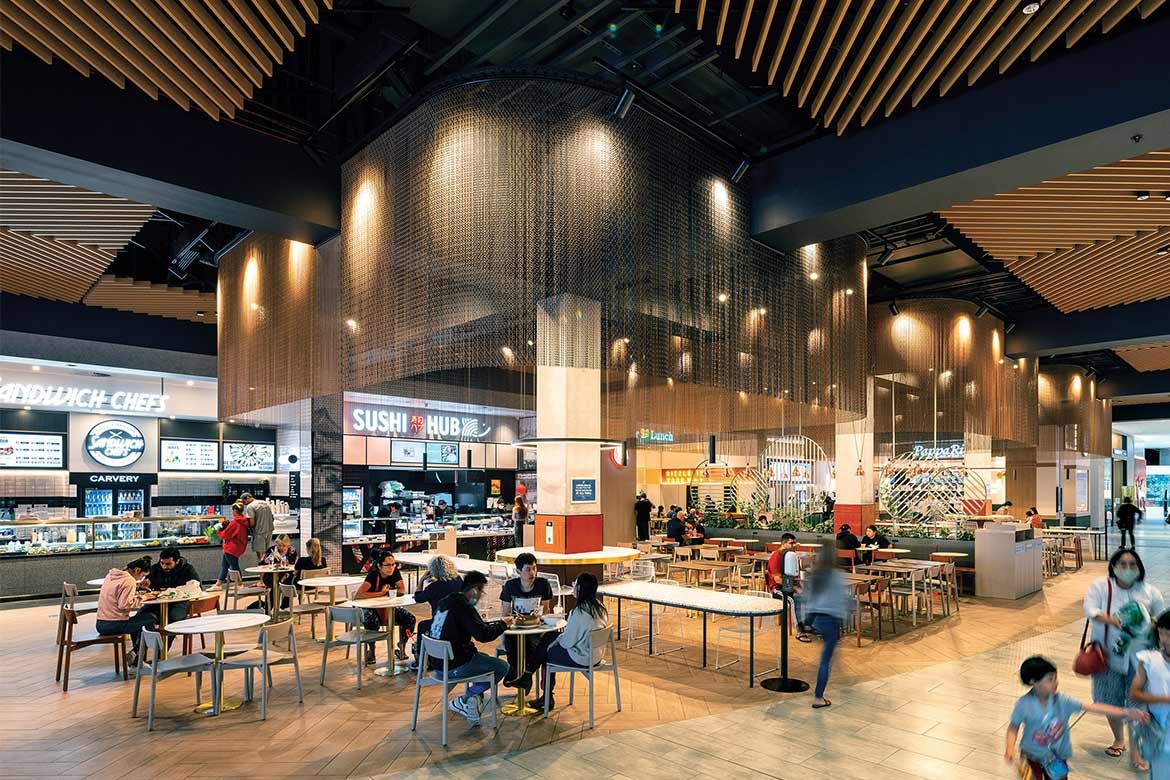
One of the most recent applications of these designs can be found in the M-City Shopping Centre (Clayton, Victoria), designed by MTRDC, which includes several ceiling solutions in the food court and mall space. For this application, Gradient 1 was selected, where the brown shades move horizontally from light to dark. The project was managed by ChainCraft, Australia and New Zealand’s distributor of Kriskadecor.

The Essential Collection by Claire Davies features versatile patterns such as Nieva de Noche, the same design used by Perathoner Architects in the Linder Cycling Hotel to blend perfectly with the surrounding water features.
Kriskadecor chains are made available to Australia and New Zealand via ChainCraft, who offer assistance at every step of the design process.