There is no better sense of camaraderie then when one of our own is killing it outside of Oz. I think it’s because unlike the seemingly small pond of the Australian market, getting noticed in the conversely massive Europe is a huge coup. The competition doubles, if not triples; there’s more media, more potential buyers… more everything. This presents a particular problem for solo designers who have to double their output just to stay afloat. It’s incredibly tough – but not impossible.
The debut collection by Copenhagen based Australian designer Nikolai Kotlarczyk presents a series referencing the aesthetic, ritualistic and emotive aspects of the Catholic Church in central Europe – all from the unique perspective of a non-native European – an Australian.
Nikolai Kotlarczyk, originally from Mullumbimby next to Australia’s most easterly point, worked within the Australian design industry for many years after graduating from the Queensland College of Arts in 2007 (Bachelor of Design, majoring Interior Design). After working with renowned Australian manufacturer Tait until 2013, Nikolai moved his studio to Denmark’s capital Copenhagen.
His debut series highlights the apparent contradictions of the church, a conflict of modesty and opulence, masculinity and feminism, modernity and tradition. These contradictions are highlighted through objects that mix robust materials with hazy transparencies, honest reflections with abstract figures, and feminine colourways with tribal motifs. The ritualistic act of the offering, the use of architectural mandalas and the idea of self-reflection are all explored within the series.
Rose Coffee Table
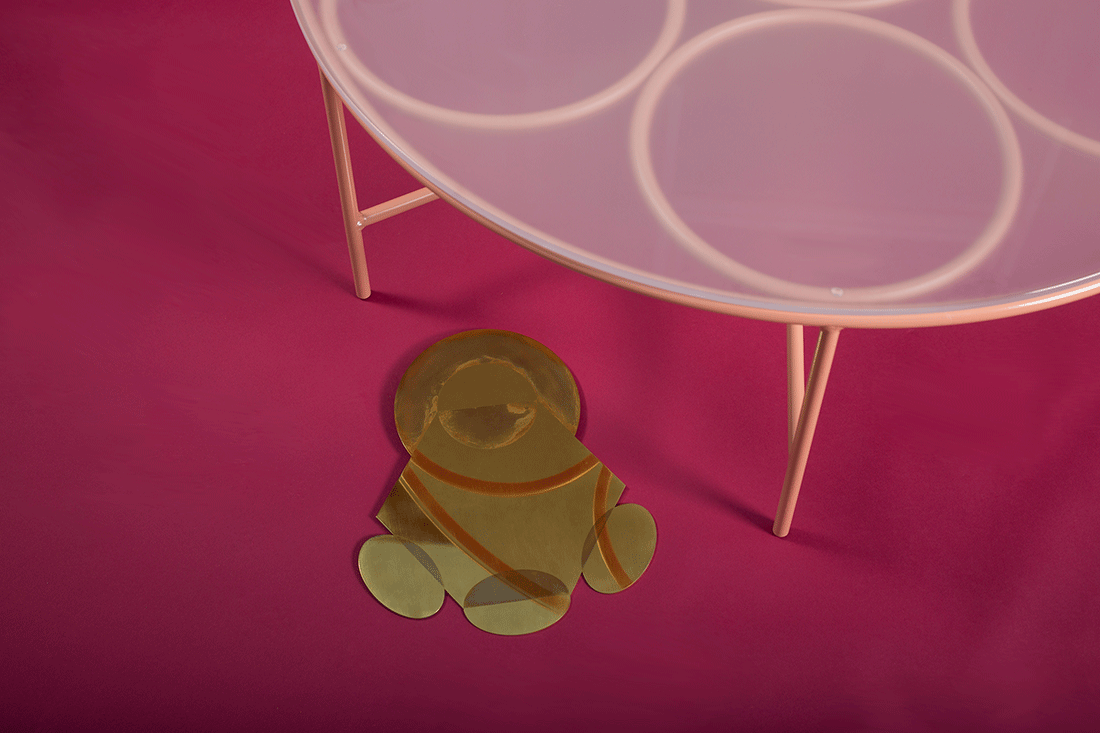
The form of the Rose coffee table brings an instant visual connection to stained glass windows of many catholic churches throughout Europe. Architects used the rose formations as a type of mandala, bringing order out of chaos and giving form to the unformed. By combining these simple circular sections, new and interesting voids were created within the church walls. These voids always contained a symmetry and order due to the repetition of this simple shape. The opal matte glass top, presenting a halo of the circular forms below, further softens the pink coloured steel frame.
Barocche Mirrors
The Barocche series of solid brass mirrors are composed from the graphic interpretations of floor plans from three distinct churches in central Europe. The placement of these domes and columns reveals almost tribal masks from within the make-up of their physical environments. Spaces where individuals go to face their own demons, the Barocche Mirrors aim to question ones own reflection. Produced from mirror polished brass with oxidized patterns.
Halo Vase
One ritual practiced across religions and societies is that of offering to a higher being. Whether flowers and candles, or even fruit, this act of giving in turn changes these items from everyday to something more significant. The Halo vase aims to bring a small space into the home where one can signify this act of collecting and giving. The reflection of the polished brass back highlights the flowers or leaves displayed in the ceramic stem, creating a small space with heightened significance.
Nikolai’s work serves as a strong reminder that the design talent of Australia and the Asia Pacific represents a new era in design iconography; one where we are leaders not followers, pushing the industry to a future unburdened by the traditions faced by our European industry counterparts.
‘On ya, Nikolai!