While the name Angela Ferguson is well known in the sphere of workplace strategy and interior design, her new practice, NeuroHaven, has just been established and is set to make quite an impact.
After almost 30 years of practice, including as a former owner of Futurespace, Ferguson has spread her wings and created a new consultancy that uses neurodivergence as a baseline for designing workplaces that ultimately benefit everyone.
Over the past decade, the workplace has rapidly changed and creating safe and comfortable spaces for a wide range of people’s needs is now the order of the day.
Through NeuroHaven, Ferguson is channelling her extensive knowledge and expertise to create ‘human first’ environments, contributing to clients’ and designers’ projects from early strategy through design, delivery and post-occupancy review to understand and determine better directions for the workplace.
“After almost three decades designing workplaces, I realised the conversation needed to shift. We’ve become very good at measuring how efficiently workplaces operate, but we’ve spent far less time asking how well they help people function. NeuroHaven was created to bridge that gap – bringing together workplace design, research and lived experience to help organisations create environments where people can think more clearly, work more effectively and ultimately perform at their best,” says Ferguson.
Related: A new home for architectural debate in Melbourne
Around one in five people are estimated to be neurodivergent, while many more experience differing sensory, cognitive and behavioural needs throughout their working lives. Designing for all aspects of human functioning is an imperative, and Ferguson wants her clients to see that there is a better way to support their people and, ultimately, their business.
Ferguson sees three important aspects of today’s workplace – sensory, cognitive and behavioural – that culminate in better human functioning, workplace performance and wellbeing. Given her own lived experience of neurodivergence, the designer understands what needs to be adjusted, removed or added to a working space for optimal health, which can then lead to enhanced performance.
Over her long and distinguished career to date, Ferguson has helped organisations through strategy, interior design and research. With experience spanning a plethora of brands across the Asia-Pacific region, she has worked with organisations such as Google, Microsoft, PwC, Fortescue, SBS, REA Group, Aware Super, IAG, Tourism Australia, Stan, Symal, Johnson & Johnson and many others.
Ferguson reflects, “Throughout my career I’ve had the privilege of working with organisations including Google, PwC, realestate.com.au, Symal and many others, often in the technology and financial services sectors. When I look back on these projects, the common thread wasn’t really architecture or interiors – it was curiosity about people. I was always asking why some workplaces enabled people to thrive while others created unnecessary friction. Today, NeuroHaven gives me the opportunity to focus entirely on that question, working alongside architects, designers and clients to bring a specialist human functioning lens to workplace strategy and design.”
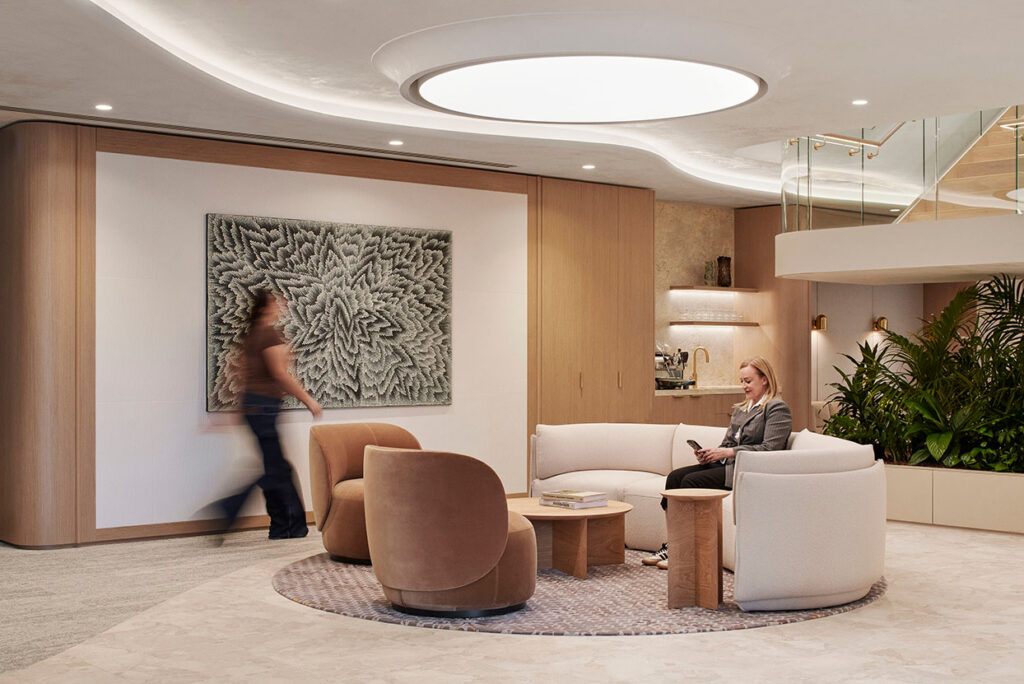
While the language of workplace design evolves, Ferguson’s underlying philosophy has remained consistent throughout her career – that great workplaces are designed around how people function.
Long before neuroinclusion became part of mainstream workplace conversation, her work increasingly focused on understanding how workplace environments influence people’s behaviour, wellbeing and performance.
It is this curiosity that led Ferguson to undertake doctoral research exploring how future workplaces are imagined and brought into being through design practice. As global understanding of health, wellbeing and neuroinclusion has evolved, that research provided the foundation for the creation of NeuroHaven.
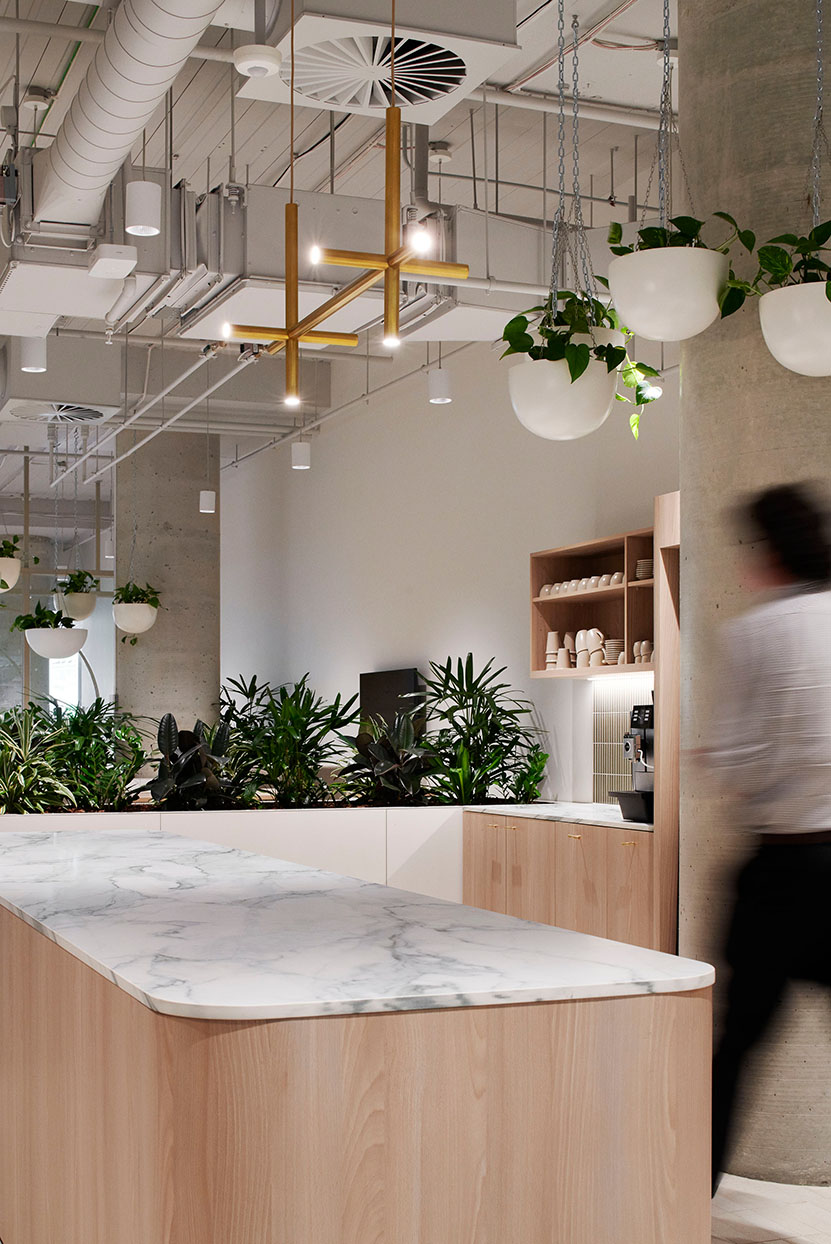
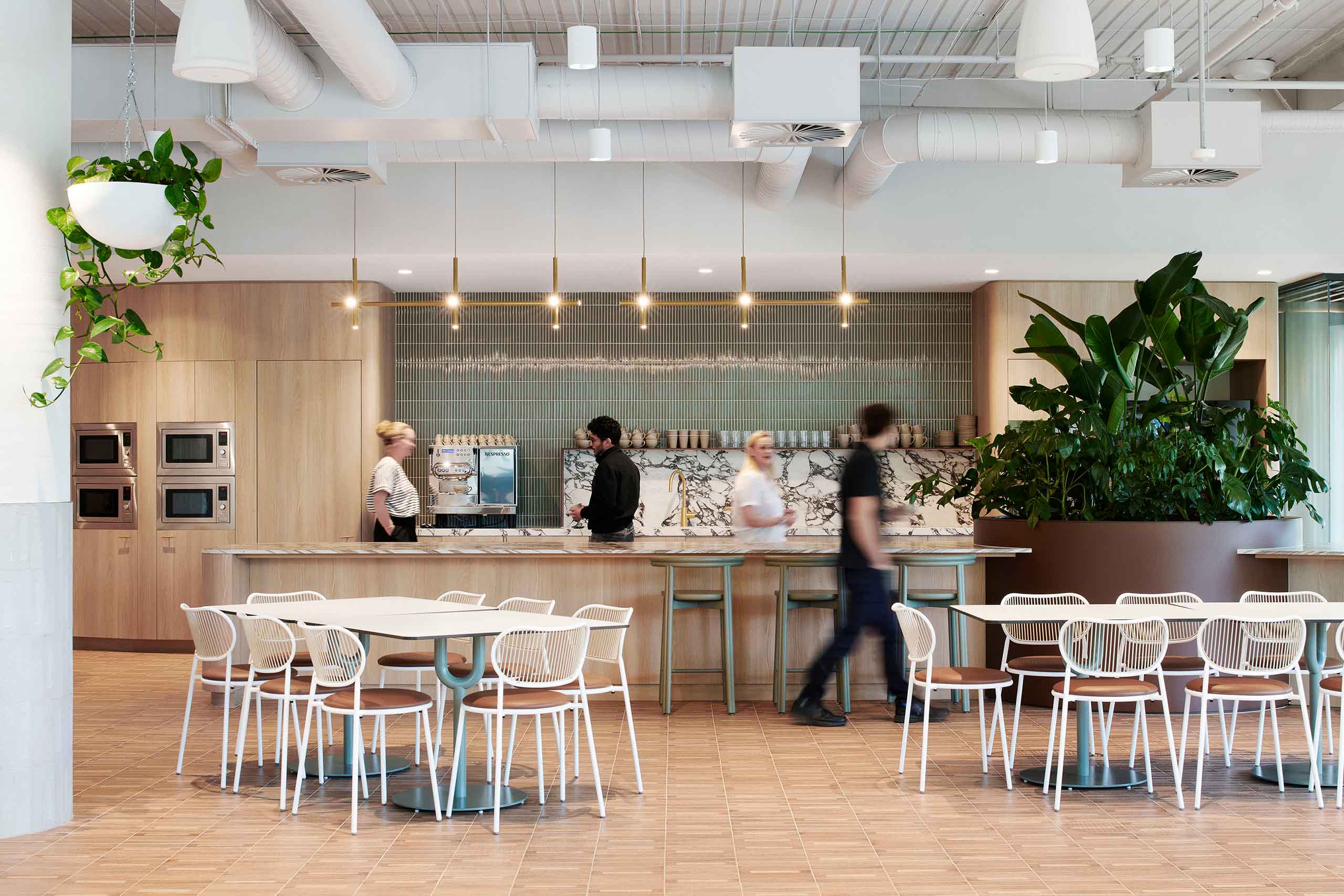
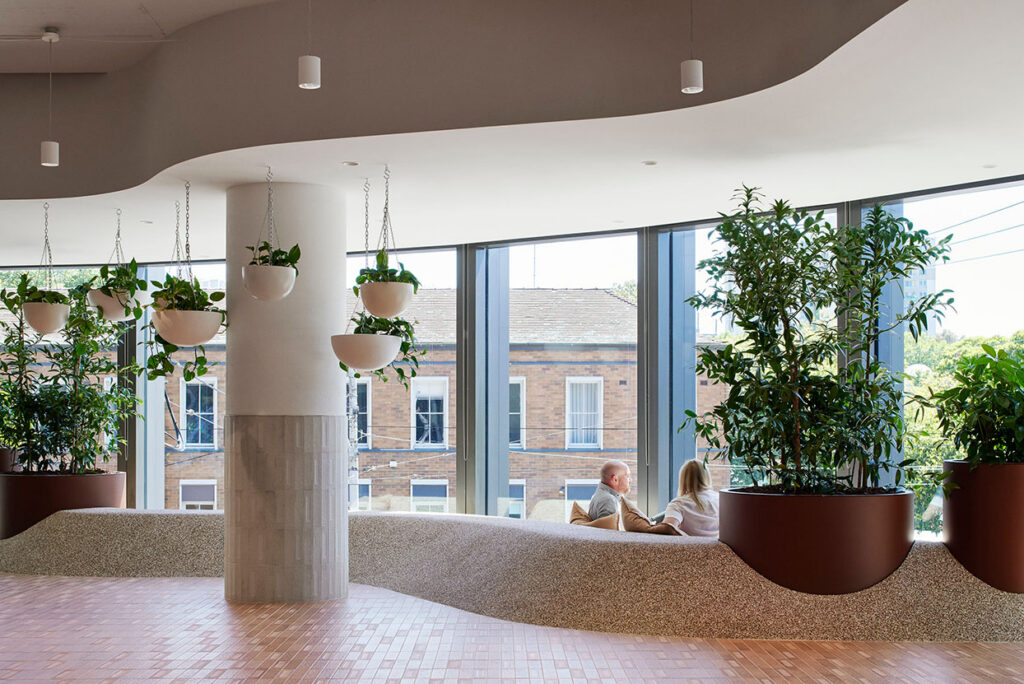
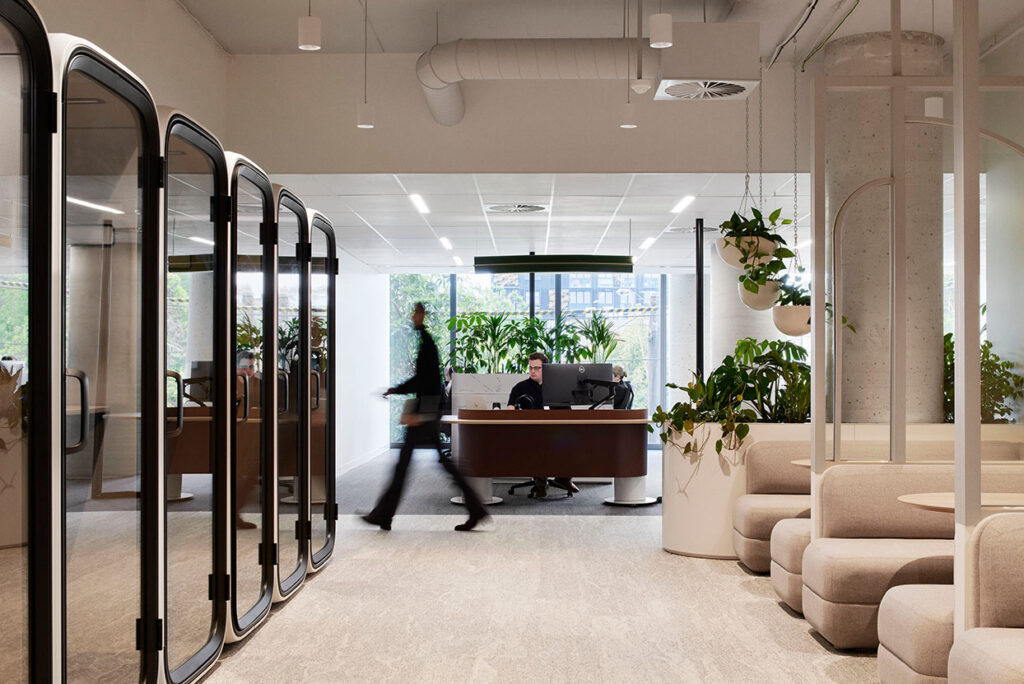
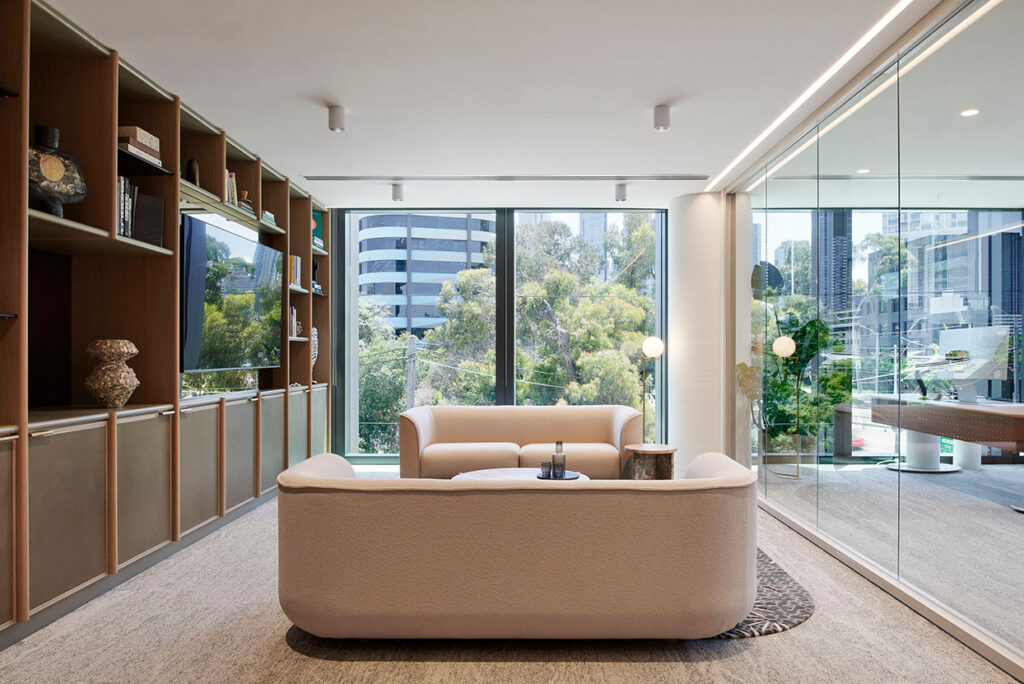
The recently completed (2025) Symal workplace illustrates how many of the principles now captured within NeuroHaven’s Human Functioning Framework have long been embedded in thoughtful workplace design. Natural materials, planting and curved forms create a calming sensory experience, while intuitive planning supports easy navigation and reduces unnecessary cognitive effort. A diverse range of work settings provides people with choice over how they focus, collaborate and restore.
“What NeuroHaven brings is not a new set of design features, but a structured framework for understanding why these principles matter, how they influence human functioning, and how they can be applied more deliberately and consistently and in line with an organisation’s specific workplace needs,” comments Ferguson.
Today, NeuroHaven brings together almost three decades of workplace practice, research and lived experience to help organisations, architects and project teams design environments that support sensory, cognitive and behavioural needs, creating workplaces that better support human functioning.
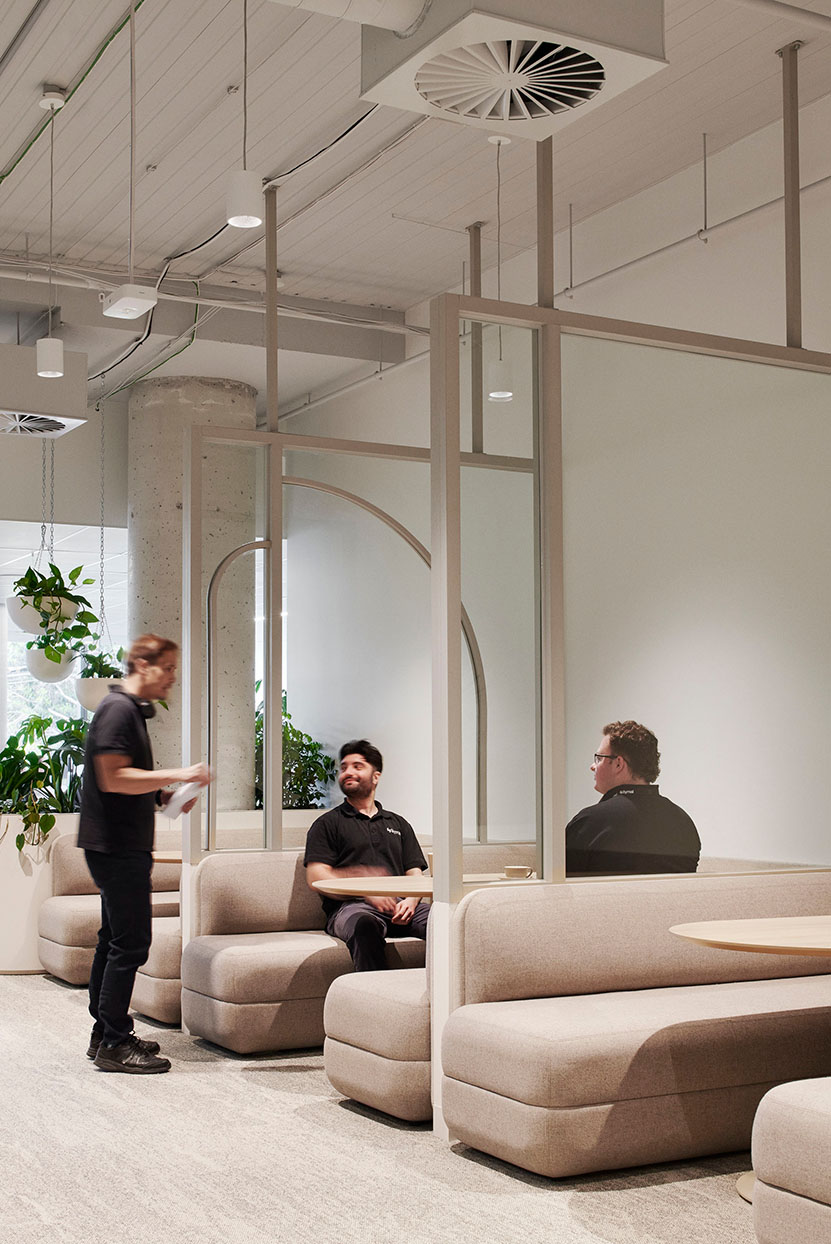
Ferguson explains, “I don’t see neuroinclusive design as another layer that gets added to projects. I believe it represents the next evolution of workplace design. When we better support sensory, cognitive and behavioural functioning, we create workplaces that are more intuitive, more inclusive and ultimately higher performing for everyone. If NeuroHaven can help move that conversation from compliance to capability – from accommodating difference to enabling human potential – I’ll feel I’ve made a meaningful contribution.”
Angela Ferguson is passionate about her new practice, as indeed she has always been about her design career. Now, with the freedom to explore how we work and make changes to enhance the everyday, there is an opportunity to ensure that the ubiquitous act of working is more inclusive for everyone.
And the last word is best left to Ferguson, who makes the salient point: “The question is no longer simply whether a workplace is sustainable, efficient or beautiful. It’s whether it enables people to function at their best.”
NeuroHaven
neurohaven.com.au
Photography
Nicole England