Placemaking, simply stated, is creating places that people want to be, writes Buchan principal and director, Andre Jones. Whilst not a new concept, it has lately become something of a north star for anyone involved in city-making.
In Perth, as elsewhere in Australia, the increased focus on placemaking is linked to the expansion of public transport networks and the need to create more compact, connected cities. Metronet is bringing more than 70 kilometres of new passenger rail and 22 new stations to Perth and is set to unlock 8,000 hectares of land. Entire new communities will be created, while the redevelopment of existing stations aims to increase density and urban amenity.
Buchan recently brought together some of Perth’s most influential developers to have a conversation around unlocking Perth’s potential. The message from the assembled group was one of optimism, describing the city as a great place to live and one they are deeply committed to.
Some common themes emerged. Whilst city-making is a complex ecology, several factors that will positively impact on the design evolution of Perth were identified.

Collaborating to deliver on policy
The WA State Government has acted to create policies and projects that will increase density and reduce sprawl. These will take years to come to fruition. Bringing architects, developers and government together to engage in regular, meaningful dialogue will ensure the policies work in action and the vision stays on course.
Increasing the population
Perth’s population needs to grow, to generate the critical mass required to support investment in quality public spaces and efficient infrastructure. Creating desirable, high-amenity places to live will undoubtedly attract more residents to Western Australia, driving further precinct development.
Greening and biophilia
Mature trees are what makes established suburbs desirable. A just-released research paper from UWA, entitled How the urban forest influences residents’ place attachment, (Harrison McGrath, MSc (2021/2022)) surveyed 400 Perth residents and found a strong connection between sense of place and trees. Now is the time to start planting at future Metronet development sites, so that trees can mature by the time construction begins. This will help to create a strong sense of place and deliver the benefits that the UWA report identifies, which include better mental health.
Is there an example of precinct placemaking in Perth that leverages transport infrastructure to increase density and preserve what people love about their city? Cockburn Quarter is one place that is striving to deliver on the vision.
A place to feel proud of
Located 24 kilometres south of the Perth CBD, Cockburn Central is one of the State Government’s first designated ‘Activity Centres’; a mixed-use, multi-residential, retail and commercial precinct anchored to the public transport system. With its quick connectivity to Perth’s CBD, the precinct has steadily grown over the last decade but without consideration for how growth and creating a sense of place aligns.
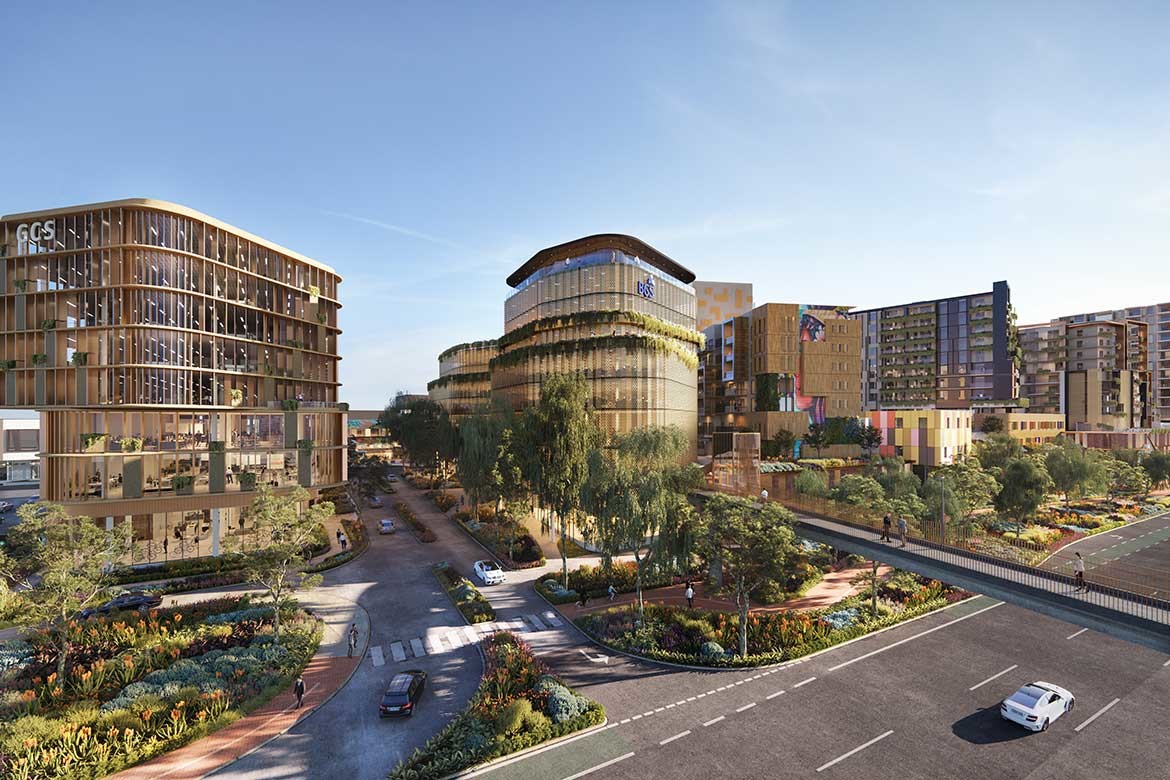
Buchan has master planned a 20-year vision for Cockburn, centred on a new community heart known as the ‘Cockburn Quarter’. The starting point was to ask the local community what they want – the cornerstone of placemaking.
Community feedback identified the need for better cross-precinct connectivity; a desire for more green, shared space; less traffic; and, most telling, a yearning for something to feel proud of – a sense of place. The people of Cockburn expressed a clear desire for more excitement and activity, alongside a strong need for respite from the pressures of contemporary life. High value was placed on aesthetics and sustainability.
The masterplan responds by visioning the Cockburn Quarter as an extension of what people love about the surrounding suburbs – the local parks, walking and bike tracks, and leafy streets that support the residents’ healthy, outdoor lifestyle. Buchan’s masterplan has a focus on walkability, creating connected, green spaces that will link the precinct’s retail, entertainment, medical and recreation zones and minimise the need to navigate busy roads. A town plaza will create a focal point and create the community heart that is currently missing.
The community’s enthusiasm for the masterplan indicates that Perth people are ready to embrace higher density if it will make life more interesting and exciting and offer more opportunities for socialising and recreation, whilst preserving a deeply felt need to connect with nature and retain local character. Quality design is critical.

A line in the sand
It’s time for Perth to define its city limits, curb sprawl and focus on channelling our limited resources into prioritised, quality precinct development. Perth residents may be wary of change but we’re quick on the uptake once we can see the benefits.
We have the luxury of sunshine and space and with focused investment in good design, we can create an efficient, green and sustainable city that people everywhere will want to live in.

Buchan
buchangroup.com
We think you might like this article about Gerald Matthews of Matthews Architects.