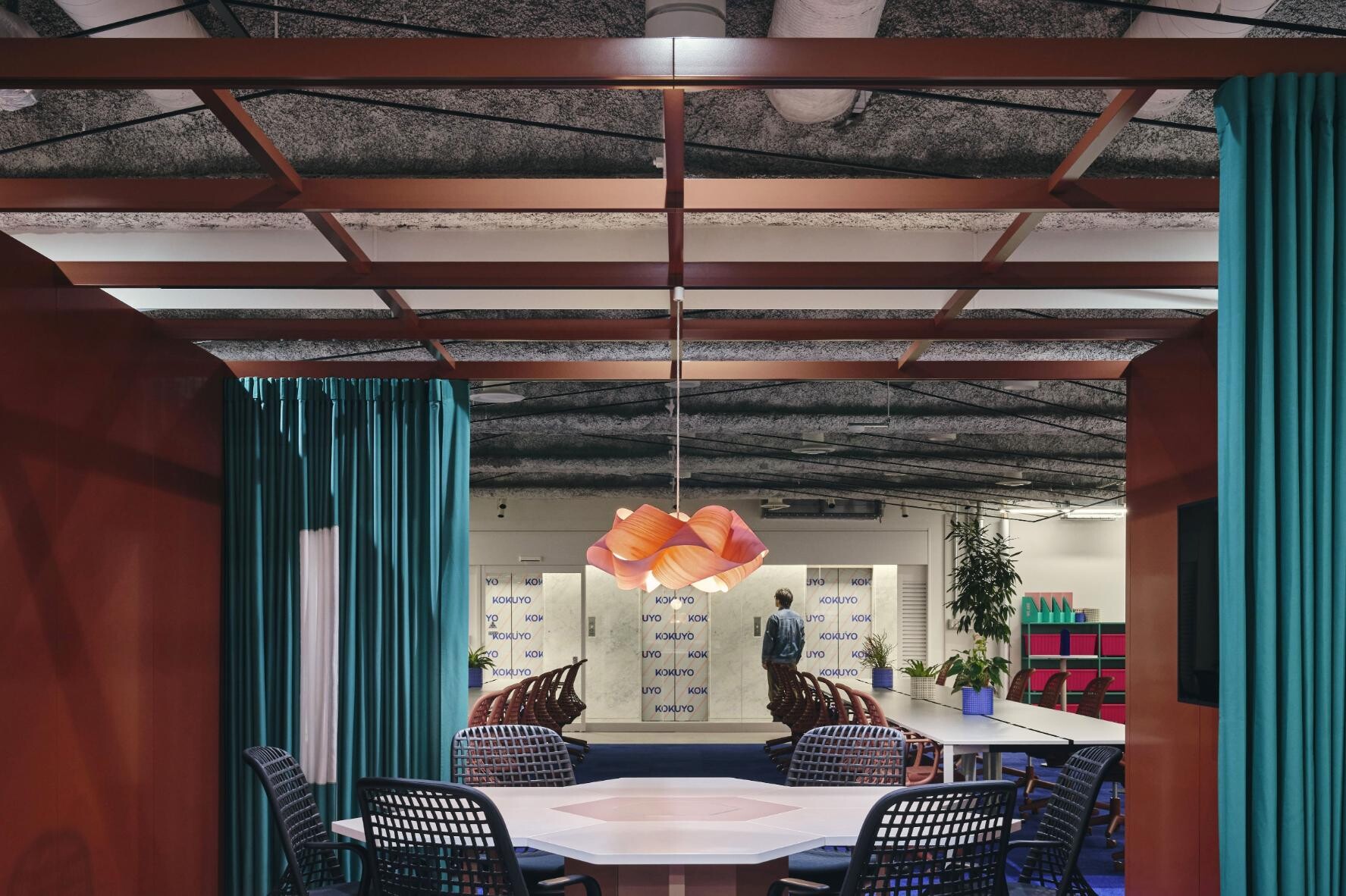
The reimagined floor within The Campus — Kokuyo’s flagship Tokyo workplace — represents a deliberate shift away from the neutral, efficiency-driven office interiors that have dominated workplace design for the past decade. Instead, the redesign embraces colour, texture and movement as active architectural devices, transforming the floor into a social and spatial catalyst for interaction.
The ambition was never simply to provide another functional workplace level. Rather, the project sought to create an environment that introduces energy into the everyday experience of work — both literally and figuratively. Through layered materiality, playful interventions and flexible spatial planning, the design positions collaboration not as a programmed activity, but as something naturally encouraged by atmosphere and circulation.
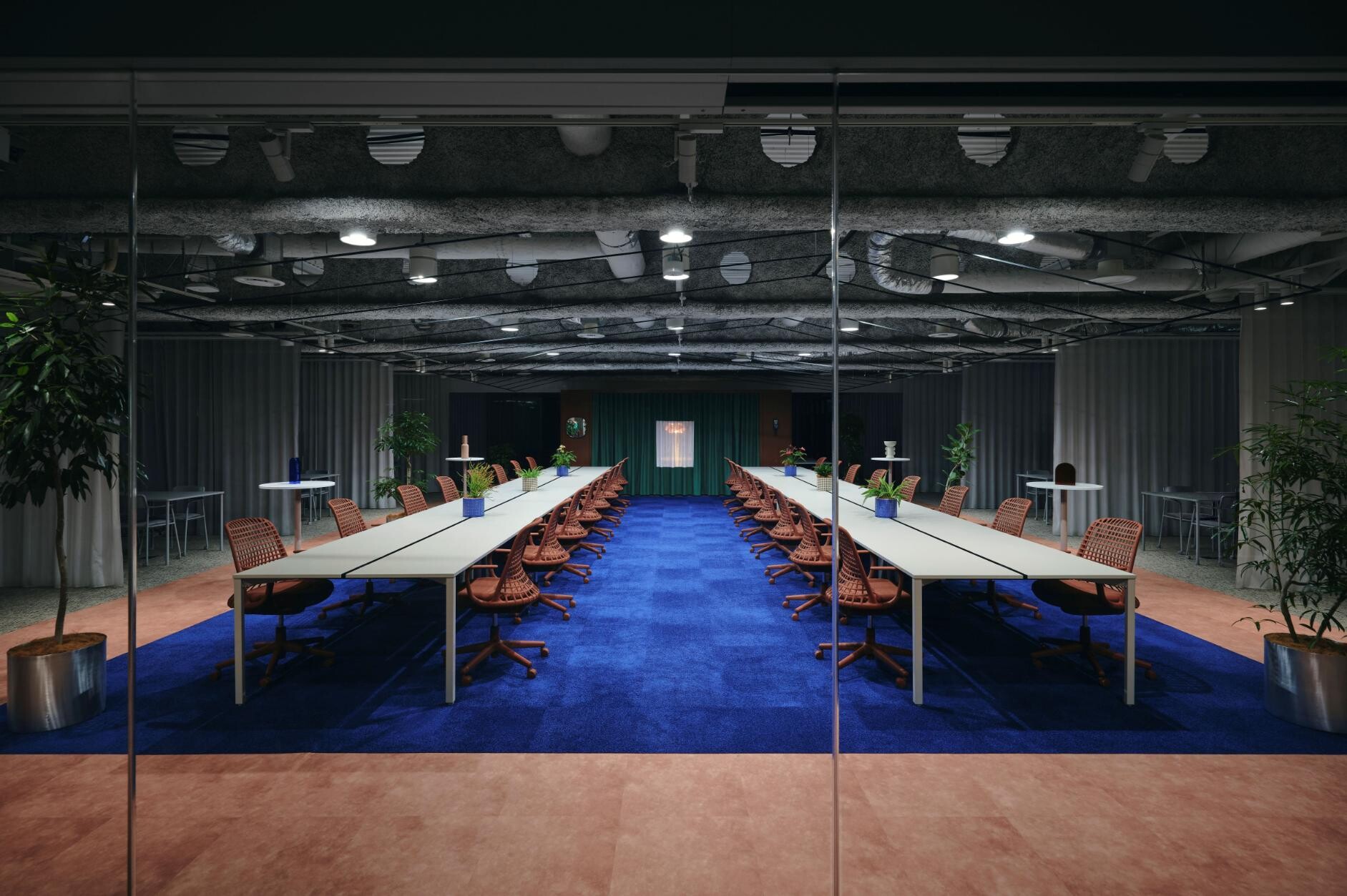
At the centre of the scheme is a carefully orchestrated palette that balances warmth with clarity. A vivid blue carpet defines key collaborative zones, embedded within a broader field of warm pink clay tones that soften the floorplate and establish a sense of cohesion. The contrast is confident yet controlled: the blue acts as spatial punctuation, drawing movement and gathering activity, while the surrounding clay tones maintain an underlying calmness across the open-plan environment.
Curtain systems further shape the spatial experience. Teal drapery introduces vertical rhythm and visual depth, offset by quirky white panel detail that lends a slightly unexpected character to the workplace. Elsewhere, opaque white curtains are used to separate meeting zones without fully enclosing them, preserving openness and airflow while subtly defining areas for conversation and focused exchange. The result is a workplace that avoids rigid boundaries, favouring permeability and adaptability instead.
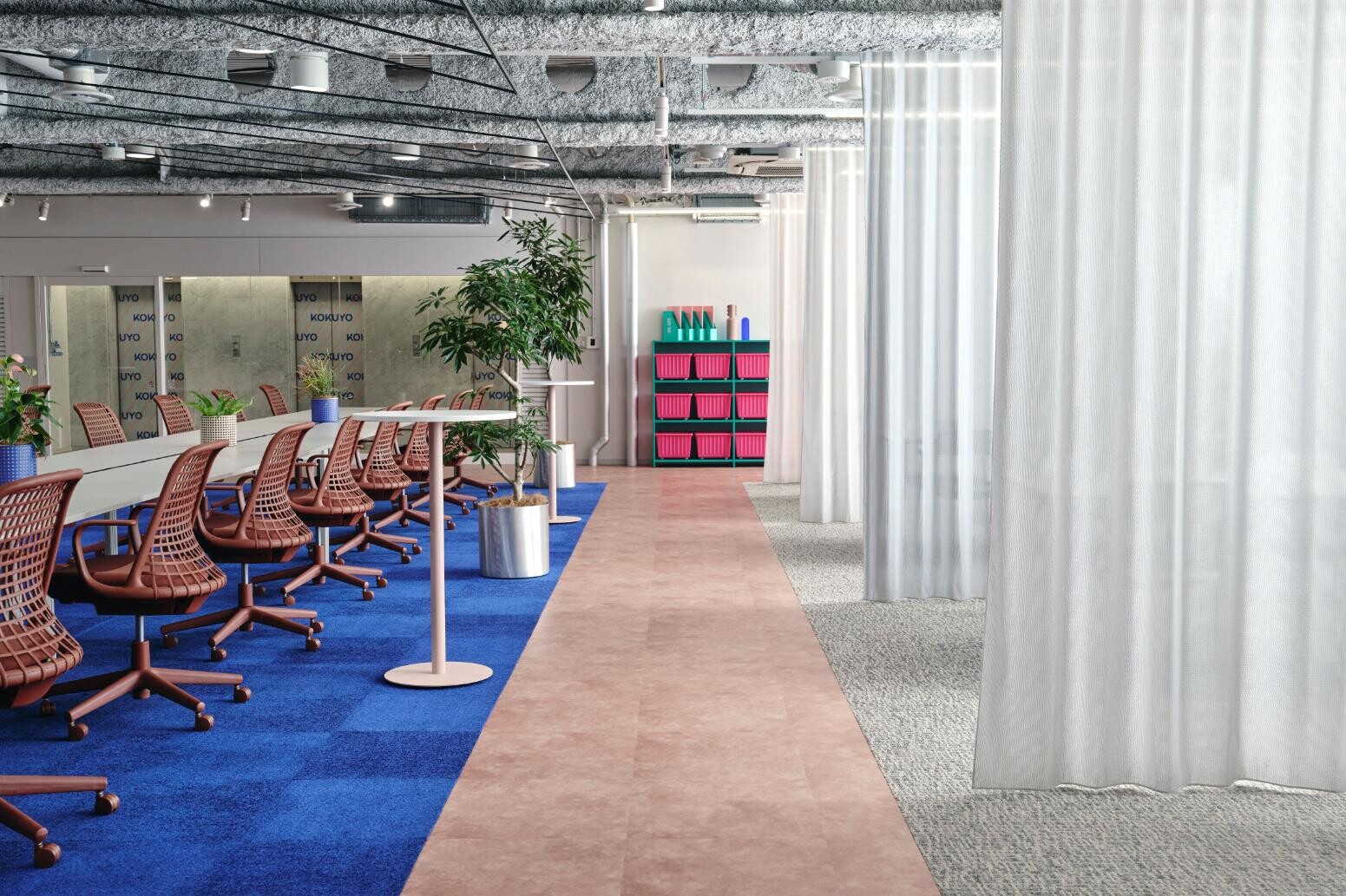
This layered softness is central to the success of the redesign. Rather than relying on hard partitions or overtly corporate planning strategies, the floor uses textiles, colour and movable elements to create spatial flexibility with a lighter architectural touch. The approach allows the workplace to feel simultaneously activated and relaxed — open enough to encourage incidental interaction, yet structured enough to support concentrated work.
Importantly, the project also introduces moments of personality that resist the polished anonymity common to many contemporary offices. Character-filled objects are integrated throughout the floor, including a playful cat clock that quietly reflects the distinctive sensibility long associated with Kokuyo. These interventions prevent the space from feeling over-designed or overly formal. Instead, they reinforce the idea that workplace environments can support productivity while still expressing humour, individuality and cultural identity.
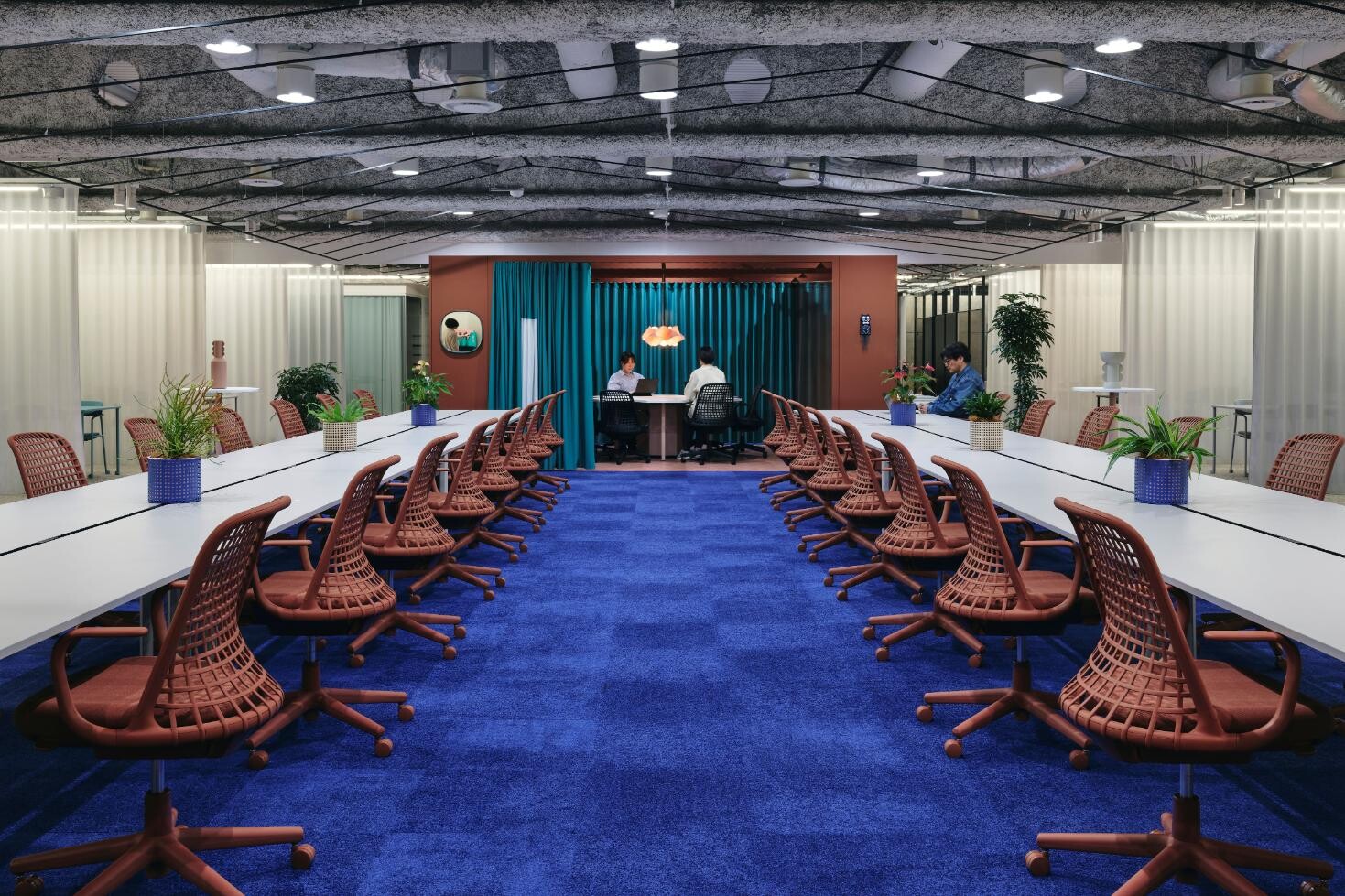
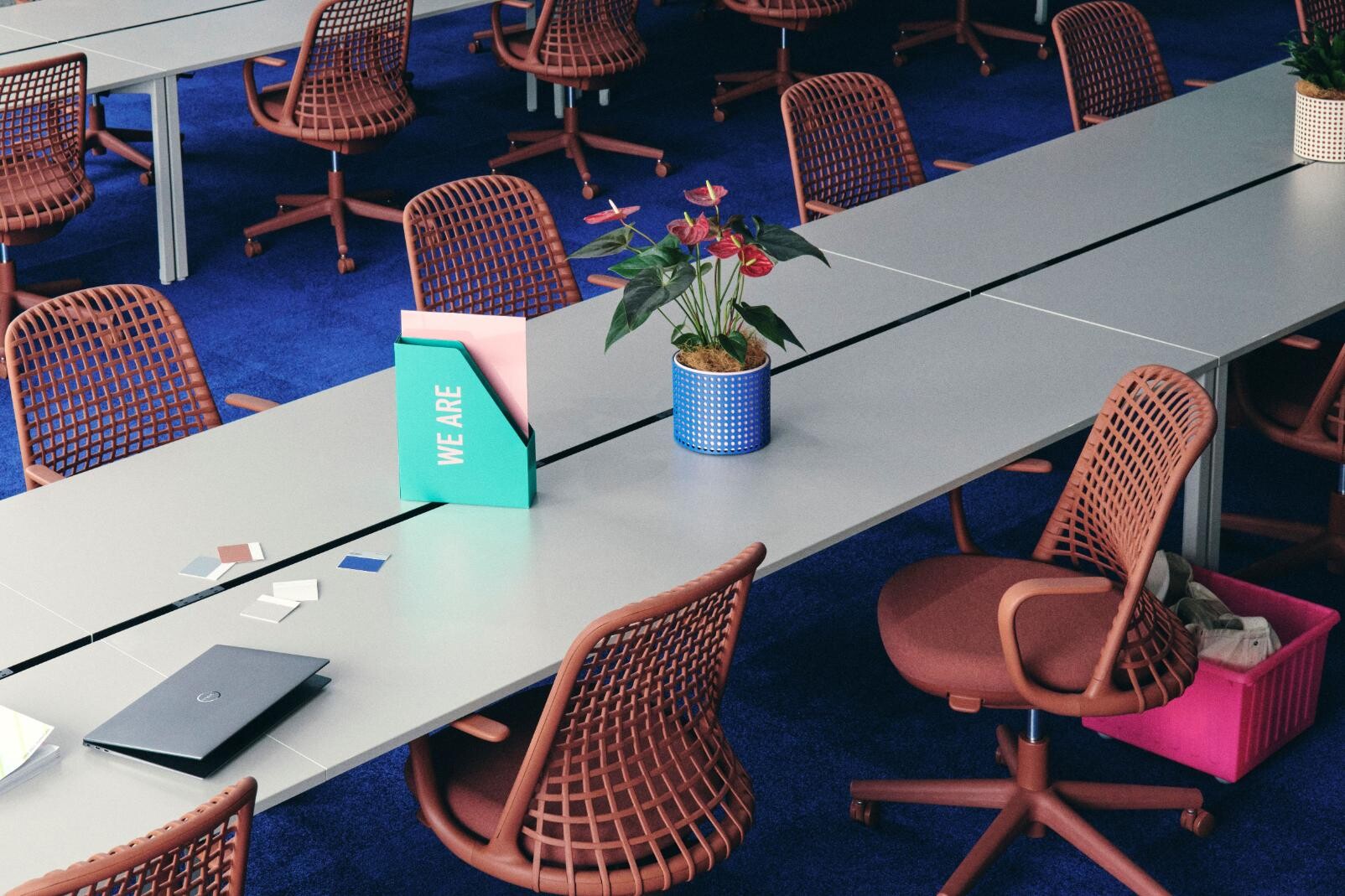
Movement itself becomes part of the architecture. Analog systems such as handwritten booking boards and file-box storage for group reservations intentionally foreground the visible flow of people through the space. Workers are not concealed behind seamless digital interfaces, but become part of the visual composition of the floor — their movement treated as another “colour” within the environment. In this way, the workplace feels alive not only because of its palette, but because of the activity continually unfolding within it.
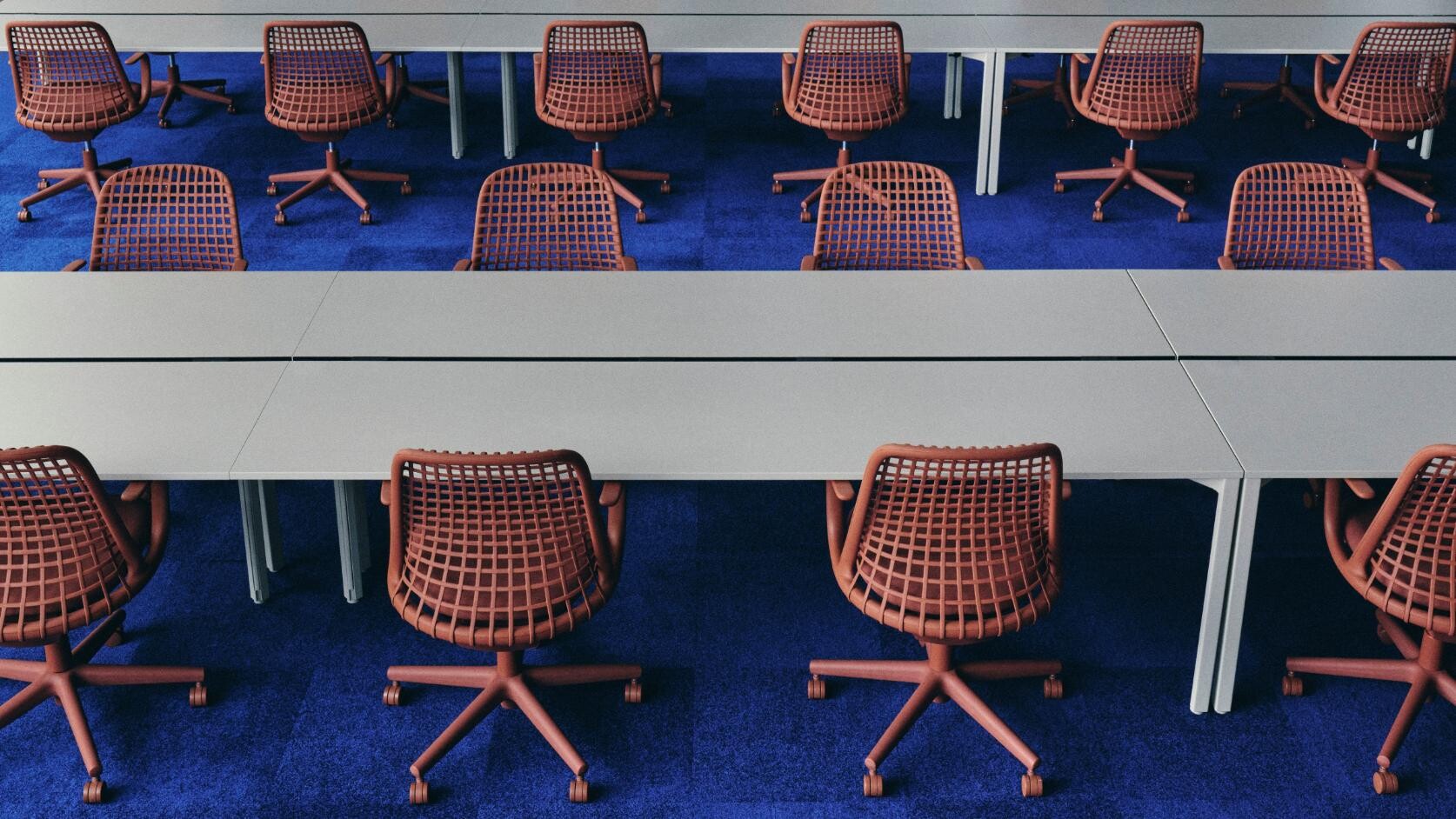
Furniture selection plays a supporting but significant role in reinforcing this atmosphere. Positioned throughout the main working areas, the Kokuyo Hug Knit Chair introduces both ergonomic performance and visual distinction. Its flexible knitted mesh construction delivers prolonged comfort and lumbar support suited to extended workplace use, while its tactile appearance complements the softer, more expressive architectural language of the redesign.
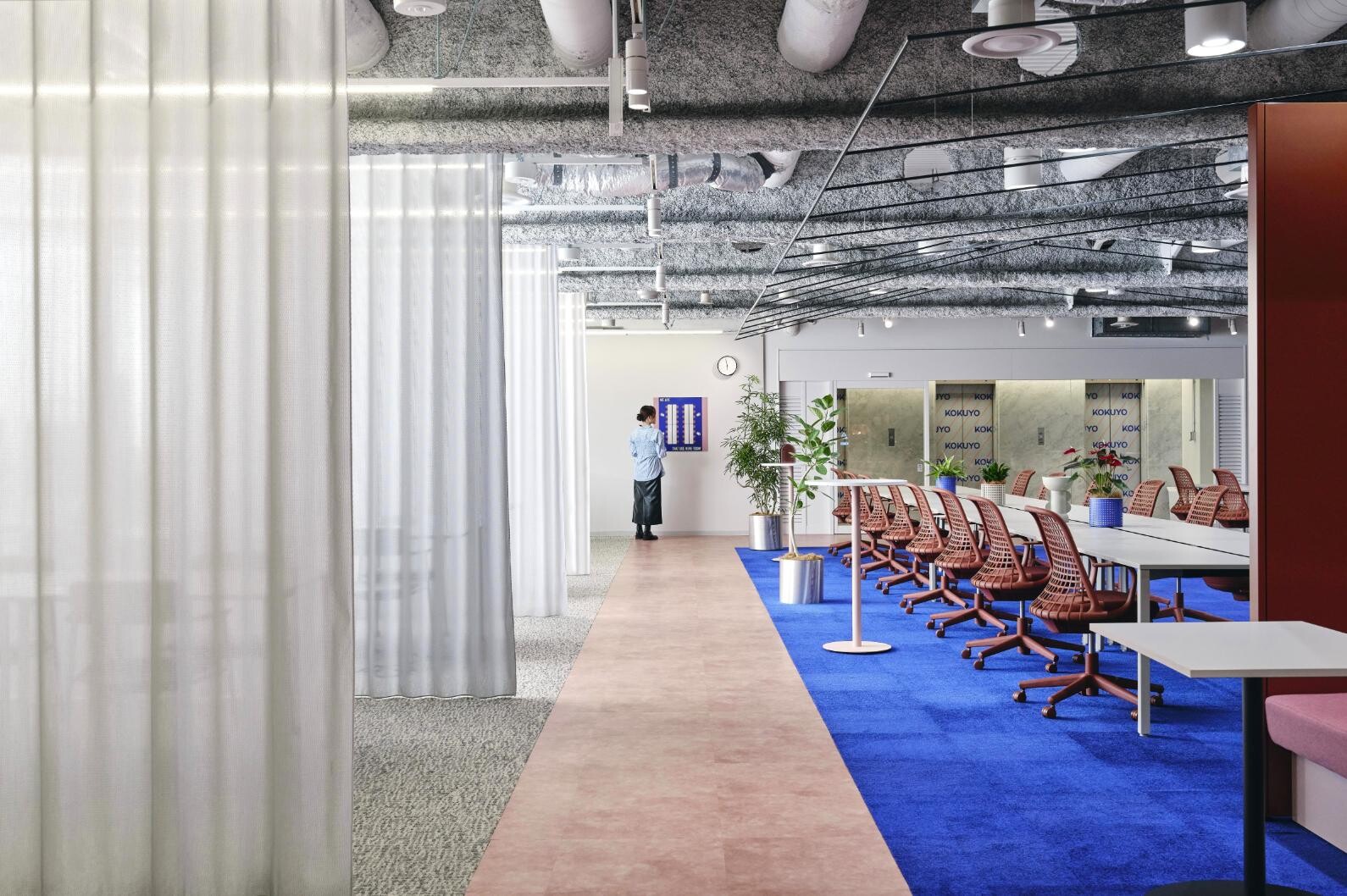
Rather than appearing as an isolated product insertion, Hug Knit integrates naturally into the broader spatial narrative. The chair’s lightweight visual character aligns with the openness of the curtain-defined planning, while its material softness echoes the textile-driven approach used throughout the floor. Within a workplace centred on comfort, adaptability and activation, the seating contributes quietly but effectively to the overall experience.
The redesign of Level 8 ultimately demonstrates a broader evolution occurring within workplace architecture. Increasingly, leading offices are moving beyond metrics of density and efficiency alone, recognising the value of emotional atmosphere, visual stimulation and human interaction within professional environments. At The Campus, colour becomes infrastructure, softness becomes spatial strategy, and character becomes an essential component of workplace identity.
The result is not simply a refreshed office floor, but a workplace environment designed to foster energy, participation and connection — an interior where collaboration emerges naturally through the interplay of architecture, objects and movement.
Photographer: Masaki Ogawa
KOKUYO
kokuyo.com