Designers have become accustomed to working at a fast pace to respond to market demands. However, it is only through an understanding of the key elements that go into creating a product can we understanding what designing sustainably truly means.
The American Hardwood Export Council (AHEC) have invested in life cycle assessments (LCAs) to collect and evaluate all the inputs and outputs of material, energy and waste flows associated with American hardwood products over their entire life cycle. An LCA provides a systematic and standardised technique for assessing the environmental aspects associated with a product so that its true environmental load can be understood.

Tom Fereday, Adam Goodrum, Greg Natale, David Trubridge, and Dowel Jones are just a few of the Australian and New Zealand designers who have put their designs through the LCA process in order to learn more about what it really takes to design sustainably.
External Review by Tom Fereday
Tom Fereday’s solo exhibition for Sydney Design Week 2022, External Review, provided a unique opportunity to consider all the factors that go into the creation of a furniture collection. The Cove lounge, the result of this collaboration with the AHEC, manufacturers Evostyle, upholstery specialists Swiss Design and the Australian Design Centre, was created with American red oak, the most abundant species in the American hardwood forest resource.
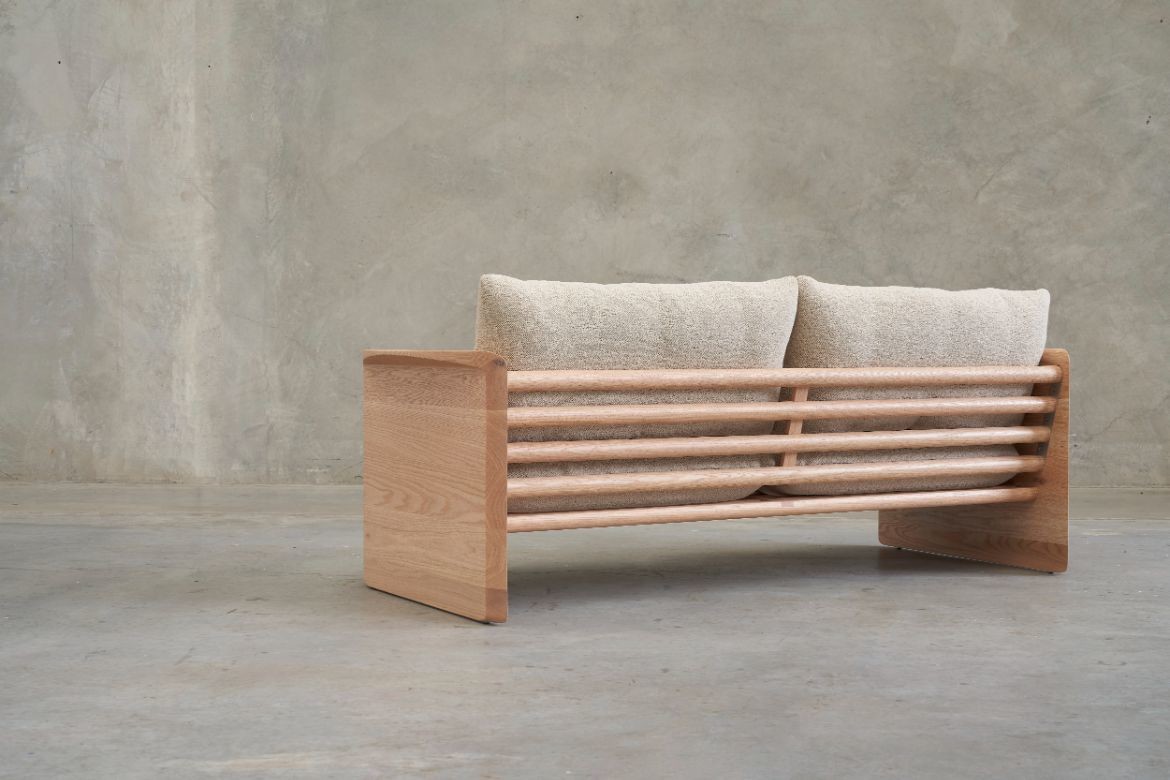
A key component of the collaboration was to interrogate the true environmental impact of Australian design by conducting a full LCA of the Cove lounge. The lifetime carbon footprint of the Cove lounge is just 18.7 kg CO2 equivalent, which is about the same as the carbon emitted in a single journey from Sydney to Bowral (125km) in the average Australian car.

Seed to Seat
Seed to Seat is a featured 2016 collaboration between six designers and the AHEC. Australian designers Adam Goodrum, Greg Natale, Anne-Claire Petre, Ben Percy and Todd Hammond along with New Zealander David Trubridge created seating from American cherry, tulipwood, red oak and thermally-modified American ash. Data was gathered on all inputs in terms of materials, energy use, transportation, and waste from both Evostyle in Sydney and David Trubridge in Whakatu, who manufactured the pieces.


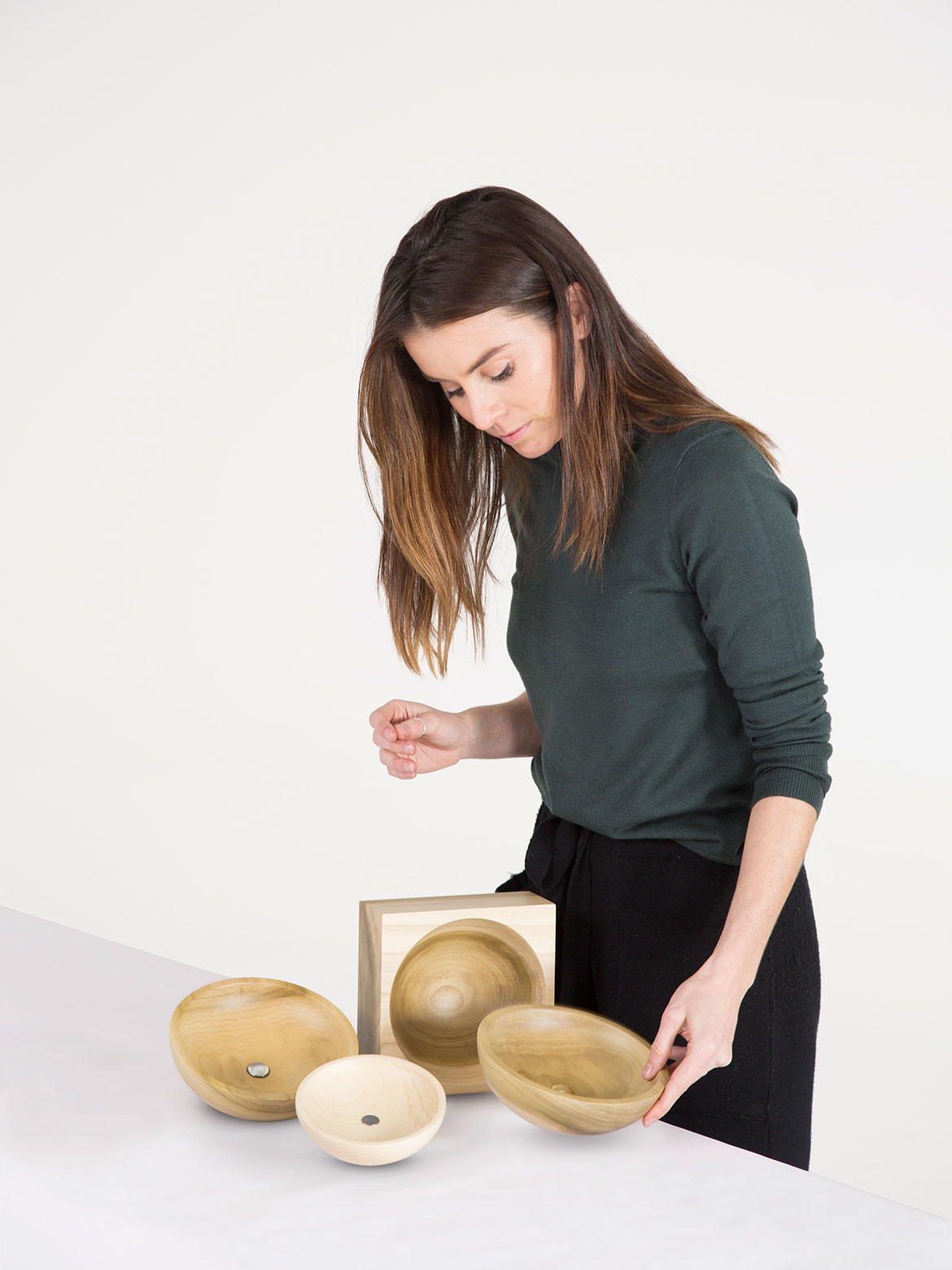
Left: Todd Hammond | Photography: Tom Ferguson
Right: Anne-Claire Petre | Photography: Tom Ferguson
The amount of time it would take for the wood used in each design to naturally grow in an American hardwood forest was also calculated for each design. Hardwood trees are selectively cut down and replaced through natural regeneration, which adds 130 million cubic meters per year to this enormous resource. According to the AHEC, the six Seed to Seat designs’ combined use of wood would require the American hardwood forest a mere 2.2 seconds to produce.
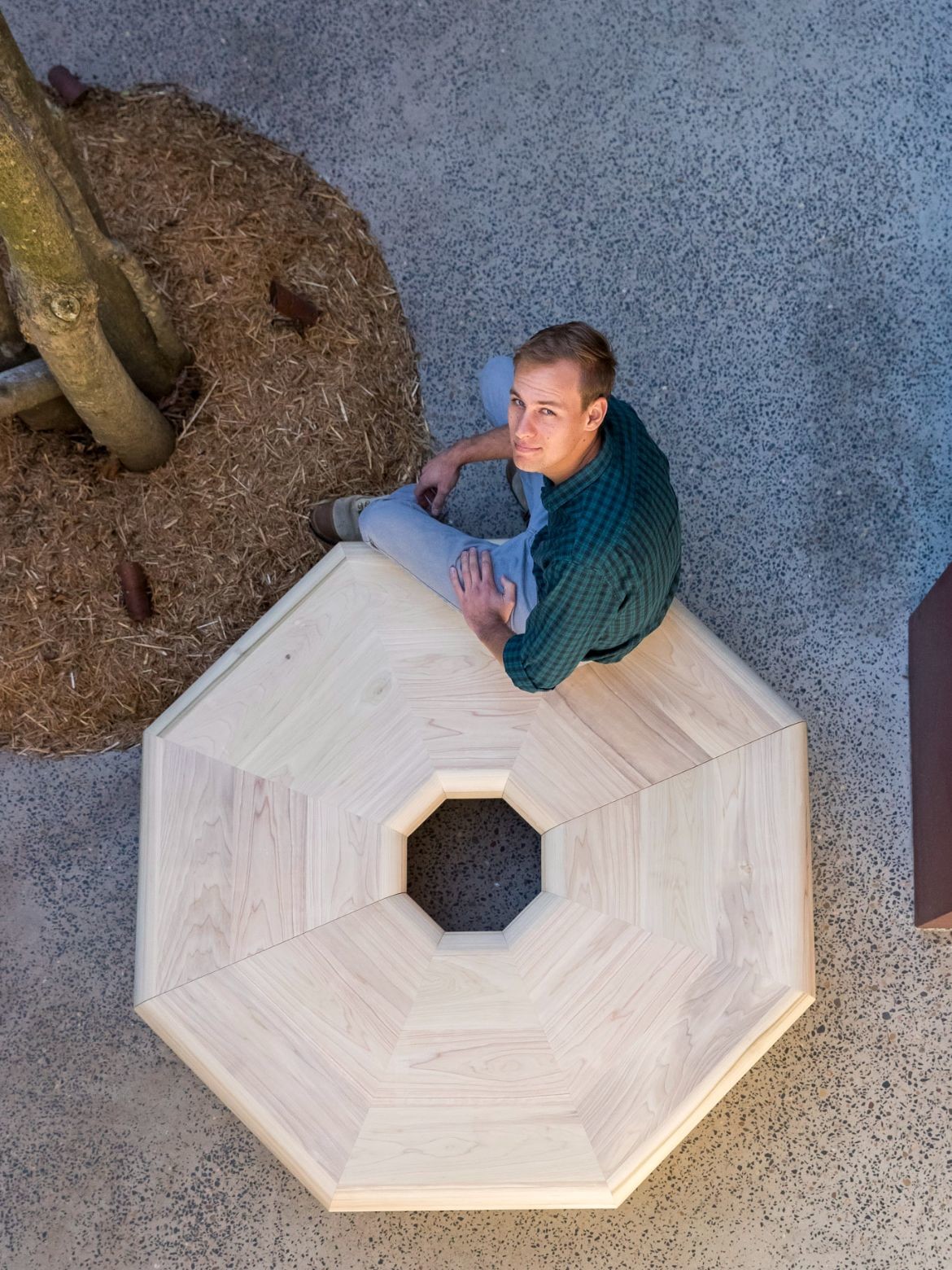


Left: Greg Natale | Photography: Tom Ferguson
Right: Adam Goodrum | Photography: Tom Ferguson
REPLACED
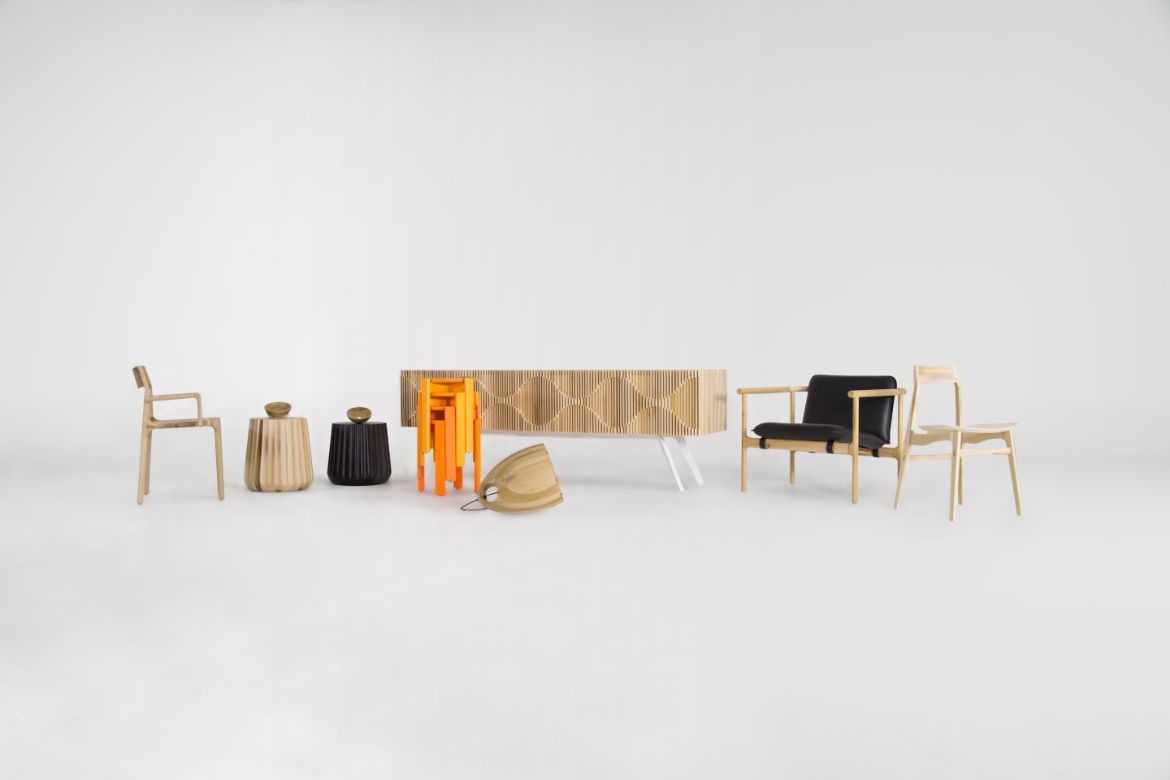
Launched in 2018, AHEC’s REPLACED project involved eight of Australia’s most highly regarded designers, each asked to reimagine their works in American tulipwood. Anne-Claire Petre, Adam Goodrum, Adam Markowitz, Coco Reynolds, Dowel Jones, Jon Goulder, Ross Gardam and Tom Skeehan replaced the timber they normally use for their signature designs with tulipwood, a wood highly favoured in Europe but little known in Australia.
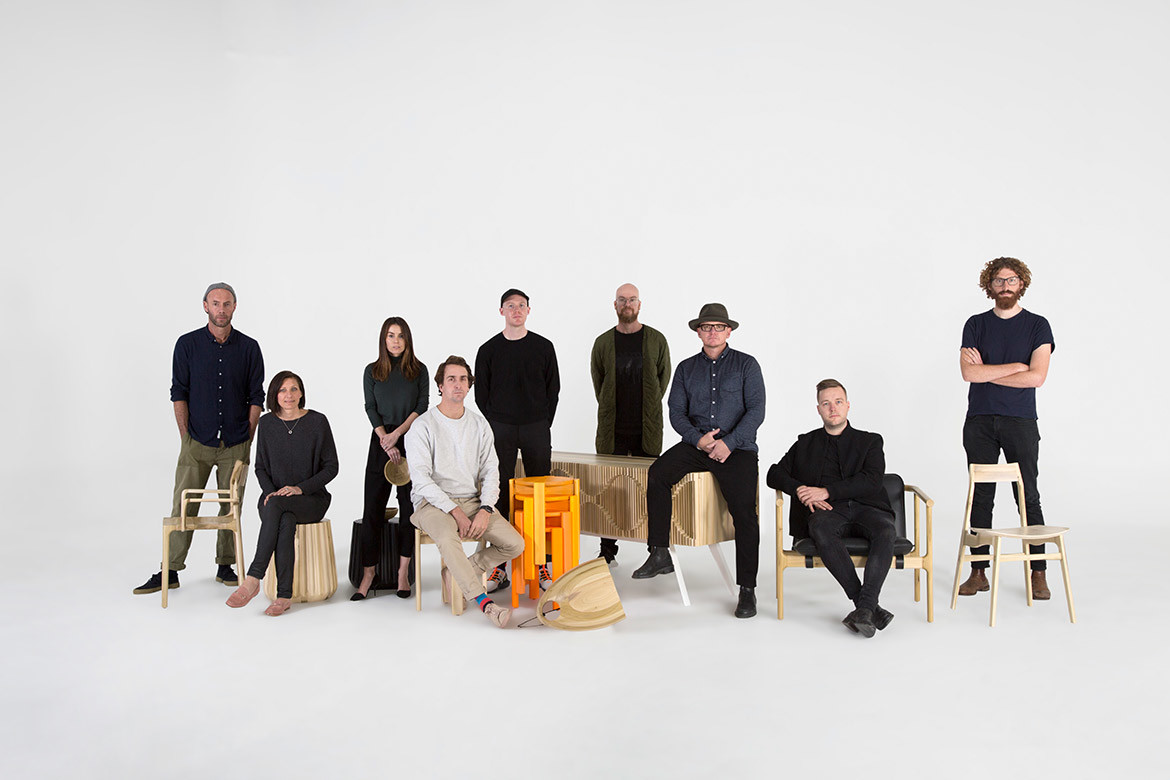
The information gathered throughout the design process allowed AHEC to measure the precise environmental impact of each design. According to the AHEC’s calculations, the REPLACED pieces together store the equivalent of 221kg of CO2, and the tulipwood that was used for the collection would be replaced in the forest in less than a second.
American Hardwood Export Council
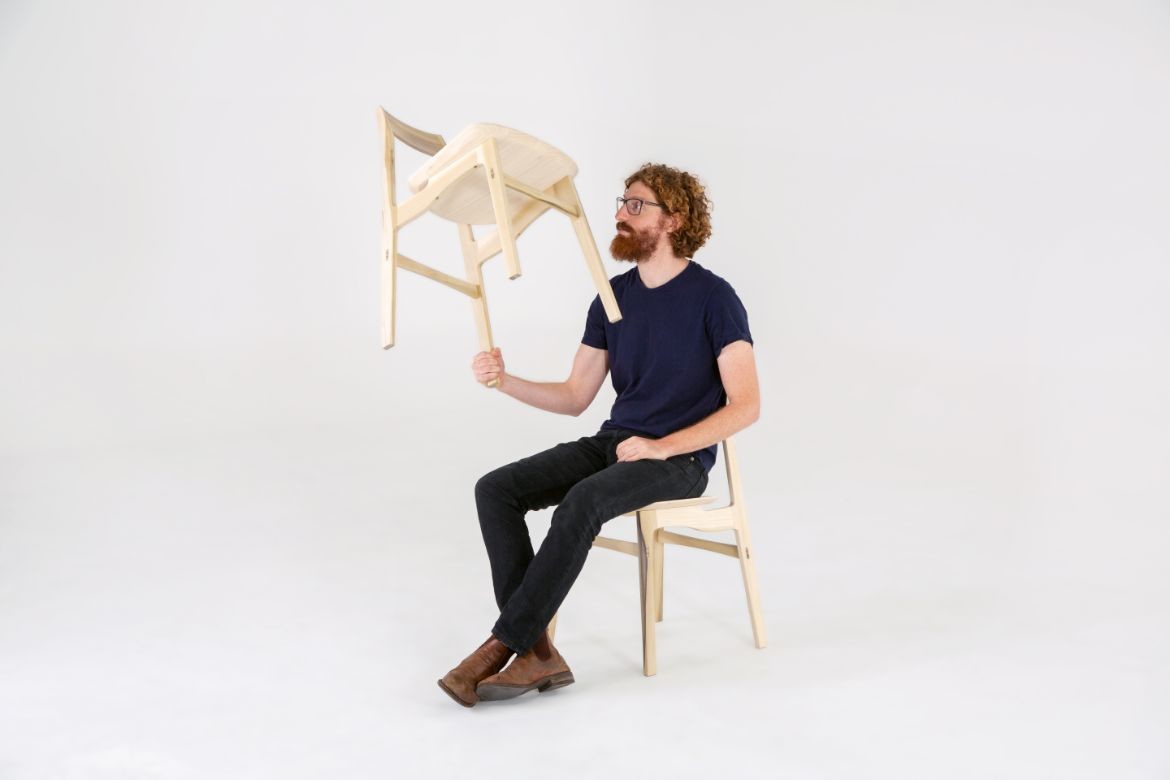
We think you might like this story on the American Hardwood Export Council and Tom Fereday’s External Review.