In recent years, Australia has established itself as a leader in commercial design. Around the world, we’ve earned a reputation as innovators when it comes to office furniture, lighting, interiors, and architecture. We’re known early adapters to new technology and the ABW model and are future-oriented when it comes to our taste and tendencies in design.
Crucially, the Australian design industry has wholeheartedly embraced the inclusion in workplace design of ergonomics, the science of adjusting the task to the worker (and not the other way around) to maximise productivity and reduce discomfort, fatigue, and injury.
But, as we are all too aware, the workplace is continually evolving. Today, the workplace and the way we work has shifted drastically from what it was 10 – and certainly 20 – years ago. The way that we work is different, in terms of our reliance on technology and preference for collaboration, and the places in which we work have also changed.
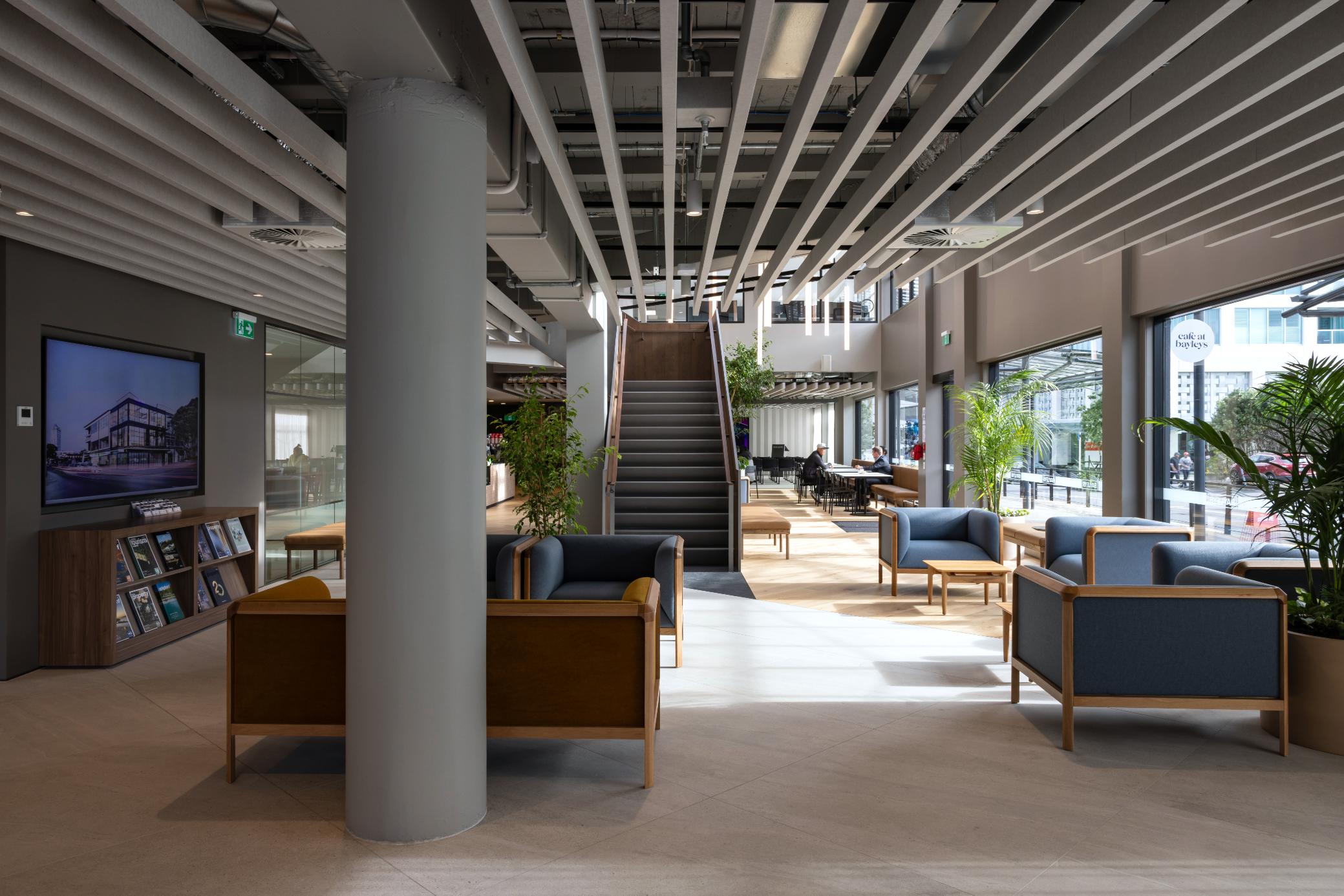
Offices are becoming busier and denser to accommodate higher workloads and expanding workforces, causing workspaces to contract. Since 1994, there has been an average 17 per cent reduction in square footage of workspace per worker.5 Contrary to the contents of the Standard, today’s workers are no longer spending their whole days in task chairs and cubicles. Instead, they are dividing their days between boardrooms, breakout areas, and working on the go.
The Standard – which explicitly excludes mobile workstations – must reconceptualise office furniture as more than just a desk, task chair, and monitor. Rather, it should respond to a shifting paradigm that has seen the advent of collaborative workspaces and mobile work habits, as well as outline ergonomic requirements for more contemporary forms of office furniture such as stools, lounges, and pods. The Standard writers should also carefully navigate the complexity of working in group settings, where the one-size-fits-all approach becomes even more starkly inappropriate
Although a one-size-fits-all approach goes against the flexibility that is at the core of ergonomics, the Australian Standards remain valuable guidelines that are in need of updating. Significant changes in the workplace in the past two decades have rendered much of the content of the Standard irrelevant or obsolete.
In this whitepaper, we look at the leading ergonomic concepts and principles that the Australian Standards fail to cover and discuss ways to bridge this gap.
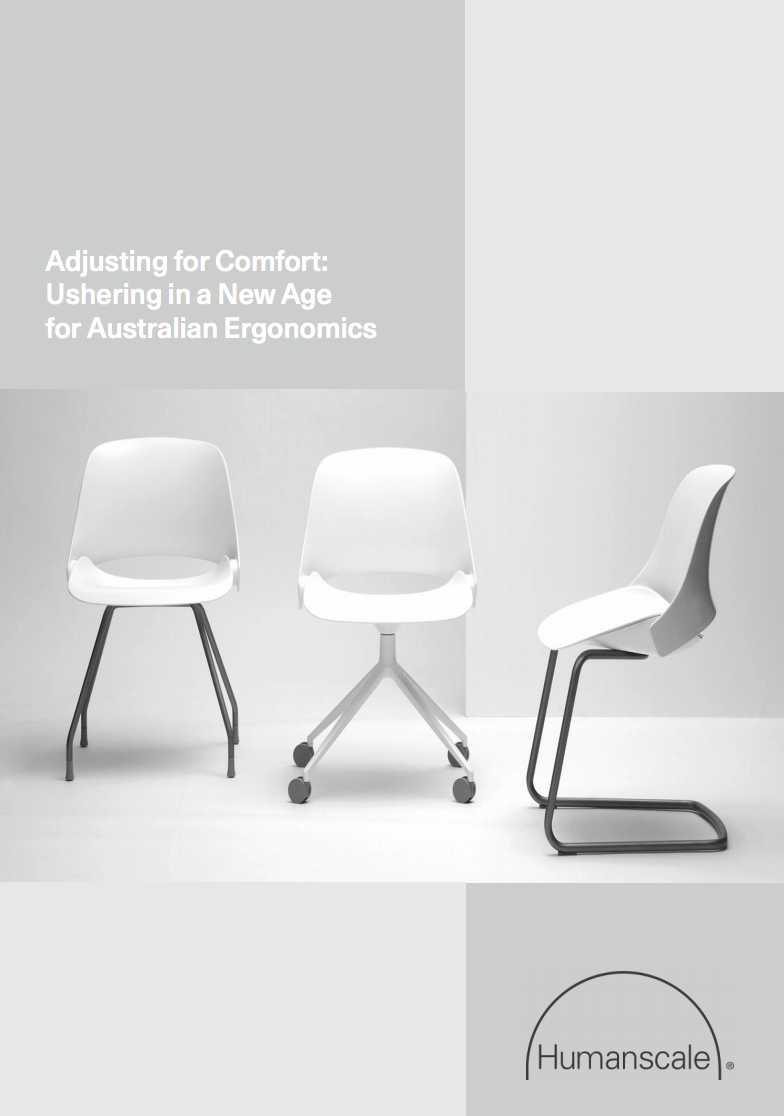
Here, Humanscale Consulting – the experts in ergonomics training and assessment – address the issues that workplaces in Australia currently face. The company’s comprehensive study into the state, current operations and required improvements to ergonomics in the Australian workplace is presented in their recently published study Adjusting for Comfort: Ushering In A New Age For Australian Ergonomics. Read more about the work of Humanscale here.
Download the complete study here: