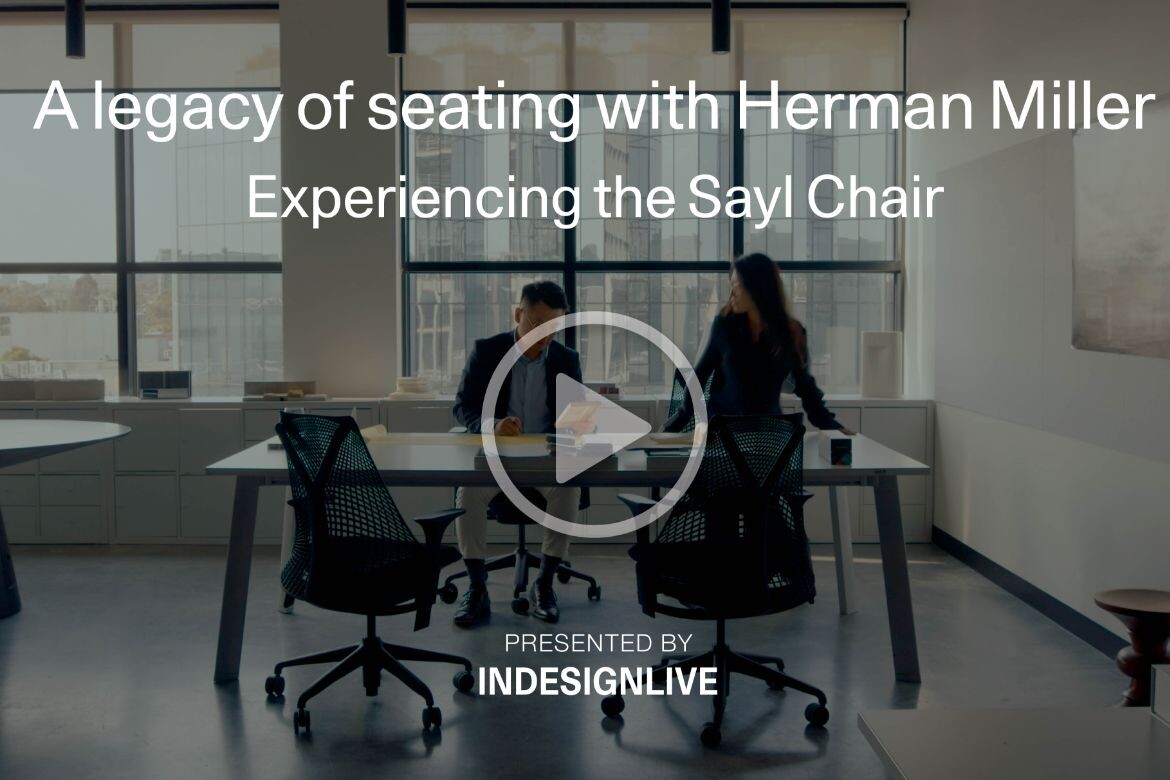
In an industry driven by the temporal, longevity can be elusive. While many strive to create designs that will be specified and appreciated for years to come, creating a classic that spans trends, evolutions and generations is a far more complex undertaking.
Herman Miller has been creating legacy products since 1923, with its range of human-centred designs having been specified in workplaces ever since. This video series looks at the stories behind the specifications, capturing Australian designers at work to understand how these functionally- and aesthetically-superior products work for them.
How do you create iconic design? Is the secret in the feel, the look, the endurance? Is it in the designer themselves, or is it in the context of time and place which anchor a product to history and memory? The Herman Miller Sayl chair combines all these factors. Each element comes together to create a story and a product that is quickly becoming a workplace classic.
Enter designer Yves Béhar, who Herman Miller approached to create a chair that would combine beautiful design, first-class ergonomics, elegant engineering and respect for the environment. Based in San Franciso, Béhar drew inspiration from his surroundings, in particular looking to a local legend – the Golden Gate Bridge – to inform his design.
The result is a chair crafted for an expansive range of motion, where a flexible construction allows for flexibly supported seated movement and for a look that is modern, geometric and a true deviation from the typical task chair.
For John Xu, director of Melbourne architectural practice Parallel Workshop, this combination of look and feel is what made the Sayl his office chair of choice. His architectural eye drew him to the aesthetic of the product, while his desire to make things that improve people’s lives was fed by the chair’s performance.
“I think one of the important [reasons why] we chose the Sayl chair was the look of it. As [architects], we all love the dynamic of the back and the shape. It gives us a very immersive feeling,” he says.
When you sit on the Sayl, he says, it naturally supports the body, no matter its shape or physique. This Xu credits to Sayl’s “very advanced ergonomic design”.
As director of an emerging practice, Xu is drawn to architecture and design that challenges the status quo. Like many in his field, he is always looking for inspiration, and seeks to turn that initial spark of curiosity into a finished work that offers something new, exciting and – with time – iconic.
While this inspiration can come from anywhere – including famous landmarks – he also looks to chairs themselves, as microcosms of architecture that capture the precarious balance between look, performance and relationship to the end user.
“I believe every architectural practice has been inspired by chairs and the way the same base product can be interpreted and conceived in so many different ways. That’s why I think we’re slowly building up a collection of classical modern furniture pieces and Herman Miller is obviously one of the top brands we like the most. It’s magnificent.”
.
Herman Miller
hermanmiller.com