Exploring Process with Omer Arbel
Published
By
jesse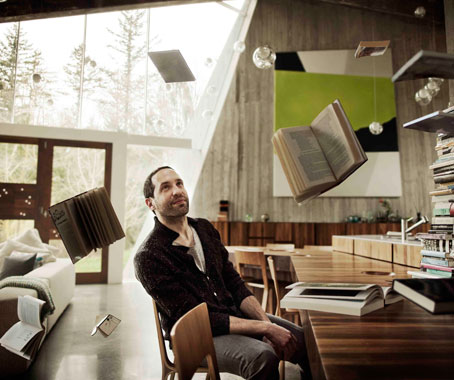
Alice Blackwood and Mandi Keighran visit the Spazio Rossana Orlandi to meet with Omer Arbel, Head of the Omer Arbel Office and Creative Director of Bocci.
Omer Arbel likes to explore the possibilities of material and process, working with master crafts people to stretch the boundaries of techniques such as glass blowing and sand casting.

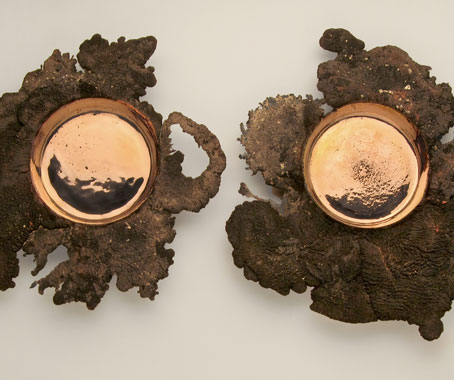
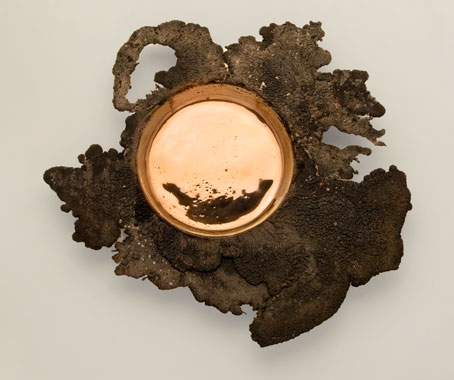
On show at the Spazio Rossana Orlandi this year was number ’19’, a set of sand blasted copper bowls – which are more installation pieces than functional items.
They represented one of 2 projects by the Canadian architect and designer – the other being his beautiful glass blow number ’28’ lights for Bocci.
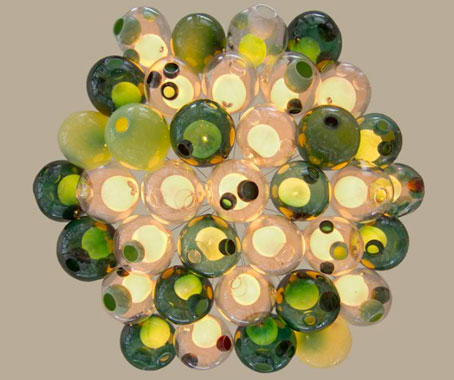
Omer spoke a little about both pieces, but it was his description of the making process of the number ’19’ which really captured our attention.
“Typically in most design and architecture situations, there’s a shape or form born in the author’s [or designer’s] imagination and that shape informs the work.
“What we’ve been focussing on in the last couple of years is an approach where we design systems of fabrications, and these systems yield form.
“Here we’re exploring a technique called sand casting – an imprecise and coarse way to manipulate and make metallic objects – like fire hydrants for example.
“Here, you take a wood shape, press it into sand to make a void/cavity and pour metal into it, roughly, very coarsely, filling up the cavity. You shake away the sand and there’s your piece.
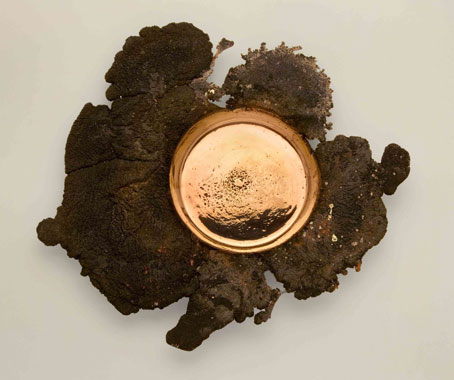
“Here, we developed a mould system, but there’s a very large opening around the perimeter of the mould; we pour the liquid metal in, over-pouring so it overflows from the cavity, and of course we can’t control the overflow.
“These aren’t necessarily functional as a piece. It’s not necessary for it to be functional; we’ve done it because we’re interested in the process and results.
“I collaborate with crafts people. I used to think the designer’s role was to also become involved in the making, especially because our approach relies on the process of making, heavily. And in the beginning I made all the pieces myself.
“Since then I’ve learnt that I can spend a lifetime learning to be a great designer or great architect and that would be a lifetime of pursuit… but unfortunately I only have one. You need to devote an entire lifetime to become a master glass blower or sand caster, or any of these techniques.
“So that’s how I see my role now, and I consider it a collaboration. It’s my role to harness that energy (and their knowledge) and propose unconventional things.”

Omer Arbel
omerarbel.com
Bocci
bocci.ca
Related Articles
Events
A rollicking good story with Richards Stanisich and Royal Oak Floors
Jonathan Richards and Kirsten Stanisich discussed practice, design process and the business of running a studio at a live audience event hosted by Royal Oak Floors in Sydney.
Events
Indesign x Wilkhahn: Melbourne, where are you working?
Our latest collaboration saw a range of designers come together at Wilkhahn’s Melbourne showroom for a discussion on the workplace dynamics specific to the Victorian capital.
Events
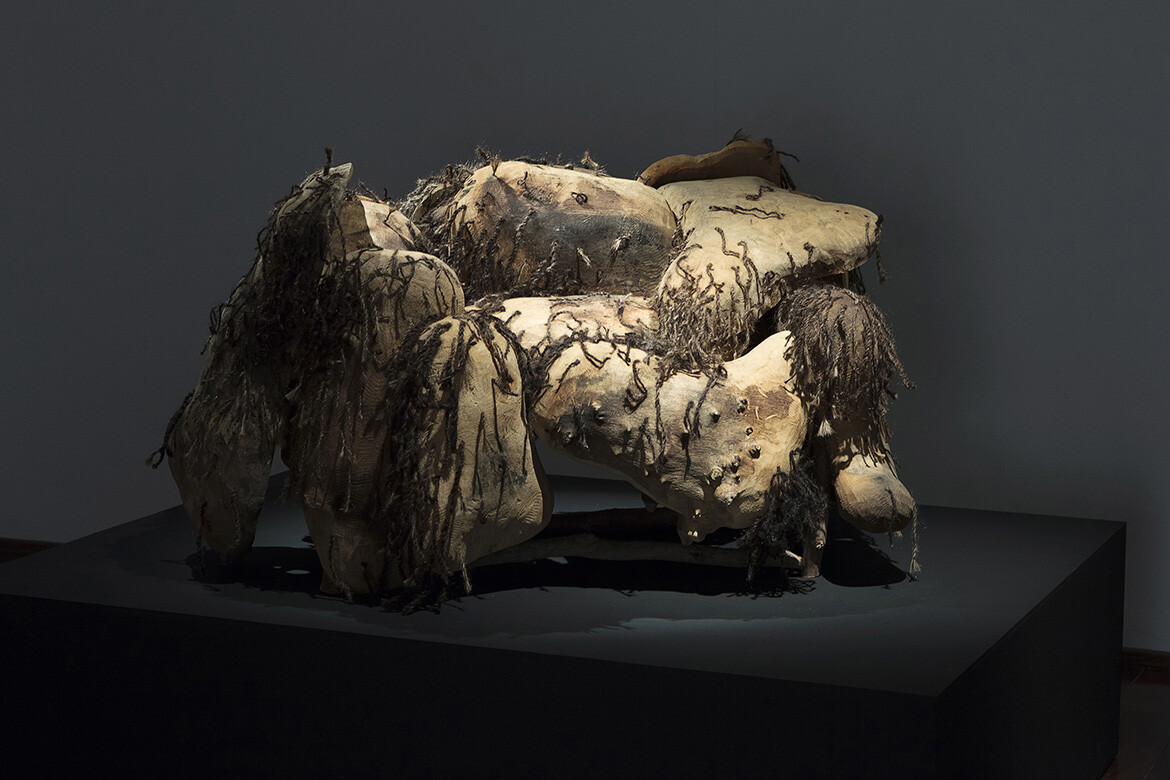
“A journey into a whole new material world”: Plant Life at the NGV
Curator Ewan McEoin tells us about the NGV’s new exhibition on plant-based materials as alternatives to plastics, synthetic materials and other non-renewable resources.
Events
The inaugural Coastal Design Assembly is about to make landfall in Sydney
Sophie Lanigan, organiser of a new event centring on Sydney’s relationship to water, tells us what the event’s all about, who it’s for and why it matters today.