The home of architecture and design in the Asia-Pacific
Get the latest design news direct to your inbox!

Get the latest design news direct to your inbox!
Recalling the warehouses of yesteryear and reflecting the label’s own sense of restraint, Henne’s new retail outlet is turning heads in Melbourne.
February 5th, 2026
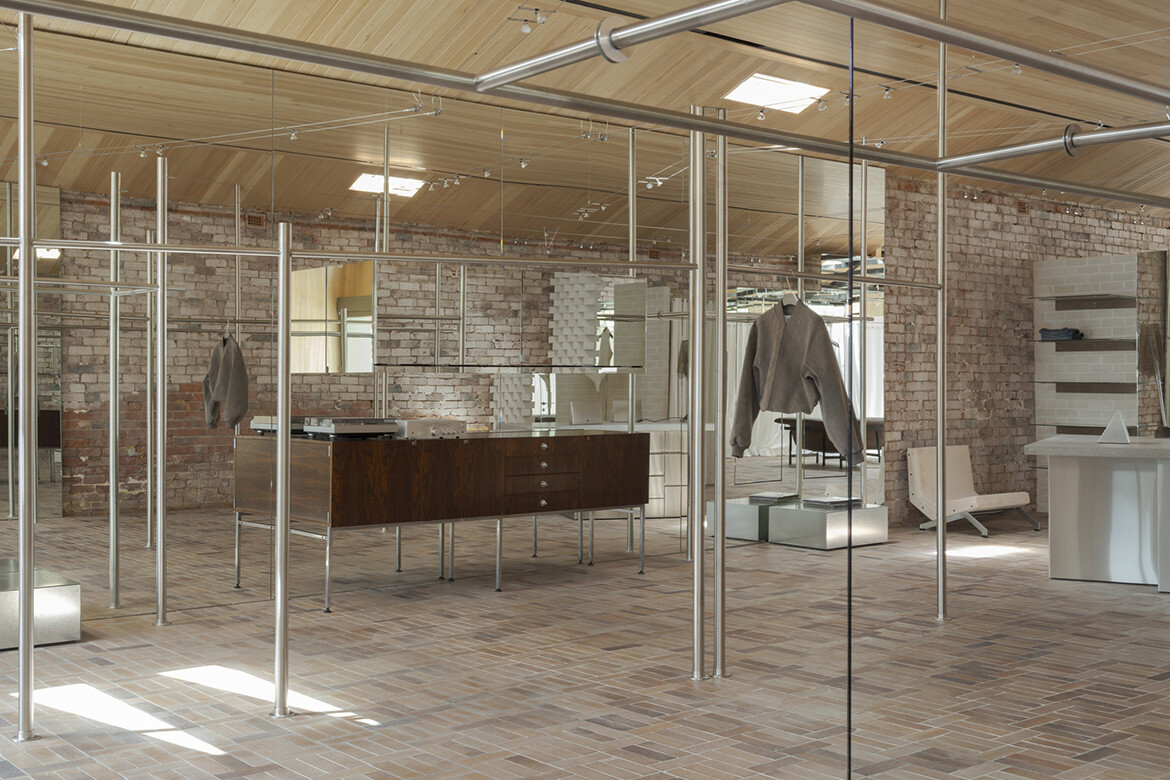
Womenswear label Henne has unveiled a new retail outlet in the inner Melbourne suburb of Armadale. Now fully operational, the store is delivering an understated yet assured vibe to its high street setting. The design has been completed by AP Design House (APDH) and reflects Henne’s preference, across its own product line, for subtlety.
“We explored the interplay of restraint and expressiveness, along with precision over excess,” says Alexandra Ponting, Director of APDH. “These qualities mirror the values of the Henne brand.”
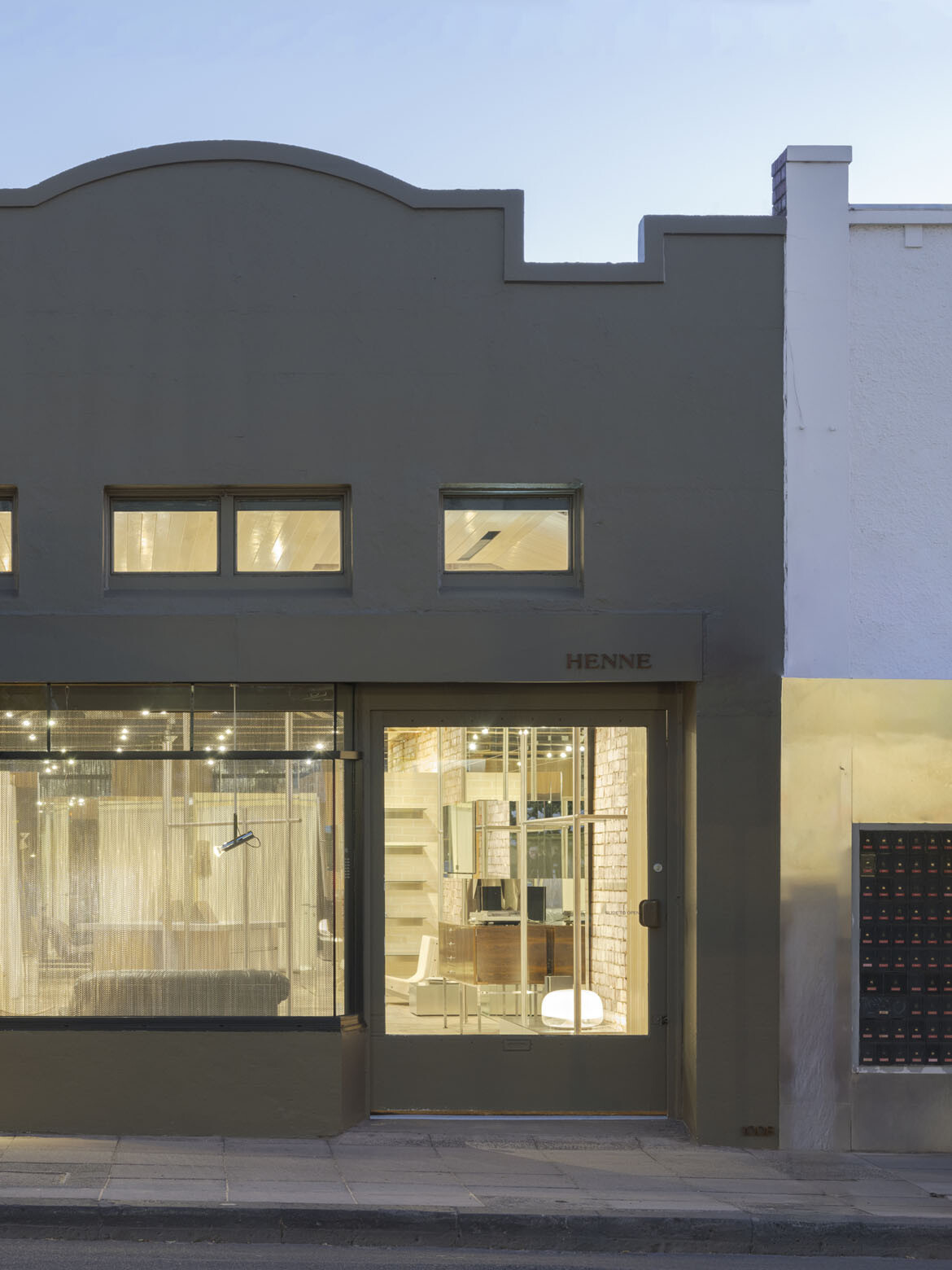
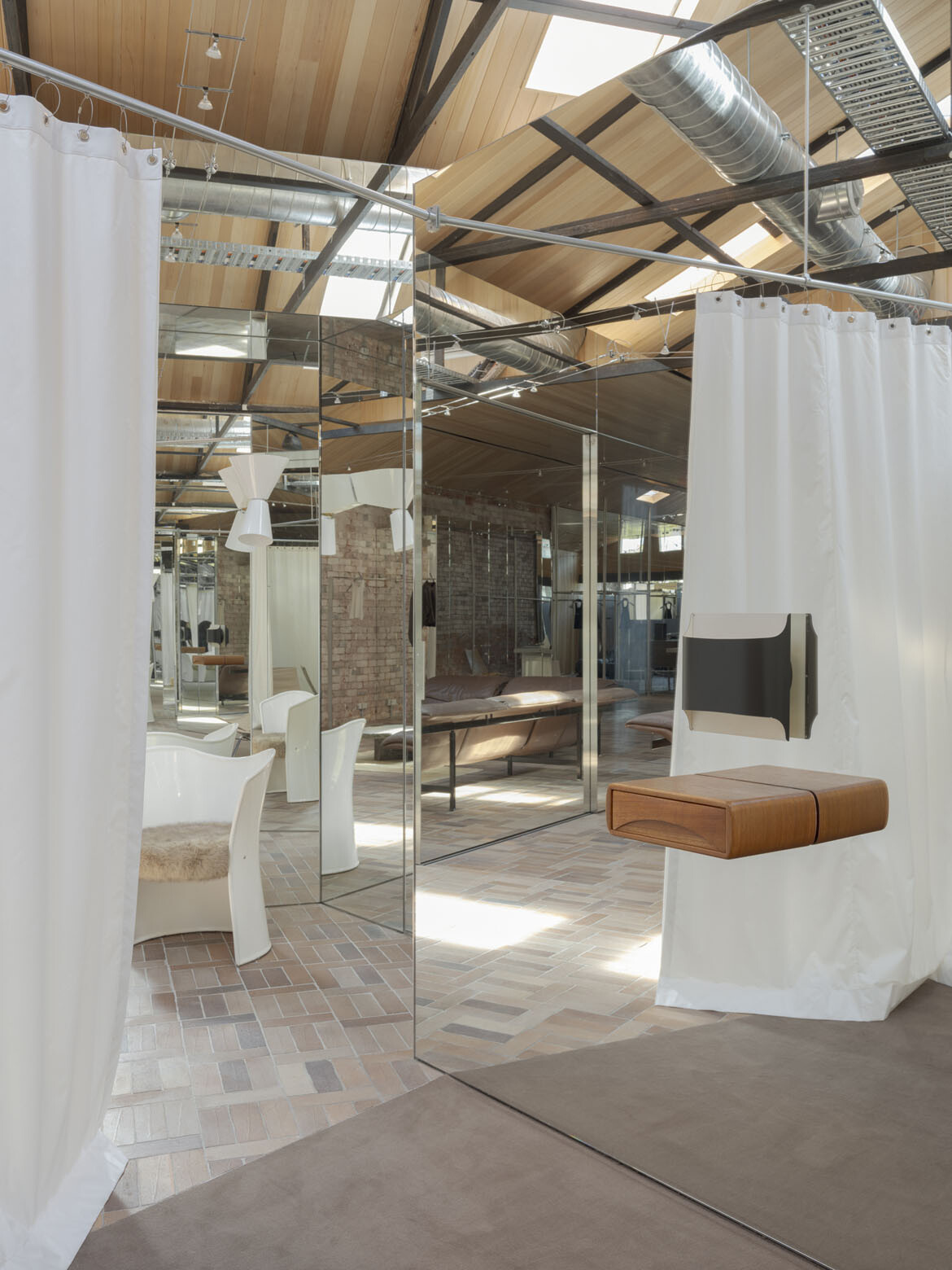
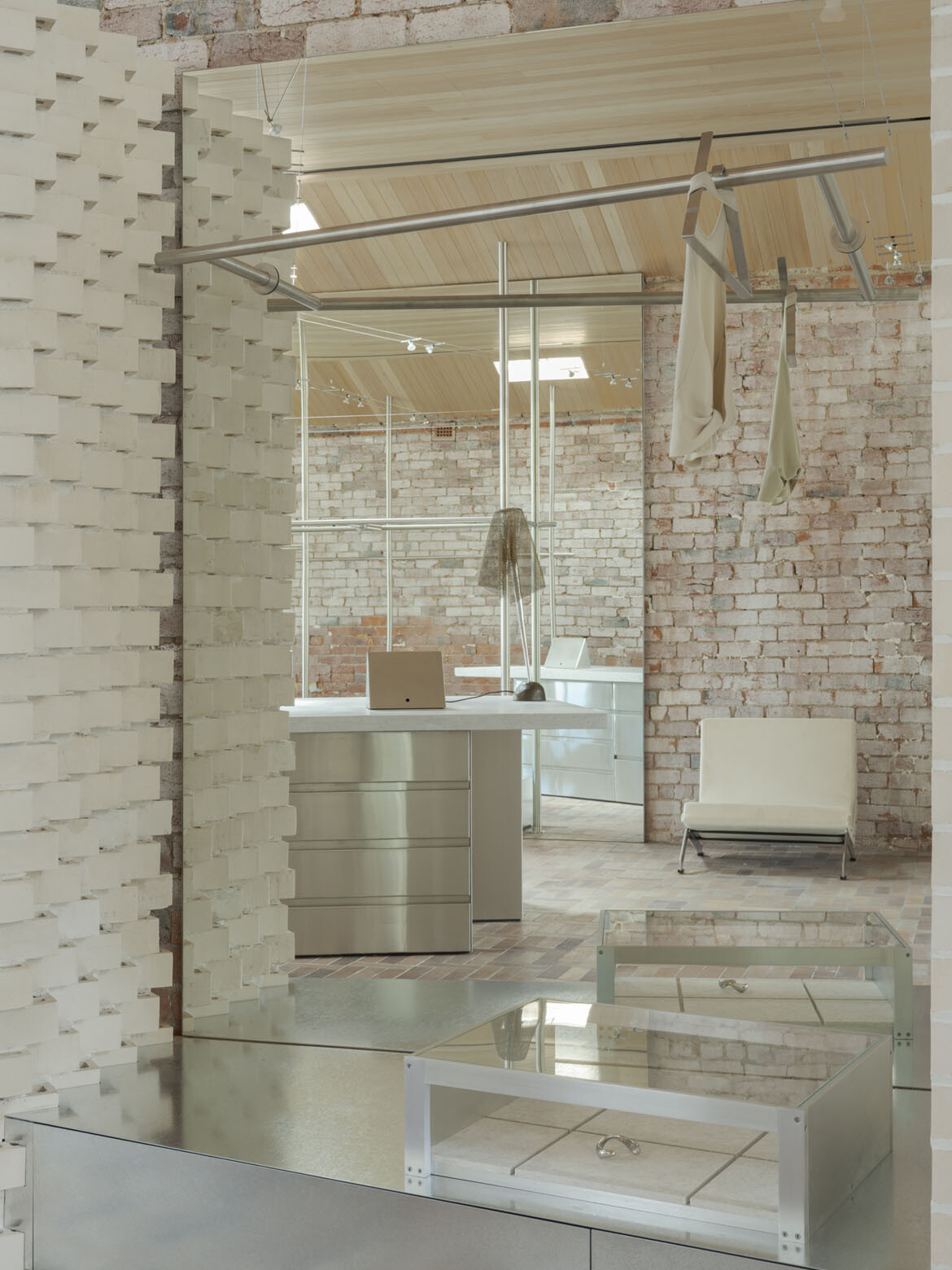
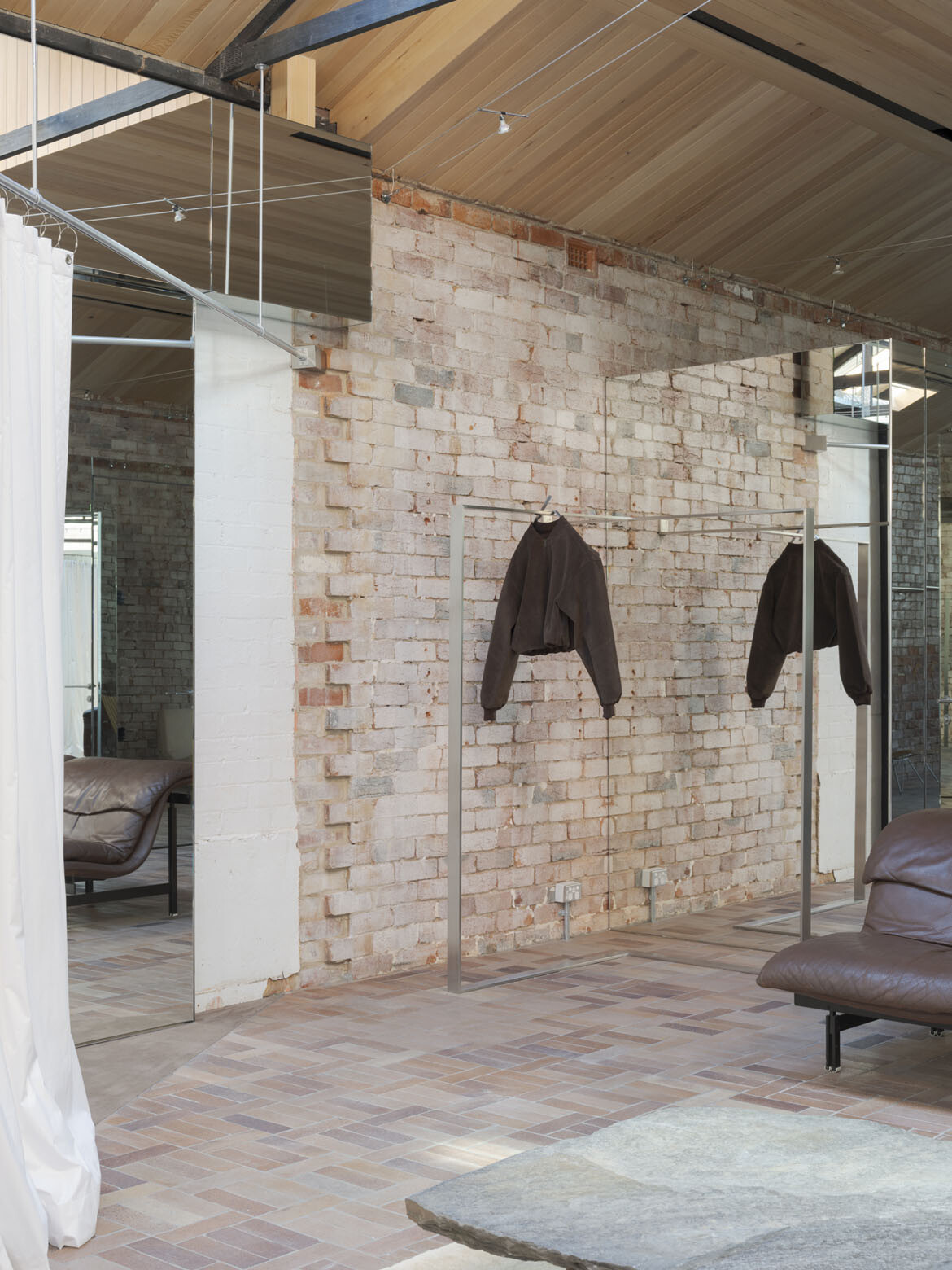
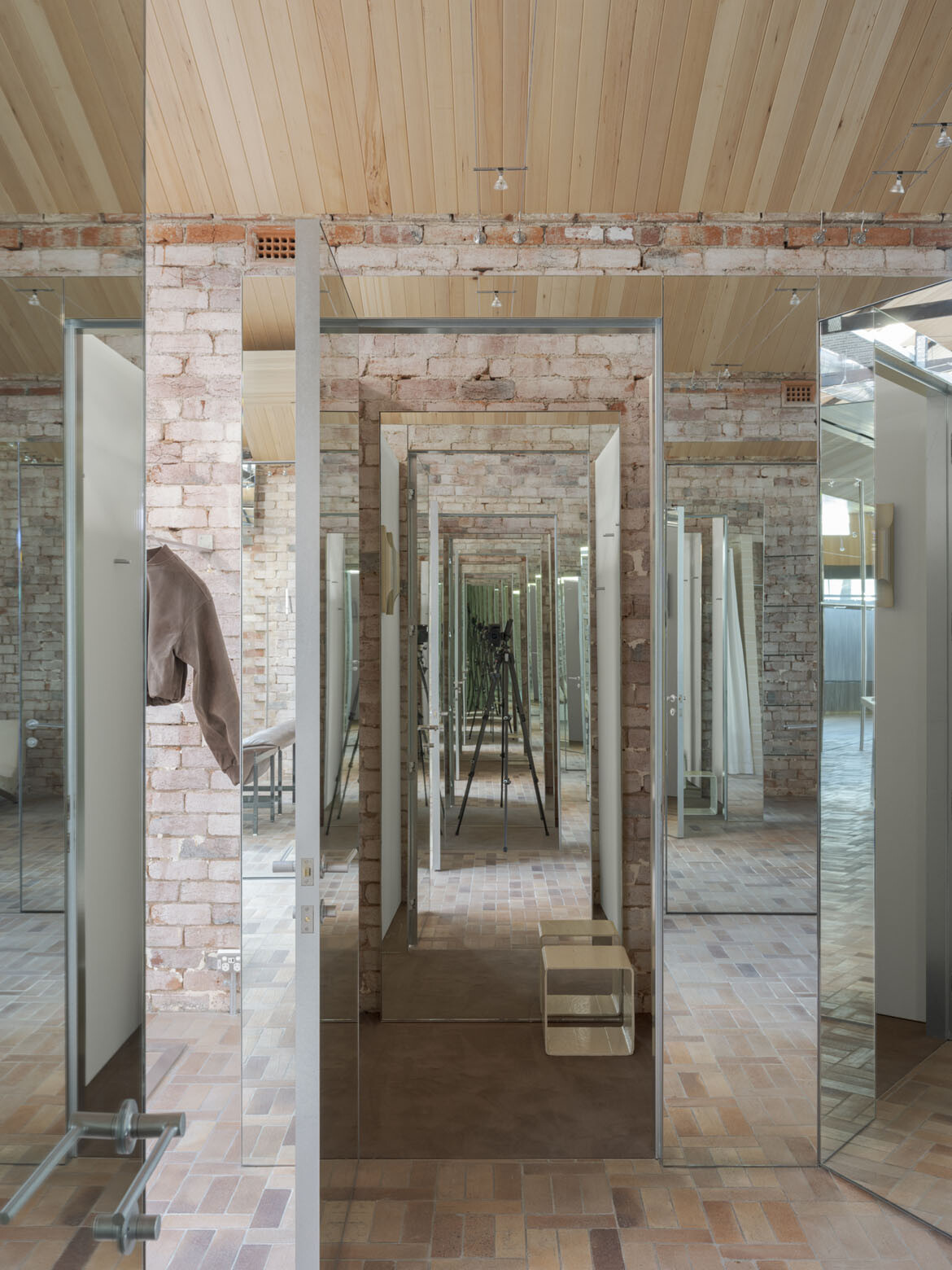
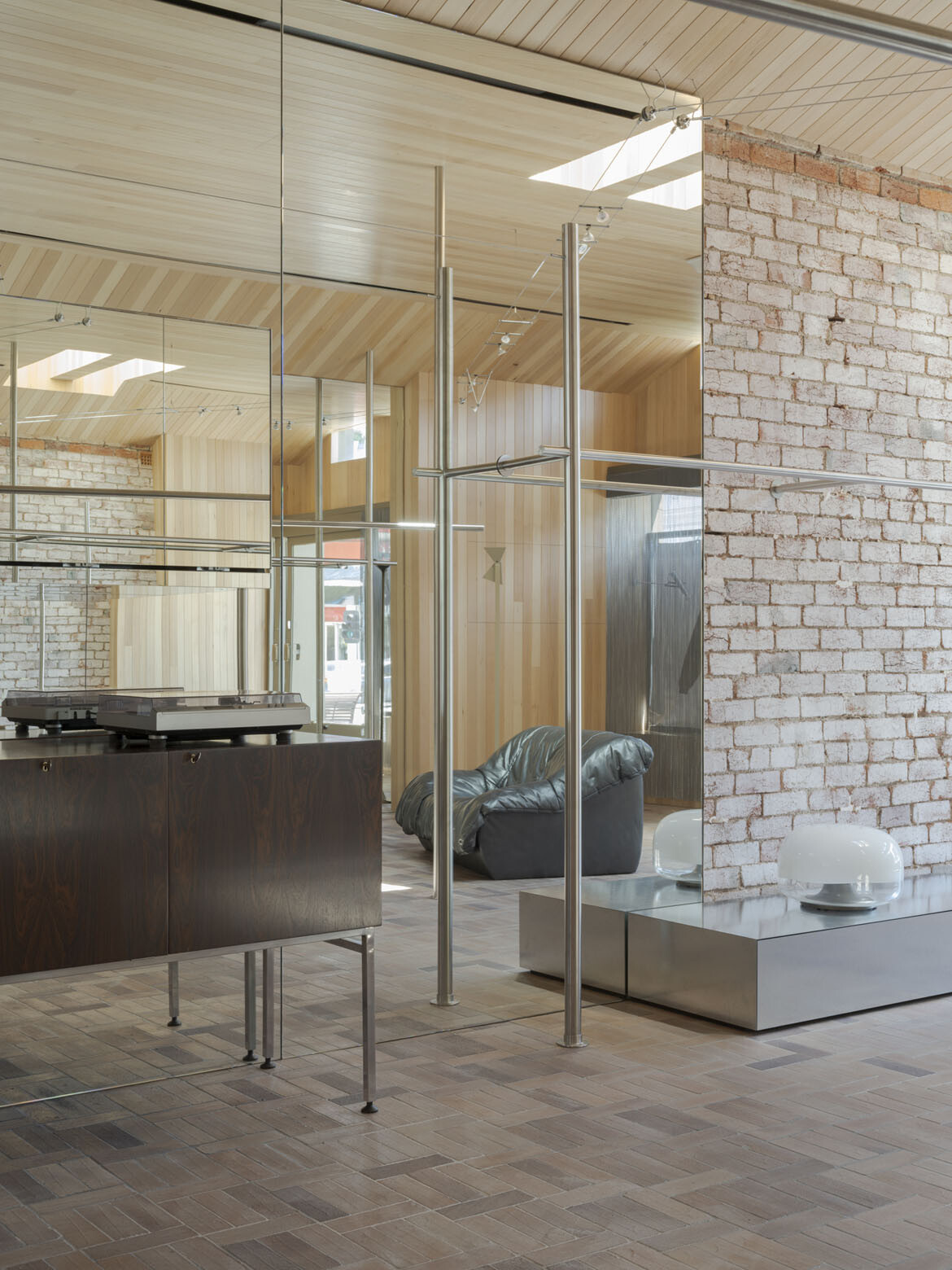
The architects’ engagement with materiality emphasises a deliberate repetition of line, shape and form. “This intention,” says Ponting, “is evident in the Hirosaki-inspired brick nib walls, brick-tiled floor, timber-panelled ceiling, custom steel structures and trapeze lighting… By stripping away ornamentation and focusing on proportion, rhythm and texture, the space achieves refinement without excess.”
The result is a retail space that – in line with the Henne ethos – balances architectural rigour with warmth and intimacy.
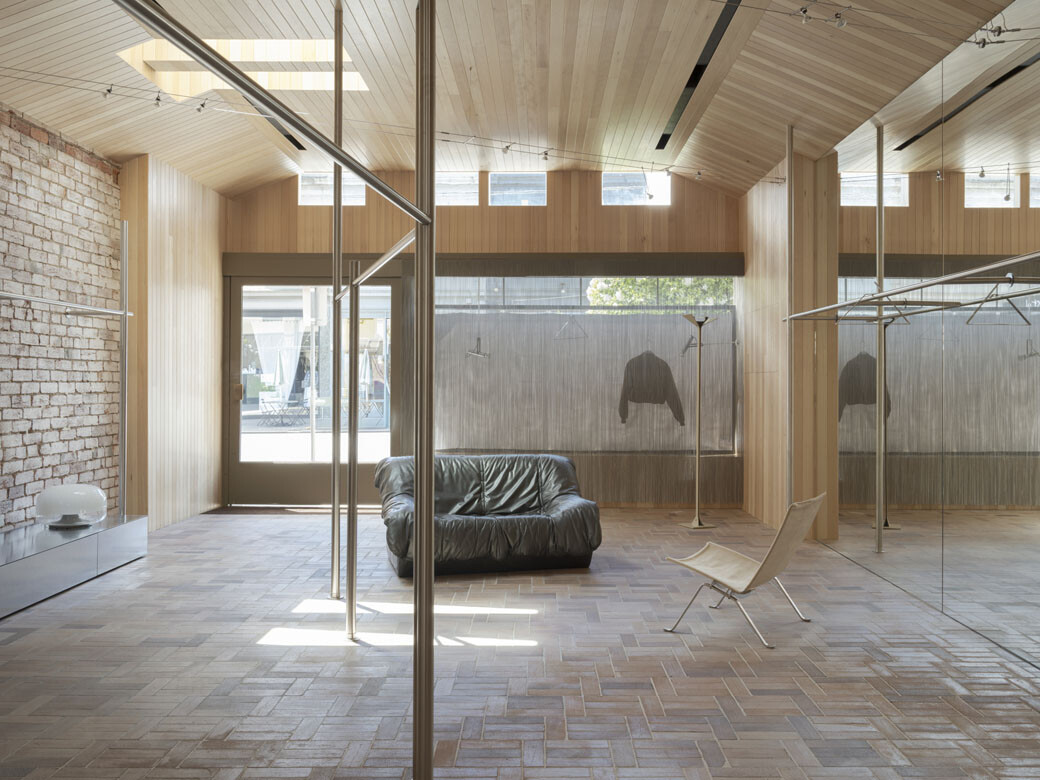
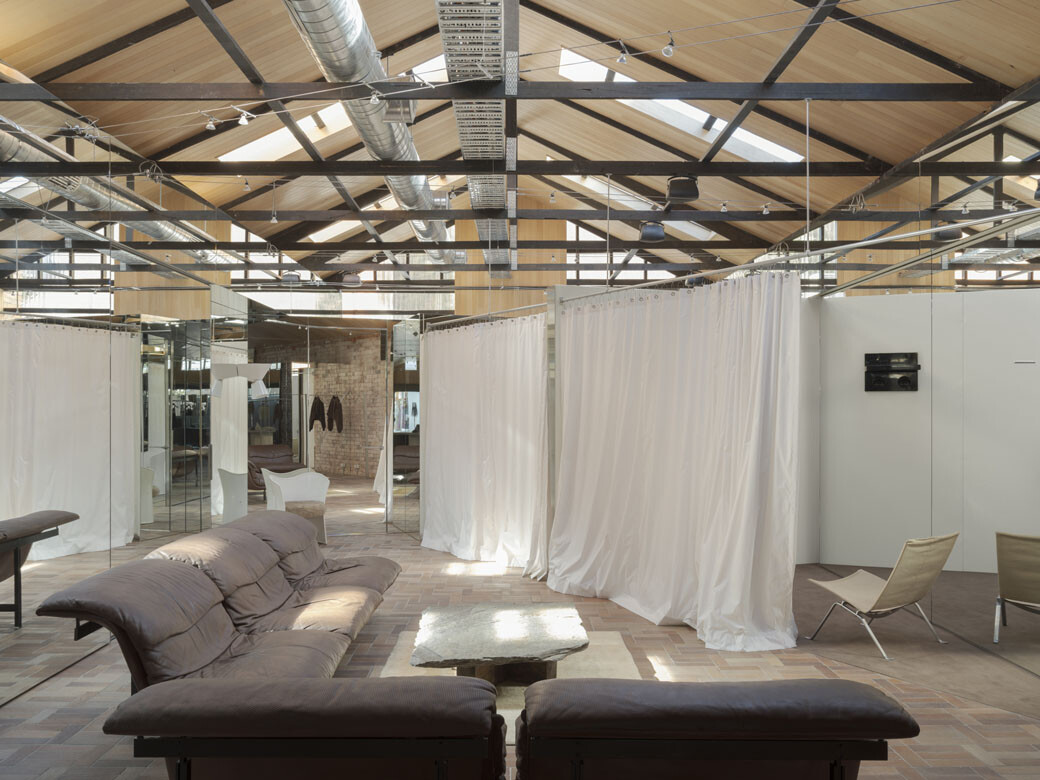
During the initial planning stages, having viewed the unrenovated building, Ponting understood that retaining existing elements would be important: “The shell we were presented with was a dream. It was long, narrow and had an interesting ceiling with original timber trusses and skylights at one end.”
Struck by the building’s “uniqueness” in comparison to neighbouring properties, she saw that full-scale modernisation was not an option. Instead, she and her team resolved to retain – and indeed celebrate – its idiosyncrasies.
Related: Modular retail apparatus with Studio Edwards
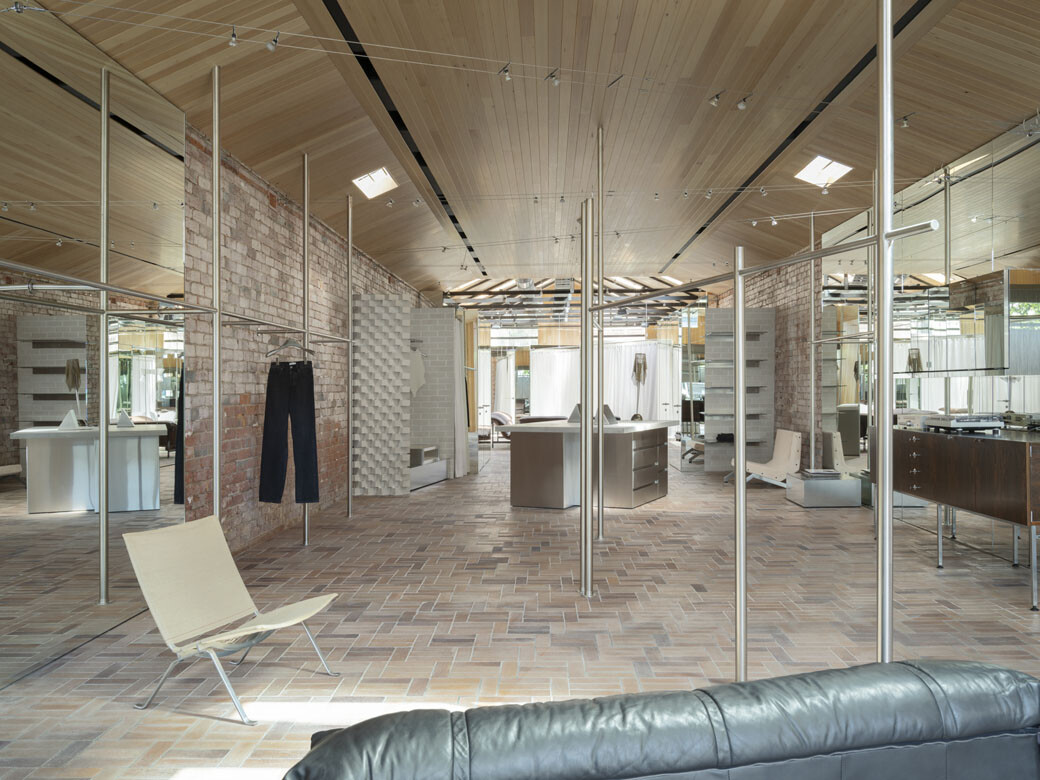
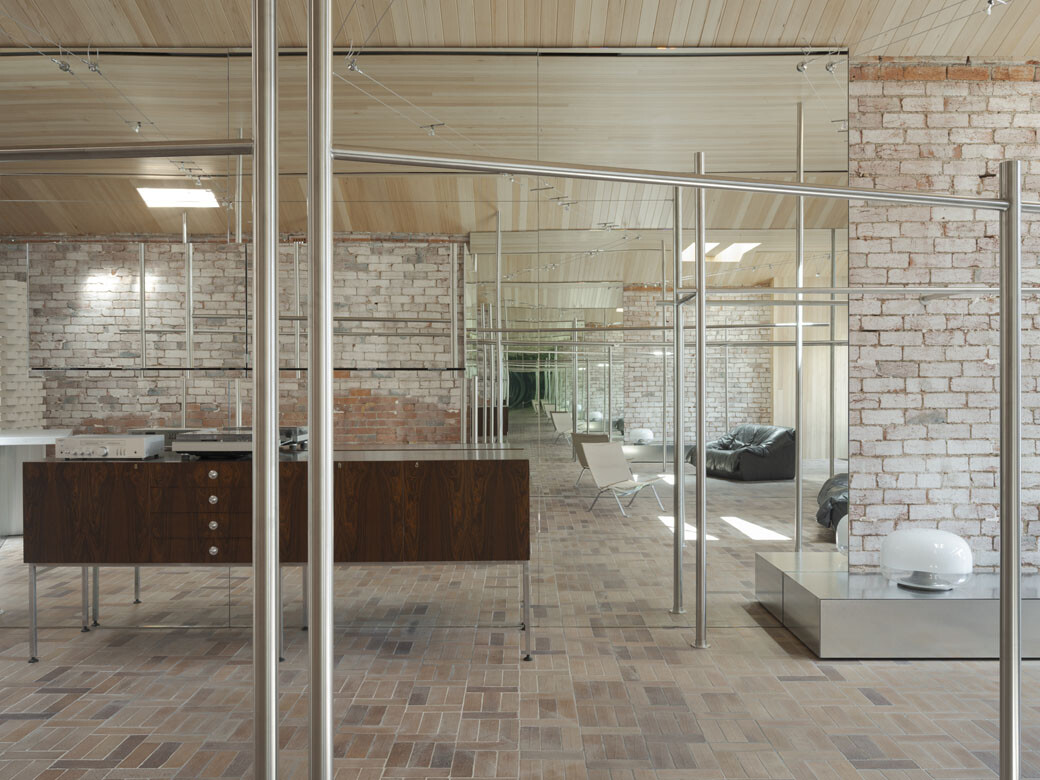
Appropriately enough, considering the client’s line of work, Ponting’s initial design impulse was towards an Australian ’80s-’90s rag trade warehouse feel. “We paired this idea with a mid-century sensibility, which is another of Henne’s brand pillars,” she says.
Though the building was gutted, the shell remains. The original brick walls, exposed timber trusses, and skylights are retained, and juxtaposed with concrete, galvanised steel and trapeze lighting.
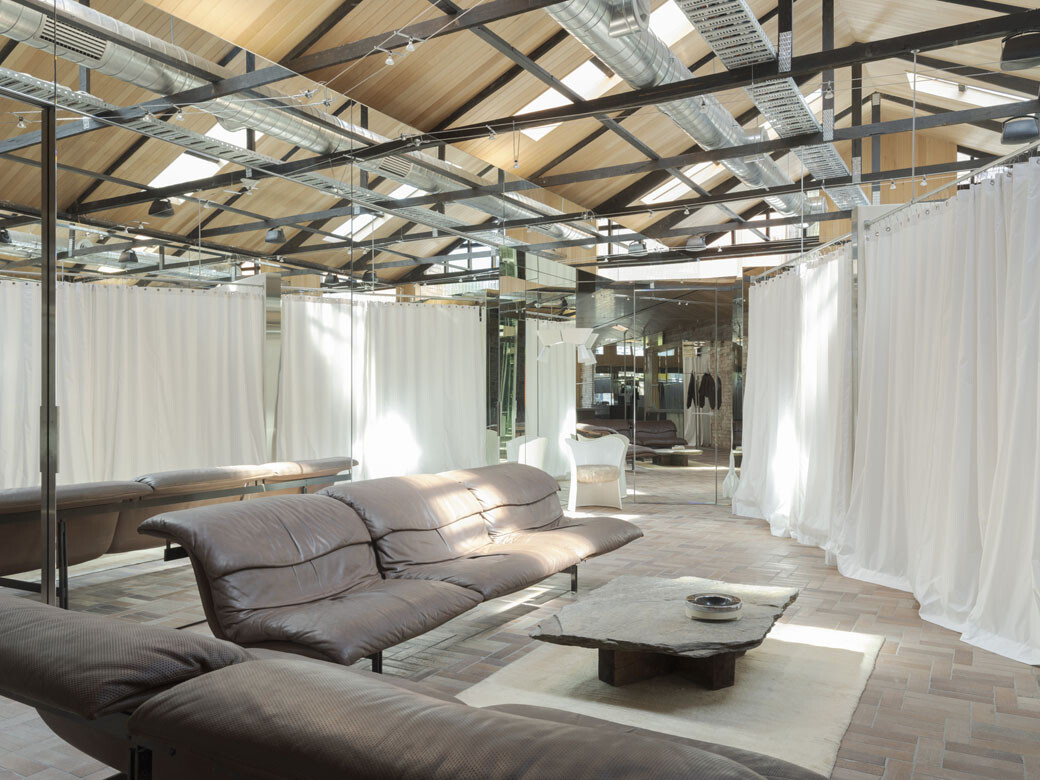
“The original elements pushed us to keep going with grounding, earthy materials, including the brick tile floor, natural clay brick nib walls and the timber panelled ceiling,” says Ponting. Indeed, she sees this rebuilt ceiling, with its capacity to attract the gaze upwards, as the hero of the space.
Meanwhile, the newly restored skylights draw natural light deep into the narrow footprint, revealing the texture of original brickwork and timber trusses and ensuring a sense of familiarity throughout the interior.
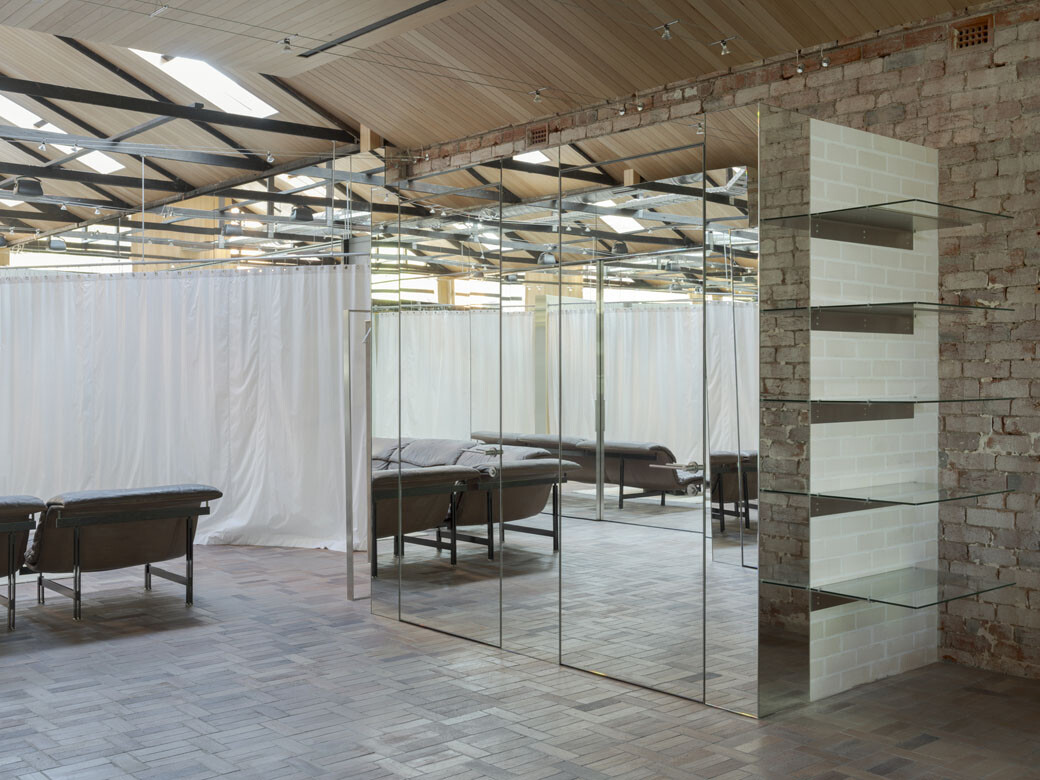
In one sense, given that the practice is best-known for its residential work, Henne Armadale represents something of a departure for APDH. At the same time, however, the focus of this latest project on authenticity and timelessness is familiar.
“The use of these materials and our minimal, thoughtful approach to the space aligns seamlessly with the ethos of other APDH work,” concludes Ponting. “We are drawn to materials that appeal to the senses, inviting you to linger and experience a space fully – compositions that feel solid, warm, tactile and grounding.”
Considering the now complete Henne Armadale in its totality – its calm rhythms, use of light, materiality and more – it’s difficult to argue with this assessment.
AP Design House
apdesignhouse.com.au
Photography
Tom Ferguson
INDESIGN is on instagram
Follow @indesignlive
A searchable and comprehensive guide for specifying leading products and their suppliers
Keep up to date with the latest and greatest from our industry BFF's!
The internet never sleeps! Here's the stuff you might have missed