The home of architecture and design in the Asia-Pacific
Get the latest design news direct to your inbox!

Get the latest design news direct to your inbox!
The importance of the humble stand at exhibitions
October 31st, 2007
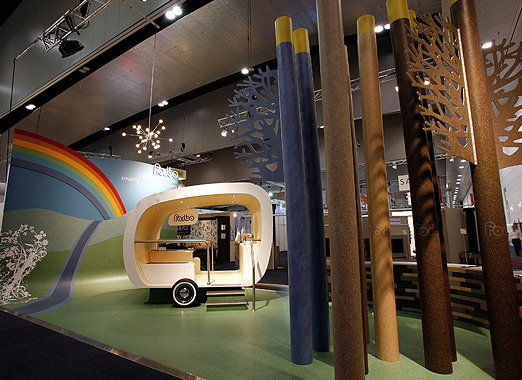
An exhibition stand, unlike a room in an interior, has to make some noise. If you consider that a typical trade fair venue is full of design objects and products all competing for attention, it comes as little surprise that each stand has to be prominent, or be lost in a sea of new products and design messages.
Exhibition design is about making an impression. At many trade fairs, exhibition stands are devised with the aim of capturing, on a small scale, the spirit of the product or company that is represented and its brand identity.
Unlike an interior space, the exhibition stand endeavours to represent a company and carve out its identity through the display. Exhibition design gives architects and designers the opportunity to branch out of the usual constraints of spatial design – and have a little fun.
The use-by-date for an exhibition stand typically expires after a few days, so environmental factors and consideration of how materials will be disposed of after the event is a major concern for designers and organisers.
To read the whole article, get issue 27 of DQ magazine, in newsagents now.
Image Caption: Forbo’s exhibition stand, designed by Exponential Design
INDESIGN is on instagram
Follow @indesignlive
A searchable and comprehensive guide for specifying leading products and their suppliers
Keep up to date with the latest and greatest from our industry BFF's!
The internet never sleeps! Here's the stuff you might have missed